
Global Land Grabbing and Trajectories of Agrarian Change: A Preliminary Analysis

15 December 2011

The politics of change in land use and in property relations linked to cases of land grabbing are not well understood, and yet are crucial to a deeper understanding of the phenomenon.
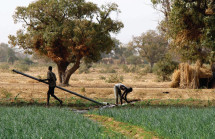
‘Land grab’ has become a catch-all phrase to refer to the current explosion of (trans)national commercial land transactions mainly revolving around the production and export of food, animal feed, biofuels, timber and minerals. Two key dimensions of the current land grab – namely, the politics of changes in land use and property relations change (and the links between them) – are not sufficiently explored in the current literature. We attempt to address this gap by offering a preliminary analysis through an analytical approach that suggests some typologies as a step towards a fuller and better understanding of the politics of global land grabbing.

Borras Jr., Saturnino M. and Jennifer Franco (2012) "Global Land Grabbing and Trajectories of Agrarian Change: A Preliminary Analysis" Journal of Agrarian Change, Vol. 12 No. 1 (January) pp. 34–59  (download .pdf)

26 pages

December 2011

About the authors

Jennifer Franco

Jennifer Franco is a researcher working on land and rural politics issues.  After receiving a PhD in politics in 1997 in the US, she began working with the Philippine solidarity group in the Netherlands, and with local peasant organizations, rural community organizing and human rights groups, and research outfits in the Philippines in two regions faced with extreme landlord resistance to redistributive agrarian reform. She began working with TNI in the mid-2000s, on several projects on various topics involving local peasant movement and rural reform activists, human rights activists, and activist researchers from various countries and regions. In 2010 she joined the College of Humanities and Development (COHD) at the China Agricultural University in Beijing as an adjunct faculty and travels there twice a year to give seminars and work with junior faculty and MA and PhD students. She has lived in the US, Philippines, Canada and the Netherlands.  

Jun Borras

Saturnino 'Jun' M Borras Jr. is a political activist and academic who has been deeply involved in rural social movements in the Philippines and internationally since the early 1980s. Borras was part of the core organising team that established the international peasant movement La Via Campesina and has written extensively on land issues and agrarian movements. Jun is also Adjunct Professor, COHD at China Agricultural University, Beijing; a Fellow for Food First/Institute for Food and Development Policy in California and Coordinator for Initiatives in Critical Agrarian Studies (ICAS).

Recent publications from Agrarian Justice

Bittersweet Harvest

A European Union (EU) trade initiative intended to reduce poverty in the world’s poorest countries has driven thousands of Cambodian farming families into destitution and led to serious human rights violations. This report assesses the human rights impacts of the EU’s ‘Everything But Arms’ (EBA) trade scheme in Cambodia. 

The Sugarcane Industry and the global economic crisis

An examination of ethanol production in Brazil, highlighting the role of financial capital, the territorial expansion of agribusiness and the impacts on labour relations and indigenous peoples and peasant farmers.

A foreseeable disaster

Why despite ten years of accumulating evidence on the social and environmental cost of agrofuels, does the European Commission persist with its failed policies? An analysis of the EU's bioeconomy vision, how it is fuelling land grabs in Africa, the agrofuels lobby that drives policy, and the alternative visions for energy that are being ignored.

UPDATE: Land concentration, land grabbing and people’s struggles in Europe

Land issues and 'land grabs' are mostly associated with the global South, however 13 country studies in this updated landmark report reveal an accelerating grab and concentration of land across Europe.