
Challenging Empire
Bennis tracks the rise of US unilateralism and the doctrine of preemptive war, looking particularly at Iraq and Israel/Palestine, and examines both the potential and the challenges ahead in reclaiming the UN as part of the global peace movement.
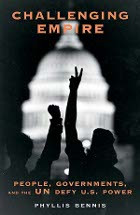
When millions around the world marched to protest the Iraq war and the US drive towards empire, the New York Times dubbed global public opinion "the second super-power". What empowered those protests was their alliance - if only for a brief moment - with governments unexpectedly willing to stand up to US pressure, and with the United Nations itself, when it followed its Charter's command to stop "the scourge of war". Bennis tracks the rise of US unilateralism and the doctrine of preemptive war, looking particularly at Iraq and Israel/Palestine, and examines both the potential and the challenges ahead in reclaiming the UN as part of the global peace movement.
About the authors
Phyllis Bennis
Phyllis Bennis is a fellow of both TNI and the Institute for Policy Studies in Washington DC where she directs IPS's New Internationalism Project. Phyllis specialises in U.S. foreign policy issues, particularly involving the Middle East and United Nations. She worked as a journalist at the UN for ten years and currently serves as a special adviser to several top-level UN officials on Middle East issues, as well as playing an active role in the U.S. and global peace and Palestinian rights movements. A frequent contributor to U.S. and global media, Phyllis is also the author of numerous articles and books, particularly on Afghanistan, Palestine, Iraq, the UN, and U.S.
Recent publications from Peace & Security
Race, space and punishment in urban sociologyStructural circumstances of deprivation and criminalization facing African-Americans and the racialized perceptions of criminality appear to be some of the salient features that recently led to a young black teenager being killed by neighborhood watch patrolman George Zimmerman. |
How international rules on countering the financing of terrorism impact civil societyMaking banks and non-profits liable for the acts and social networks of their customers and beneficiaries while holding charities and CSOs responsible for the ‘extremist’ views and actions of their associates stifles freedom of association and expression and promotes self-censorship. |
Guns, debt and corruptionHigh levels of military spending played a key role in the unfolding economic crisis in Europe and continues to undermine efforts to resolve it. |
Secrets, Lies, & PropagandaAfter the US embrace of torture after 9/11 it was only a matter of time before Hollywood decided to make a tribute to America’s liberal culture of torture for the big screen; Zero Dark Thirty |


