Myanmar’s Humanitarian Situation and the Path Forward A Commentary by Myanmar Civil Society Organisations*
Regiones
During the past three decades, civil society organisations have come to play a critical role in addressing community needs and supporting the momentum for political change in Myanmar. In this commentary, Myanmar-based CSOs analyse the social and humanitarian challenges facing the country in the regressive fallout from the 2021 military coup. Conflict, displacement and repression have swept the country with land-grabbing and illicit economies rife. At the same time, hopes and aspirations for better change have not ended, and this commentary highlights the continuing activities and goals of civil society groups, making recommendations how these essential endeavours should be supported and achieved.

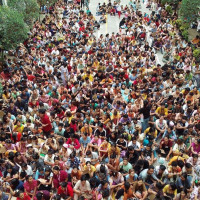
Photo credit TNI
Introduction
Myanmar has endured over 80 years of conflict, stretching back to World War II and the country’s independence in 1948. This long, protracted conflict is deeply rooted in the legacy of colonial rule, which involved taking away land and resources and the imposition of administrative systems based on divisive lines. Like many post-colonial lands, Myanmar struggled to redefine itself as a country after the departure of imperial powers. However, post-independence Myanmar remains trapped in a cycle of conflict where a bad colonial government was replaced by bad new governments. Because the structural problems were never resolved, they have been passed down through generations, leading to the state failure and 'conflict trap' we face today.
Contextual analysis
The Military’s Survival Strategy
Over the last decades, the Myanmar military’s strategy has never been to solve the conflict, but only to 'manage' it. This is a key feature of the conflict trap. Any new government the military attempts to form will follow this same pattern: they lack the political will to address the root causes of the crisis. The military leadership operate under the belief that the Myanmar armed forces, known as the Tatmadaw or Sit-Tat, is the most resilient institution in the country and that, if they can prolong and control the patterns of conflict, they will ultimately win. This has been the military’s functioning logic for years, and it will not change with 'window dressing' tactics. It is clear that the current military regime has no intention of solving the conflict – only of continuing its own survival.
From a broader perspective, the reality is that the military has been weakening and becoming increasingly fragmented. Since the 2021 coup, in particular, it is evident that the military authorities can no longer maintain the same control they once held from the regime capital at Nay Pyi Taw. At the same time, the military has lost control over large areas among the Bamar-majority population in central Myanmar as well. This retreat is unprecedented in the country’s modern history.
Another major challenge for the Tatmadaw and any government that the generals attempt to form is their use of coercive power. They are forced to rely on the constant aerial bombardment of civilians to maintain a foothold. But for how long can they sustain this? In the end, this strategy will destroy them. By ruling through fear, they will never gain legitimacy nor accurate information, only entrenching a culture of corruption that is furthering misgovernance, state failure and national breakdown. The Tatmadaw leadership are attempting to counter with violence a new generation calling for social and political change, ensuring that the fighting – and the resulting suffering of the people – will only continue to increase.
Challenges for the Resistance
The opposition cause, based among the people, also faces significant challenges. The present anti-military movement emerged from a scattered situation following the 2021 coup where communities across the country took up arms. Yet it has proven difficult to organise these diverse actors and groups into a common platform. Currently, the lack of a unified, collective vision and strategy remains a major obstacle for the resistance and pro-democracy progress.
Another critical challenge lies in the rise of 'war economy’, particularly within the extractive sectors. We must remain extremely cautious because historical precedents suggest that the illicit trade in drugs undermined previous movements in Shan State, and today the proliferation of scam centers threatens to do the same in Karen State. The uncontrolled exploitation of natural resources, such as rare earth mining, poses a similar risk. If the resistance becomes dependent on these predatory economies, it risks losing its moral standing and its structural integrity. We must be aware that these illicit economies have the power to dismantle the resistance from within.
The explosion of the scamming industry has also evolved into a global crisis, drawing intervention from the United States, even as China attempts to control the crack-down on the industry. While the military State Administration Council (SAC) and successor regime have strategically exploited the scamming issue for political leverage, ethnic armed organisations (EAOs) must tread carefully to avoid being tainted by association with these illicit operations.
For civil society, the most alarming development is the decentralization of these threats. Much like the drug trade, scamming and organised crime have become deeply rooted and pervasive across all levels of society. As these criminal elements become localized and normalized, civil society organisations (CSOs) are increasingly concerned about the long-term impact on society.
At the same time, it is important to remember that the present period is defined by a fluid landscape of possibility for long-needed change. Overcoming a deep-rooted colonial legacy is difficult. But, in support of these endeavours, many important ‘bottom-up’ or ‘ground-up’ initiatives have been taking place through trial and error at the community level in self-administered and non-regime parts of the country since the SAC coup.
In the past, for example, EAOs focused primarily on their own territories and circumstances. Today many are looking beyond their traditional boundaries to forge alliances among movements that share the same values and goals. In consequence, there has been an observable increase in inter-group coordination during the past five years. Adding momentum to the popular demands for change, people among the Bamar population in central Myanmar are also envisioning the construction of an entirely new country.
While these collaborative efforts face significant internal and external pressures (and in some instances have faltered), they represent a critical component of the changing political trajectory on the ground.
The Humanitarian Crisis, Shifting Societies and Deteriorating Services
Since the 2021 coup, the deteriorating health situation in the country has become extremely worrying. Many hospitals are no longer functional, leading to a complete lack of treatment for chronic diseases, a shortage of essential vaccines, and an absence of maternal and child healthcare. The long-term impact of this crisis will be felt for the next five to ten years, likely resulting in high rates of premature births and children with developmental issues. In addition, a significant portion of the population is suffering from mental health challenges and trauma, creating an urgent need for healing and support.
In this vacuum, the responsibility for governance and service delivery now falls increasingly to the EAOs, who require significantly more support to meet these essential needs in the large territories that they administer. In practice, the regime has imposed transportation blockages to try and stop the movement of life-saving medicines and essential goods around the country in order to undermine the capacity of opposition and non-governmental groups.
A similar scale of challenges exist in the educational field. Opportunity and access remain elusive for many children and youths due to displacement, poverty and a critical lack of resources. In the conflict zones, schools are no longer safe havens as they are frequently targeted by military airstrikes in attacks on civilian populations. At the same time, those fleeing to neighbouring countries face steep barriers to education, including precarious legal status, language gaps and financial strain.
In the meantime, the majority of the Myanmar population continues to live in rural areas where they face immense livelihood challenges in whichever part of the country they live. This general landscape of impoverishment, division and suffering will not change under the new government appointed following the sham election in December 2025. Rather, every sphere of civilian life is being subjected to increased militarized control.
This oppression also extends to those working abroad, who face increasingly restricted passport renewals and mandatory taxation. Currently, remittances from migrant work provide the primary source of income for many families in Myanmar, ensuring their daily survival. Making lives even harder, migrant workers are facing intensified crackdowns within their host countries.
For those who remain, the situation for smallholder farmers is becoming increasingly dire. The cost of agricultural inputs and fuel has skyrocketed while produce prices continue to decline. These worsening trends highlight a tragic paradox: the food producers themselves are going hungry. According to the latest report by the World Food Programme, compounding crises will hit conflict- and earthquake-affected areas hardest in Myanmar, adding to the nearly one-quarter of the population already facing acute hunger.
The challenges for local communities do not end here. In many parts of the country, the civilian population is caught in mounting pressures not only from the military regime but also from opposition groups through the taxation demands of various EAOs and People’s Defense Forces (PDFs). This struggle is expected to intensify alongside the growing, and often undermining, influence of Chinese investments in multiple sectors across the Myanmar economy during the coming year. In 2026, as the latest incarnation of military regime further tightens the squeeze on the people, these combined pressures raise grave concerns that society is on the brink of collapse.
In this breakdown, women are increasingly forced to bear multiple burdens, assuming primary responsibility for household survival and communal affairs as men are away for multiple reasons, including migrant work, taking up arms, or succumbing to gambling or drug addiction. Despite taking charge of leadership and caretaking roles, women remain trapped by deep-seated patriarchy and a lack of genuine protection from increasing cases of sexual and domestic violence. Until now, the inclusion of women has often been short-term and just for show.
Simultaneously, many young people face a bleak future due to forced soldier conscription – which now targets both young men and women – and the desperate choice of migration. For those attempting to return to their homes as Internally Displaced Persons, they face great challenges in rehabilitation. The proliferation of guns has normalized violence and institutional protection measures are often non-existent.
Geopolitical Realities
The geopolitical landscape of Myanmar resistance has shifted during the past five years from an internal struggle to one where actors in neighbouring China try to leverage the crisis to their advantage, although their efforts are frequently met with unpredictable outcomes and opposition. In the meantime, Myanmar remains a low priority for Western nations and other neighbouring countries, who have largely deferred to the United Nations (UN) and ASEAN for taking a lead in international diplomacy.
For its part, the UN also continues to delegate responsibility to ASEAN, despite widespread recognition that the bloc is unable to seriously address Myanmar’s political crisis and that its ‘Five-Point Consensus’ has effectively failed. This leaves resistance groups to navigate an increasingly convoluted diplomatic environment, further complicated by the competing strategic interests of neighbouring countries – Bangladesh, India, China, Laos and Thailand – along their respective borders.
The Path Forward: A Window of Hope
While this is the darkest of times, a window of hope remains, largely centered on the strength of civil society. Despite the immense challenges the country faces, CSOs continue to function in diverse and creative ways, remaining steadfast alongside the people. In these endeavours, they are bolstered by the creative tactics of a new generation that refuses to return to the old situations and failures of the past. Furthermore, the community’s ability to recognize and analyze the risks of fragmentation is a positive sign, serving as a critical safeguard against further division.
At the same time, it is important to be realistic and not naïve. In particular, decreased funding for CSOs during the past five years has placed civil society in Myanmar at risk of weakening. This funding gap creates concerns regarding potential divisions between those who receive support and those who do not. To address this, the international community must be warned that Myanmar is not a single entity, and there are no 'one-size-fits-all' solutions in a multi-cultural and multi-ethnic land. Realities vary significantly at the subnational level, shaped by diverse perspectives on federalism and ‘ground-up’ priorities. Solutions can be found through inclusion, dialogue and genuine political will.
In the meantime, it is crucial to understand these distinct realities to provide effective support. Working with the new sham government in Nay Pyi Taw will only further prolong the conflict. These challenges and landscapes are laid out in the following section.

Photo credit TNI |
Programming perspectives
While the funding gap continues to widen, the emerging – albeit highly restricted – aid streams since the 2025 earthquake disaster are increasingly channeled through UN mechanisms, undermining years of localization efforts led by civil society organisations. These international actions are predominantly short-term in nature. Under these worsening conditions, it thus becomes ever more crucial to consider the evolving realities in different parts of the country as well as the different social and ethno-political dimensions of Myanmar’s long-standing conditions of militarized rule, civil war and state failure.
First dimension – Nature of Myanmar’s prolonged conflict and the implications
Myanmar’s protracted conflict is fundamentally political, with roots stretching back to the period before independence. Addressing such deeply-seated issues requires long-term vision and new approaches rather than short-term measures and ‘one-size-fits-all’ approaches. This proposal draws on lessons learned from decades of aid intervention across various regimes, which operated under the code of political neutrality.
The popular assumption is that development should be pursued first and peace will eventually follow. In Myanmar, however, good intentions have not always produced good outcomes. The military regime has historically weaponized 'divide and rule' tactics, instrumentalizing the aid sector to consolidate its oppressive rule and suppress opposition. This has reinforced the decades-long conflict trap. Therefore, in order to break this cycle, we can no longer afford to repeat the shortcomings of the past.
In this context, the role of CSOs is indispensable. These actors possess a better understanding of conflict complexities and their localized implications. Since the 2021 coup, CSOs have been targeted by intense military surveillance and systemic crackdowns. Yet, they remain vital in navigating the emerging political landscape, which now includes new governance structures and political forces operating beyond both the regime-controlled administration and long-established ethnic systems like those of the Karen National Union and Kachin Independence Organisation. Despite these circumstances, the continued operation of CSOs – both inside and outside the country as well as in regime and non-regime controlled areas – is essential to sustaining grassroots mobilization and fostering community resilience.
At this critical juncture, CSOs must also strategically reformulate their roles by proactively defining a people-led vision for the future. For the first time in the country’s history, Bamar-majority territories have emerged at the forefront of the struggle for federal democracy, presenting a unique opportunity for nationwide alignment. As CSOs determine the direction in which to push society, they must remain vigilant against 'divide and rule' tactics. True progress requires radical inclusion in grassroots mobilization, ensuring that the voices of women, youth, LGBTQIA+ individuals, people with disabilities and minorities-within-minorities are not just recognised but centered in the new political landscape.
At present, in response to the brutality and recalcitrance of the regime, the focus of the resistance is weighted more toward military action, leaving political actors and their agendas in the background. To succeed, EAOs must therefore recognise that they cannot secure a solution alone: alliance-building is not optional, it is mandatory.
In this vacuum, the main question still revolves around political will. If anti-regime groups cannot find a way to align their interests, the country faces a massive lost opportunity to shift power back into the hands of political leaders and Myanmar will remain in the conflict trap.
Breaking this deadlock therefore requires a more inclusive approach that supports the role of CSOs. Civil society groups and individuals are central to amplifying grassroots voices, fostering social cohesion and promoting non-violent political engagement, particularly where formal political space is constrained. Strategic investment in these actors will ensure that social and political transition is truly people-led and inclusive of marginalized groups, providing the necessary foundations to translate resistance into accountable, representative governance.
Second dimension – Rebuilding society from the ground-up
The compounding impacts of COVID-19, climate change and the 2021 coup have forced both rural and urban populations in Myanmar into severe hardship. This crisis has destabilized agricultural production, leading to soaring costs and critical gaps in food availability and accessibility nationwide. In this fragile context, many communities are courageously working to rebuild local societies. To support them, an urgent priority must be the promotion of community resilience through food sovereignty. Empowering local communities to reclaim control over their lands, production systems and markets within a solidarity economy is essential for fostering long-term resilience and social wellbeing.
Furthermore, we must support community-led safety and protection mechanisms designed to shield whistle-blowers and human rights defenders. Ensuring that those who speak out against violations are protected from any form of repercussion is vital to maintaining the moral and political integrity of the resistance movement. At the same time, community initiatives around education, health and environmental protection should be supported. Issues such as mine clearance should be conducted in close collaboration between local communities and authorities as well as supporting the rehabilitation of landmine survivors.
For these reasons, any aid intervention must prioritize a collective approach over individualized solutions to strengthen social cohesion. Rather than fragmented assistance, aid should complement existing local efforts, such as ‘community preparedness’ plans organised by the people to mitigate hostile scenarios. Whether responding to aerial bombardments, 'four-cuts' food blockades or natural disasters like floods, external support must align with these grassroots survival strategies.
Crucially, this must also extend to community-led peacebuilding and trauma-healing efforts. Rather than a purely technical or clinical approach, trauma support must be grounded in the local context and sensitive to existing power relations, focusing on the collective healing of society. In the long-term, rebuilding a resilient society depends on the healthy social reproduction of young people. This requires uninterrupted support for essential public services, including maternal and child healthcare, universal immunization and inclusive educational opportunities within safe environments.
In these initiatives, recognizing both minorities and 'minorities-within-minorities' is fundamental to achieving peaceful, pluralistic coexistence. However, recognition alone is insufficient: meaningful representation is equally crucial in decision-making processes that directly impact their lives. Any framework for redistribution or restitution must therefore be intentionally extended to these historically marginalized and under-represented groups.
In particular, women should be supported to take leadership roles in society, moving beyond symbolic roles to hold genuine decision-making power in economic and political spheres. The capacity of women to lead has been demonstrated throughout the country’s history and has become even more vital since the 2021 coup. As a significant portion of the male population has joined armed resistance groups or migrated to avoid military conscription and seek livelihoods elsewhere, women have increasingly become the backbone of communal survival.
In the current context, the role of religious groups is also indispensable. Historically, religious actors have served as pillars of social harmony and sources of moral guidance during times of upheaval. Even under previous military regimes, humanitarian aid was often made possible through faith-based networks. At this critical juncture, their moral leadership and vast ground reach is thus essential in bridging deep-seated divisions and ensuring that aid reaches the most vulnerable people and communities through trusted, grassroots channels.
Third dimension – Towards civilian-led local governance
Across Myanmar, administrative systems – both long-standing and newly-established – are being managed by EAOs such as the Karen National Union, Kachin Independence Organisation, Restoration Council of Shan State, Karenni National Progressive Party and the National Unity Government (NUG). Many of these systems are functioning, providing essential services to populations within their territories despite limited infrastructure and resources. Civil servants within these administrations often manage multiple responsibilities due to severe human and financial resource constraints. To fund critical sectors like education, healthcare and humanitarian aid, these organisations generate revenue through various channels, including natural resource extraction.
To maintain legitimacy as de facto governments, they must therefore prioritize an inclusive, pluralistic administrative model that protects the rights and identities of all inhabitants, regardless of their ethnic backgrounds. It is vital that they resist the tendency toward ethnic nationalism. Criticisms have emerged over the decades regarding the imposition of specific linguistic and cultural identities, leading to biases against other social groups. At the same time, as these organisations expand governance responsibilities, they must remain vigilant in minimizing the economic burden on the people. The current proliferation of taxation checkpoints across different EAO territories has become a severe strain on civilians and must be streamlined to prioritize the people's survival over organisational revenue.
While the administrative efforts in EAO and other liberated territories serve as positive models, there is a growing consensus that, in the future, these systems must transition toward civilian-led governance rather than remaining under the direct control of armed organisations. In these structures, it is a priority to strengthen independent justice systems. These institutions are vital for providing the necessary checks and balances on the armed wings of resistance groups, ensuring accountability to the people they serve. The credibility of the resistance hinges on ensuring justice and accountability. Without a mechanism to address the violations committed by armed actors and administrative bodies, the solidarity movement for regime change risks losing its political standing.
The anti-regime resistance also face existential threats from within, highlighted by the rise of illicit drug trades and scam centers. If the NUG and EAOs do not take proper responsibility to eradicate these criminal elements, they risk damaging the movement’s integrity. Strengthening civilian oversight ensures human rights as well as protects resistance movements from collapse by corruption and lawlessness.
To mitigate against this, international and local partners should provide targeted support to strengthen civilian-led, inclusive and accountable governance systems that can counter these illicit economies. Priority should be placed on building independent justice mechanisms, streamlining transparent revenue practices, and increasing accessibility to service delivery in core sectors such as education and healthcare. By enhancing civilian oversight, emerging administrations can remain resilient against corruption and responsive to the needs of the people, thereby protecting human rights and reinforcing public trust.
Fourth dimension – Resource rush and war economy
Exploiting the ongoing political crisis, a rapid resource extraction rush is unfolding across conflict-affected areas, fueled by a predatory war economy. The rate of land grabbing has increased substantially in recent years, driven by large-scale investments in commodities like sugarcane and tissue-culture banana plantations, such as in northern Shan State. This expansion has systematically stripped communities of access to their ancestral lands and livelihoods. One key enabler of this crisis is a 'conflict trap' mindset: the belief that 'if I don’t extract it, someone else will.'
This logic is visible in the surge of gold-mining activity along river basins and the rapid expansion of rare earth mining in the ethnic highlands, a highly toxic form of extraction that has increasingly become a tool for political bargaining with other countries. While mining generates immediate revenue for various actors, we must weigh these short-term gains against the staggering long-term costs. The inter-generational impact is irreversible: once the land is poisoned or seized, it becomes impossible to rebuild society.
CSOs must therefore take a clear, evidence-based stance against this exploitative war economy. While halting all economic activity during a conflict may be unrealistic, we must demand absolute transparency and accountability. We categorically reject the claim that displaced lands are 'unused' or ‘vacant’ and therefore open for grabbing. Although communities may be temporarily unable to live and work on their lands due to conflict, their rights to their ancestral lands remain fundamental and intact.
To address this, CSOs must lead action research to provide the evidence necessary for developing people-led governance principles. We call for a guiding policy that mandates free and prior informed consent (FPIC), environmental safeguards and social impact assessments for all investments. Despite the risk of being targeted, CSOs must remain vigilant in monitoring this resource rush. As Myanmar is already highly vulnerable to climate change, the land-use patterns driven by the war economy only exacerbate environmental risks. The burden of climate change will be shouldered by the people, making climate-risk preparedness and community protection an urgent priority.
Fifth dimension - Reforming international aid and investment
The success of the preceding four dimensions depends heavily on a radical restructuring of international aid mechanisms. To avoid repeating the mistakes of the past decade, international donors and stakeholders must move beyond a technical or neutral approach and recognise how traditional funding structures can inadvertently fuel conflict or reinforce existing power imbalances. True localization requires a fundamental shift toward local leadership and the promotion of local agendas. This necessitates direct and equitable funding to CSOs across all parts of the country.
We urge international actors to adopt a Human Rights Due Diligence (HRDD) framework to ensure that 'engagement' does not become a mask for complicity with oppressive structures or predatory investments. While private sector development is frequently promoted by donors, it is essential to question whether these investments are truly empowering or even desired by the communities themselves: investment without local consent is merely another form of extraction.
Furthermore, while international support is appreciated, it must not impose unnecessary burdens through rigid, top-down requirements that undermine local agency and safety. We urge donors to recognise that humanitarian crises are rooted in structural problems that demand structural solutions. Therefore, providing both humanitarian and development funding is essential. While we value the large-scale support from some donors, the current reliance on rigid, short-term humanitarian cycles often undermines long-term localization efforts and leaves systemic issues unaddressed.
As local organisations and networks seek direct access to resources, the international community must develop new, flexible funding structures that accommodate the risks faced by local actors. This also requires a move toward locally suitable criteria for funding eligibility, ensuring that support is accessible and responsive to the realities on the ground.
Key messages
- Political root problems demand political solutions: Myanmar’s crisis is fundamentally structural: addressing it requires long-term, people-led political solutions.
- Bottom-up resilience as a foundation: Rebuilding society must begin at the grassroots through food sovereignty, collective protection mechanisms, community-led trauma healing and access to essential services.
- Transition to civilian-led governance: Establishing inclusive and accountable administration, independent justice systems and robust civilian oversight is critical to maintaining the legitimacy and public trust of emerging governance structures.
- Averting long-term societal collapse through basic service delivery: Sustained, flexible support for community-led services is a moral and strategic imperative to prevent long-term developmental regression, specifically regarding health and education.
- CSOs as strategic partners: Supporting Civil Society Organisations is a strategic investment to ensure inclusive governance, grassroots accountability and long-term social resilience.
- Principled international engagement: International aid and investment must adopt Human Rights Due Diligence, flexible funding modalities and locally appropriate risk assessment to ensure that assistance does not inadvertently reinforce power imbalances or extractive practices.
* For security reasons, the Myanmar CSOs involved wish to remain anonymous
Creditos
Mas como esto
-
Order Without Meaning and Dysfunctional Governance in Myanmar A new series of podcasts analysing why the challenges of state failure and conflict resolution have deepened during every era of governmentFecha de publicación:
-
The Deepening Labor Crisis and Myanmar Election A Myanmar Commentary by Su Latt Phyu*Fecha de publicación: