When the United League of Arakan controls Western Myanmar Analyzing new developments in military, political and humanitarian issues in Arakan
Regiones
A Commentary by Naing Lin*
Arakan has become a major resistance land, witnessing the takeover of administration and most townships in Rakhine State by the United League of Arakan since the 2021 military coup. In this commentary, Naing Lin examines the challenges in governance, community rebuilding and security the ULA and local peoples now face. The historic cause for Arakan self-determination and sovereignty has undoubtedly revived. But many difficulties remain, including international relations, displacement and humanitarian crisis, inter-ethnic bridge-building and the continuing attacks of the military regime in Naypyitaw which appears determined to impose dominant control on the country.

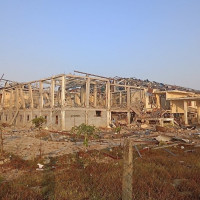
Photo credit: Citizen journalist
The generals of the Myanmar military regime conducted a pre-fixed general election seven months ago. While many international actors, including the United Nations, Western embassies and political analysts, called the election an act of “power grab” and attempt to legitimise its rule, some also argued that it could be used as a starting point for better politics in the country. The latter group include neighbouring countries, such as China, India, Thailand and several other members of the Association of Southeast Asia Nations (ASEAN). In apparent confirmation, the subsequent visits to India in early June by Snr-Gen. Min Aung Hlaing, the regime’s dictator-turned president, and then China in mid-June provided fresh international recognition for the long-isolated generals of the Tatmadaw (Sit-Tat) in Naypyidaw.
Less noticed, even if political sources claim that China granted a higher degree of recognition as it was termed as a “state visit” rather than “official visit” in the case of India, the latter’s engagement with the Min Aung Hlaing regime provided one very crucial asset which China cannot offer: that is, the endorsement of the new government in Naypyidaw by the world’s largest democracy, a recognition of governance which the regime wants the most. In consequence, this is thought to have had impact on the recent meeting between the foreign ministers of ASEAN and their Napyidaw counterparts, highlighted by Min Aung Hlaing’s visit to Thailand.
Five years after the 2021 coup d'état, the international stage is delicately set. In the overall trends in Myanmar politics, the recent elections – despite their many deficits – can be seen to have had engagement impact on regional foreign policy re-arrangements for the regime in Napyidaw. At the same time, these developments could also mean that efforts for international acceptance led by the rival National Unity Government (NUG), established by opposition groups in the coup aftermath, could face increasing limitations.
On the domestic front, by contrast, it would be safe to argue that the recent polls have had limited impact on the overall resistance movement in the country. A largely unpopular structure of failed state governance under dominance by the Myanmar armed forces holds in only half of the country, and the recent polls were hugely illegitimate in the eyes of the majority population in the ethnic states and regions. In Arakan, only three township areas experienced elections: Sittwe, Kyaukphyu and Manaung. And now the Rakhine State government installed by the Napyidaw regime following the elections continues to face ongoing conflict in the vicinity of its capital Sittwe where the state parliament is just half a kilometer from the artillery and drone strikes of the Arakan Army (AA), the military wing of the United League of Arakan (ULA).
As these events show, the regime remains widely rejected by the people in Myanmar, and Arakan has become a leading territory where Napyidaw faces both losses of territory and legitimacy. Located on strategic geo-political crossroads and with a long history of independence, the struggle for freedom and self-determination among Arakan’s peoples has become a key model and indicator of resistance trends in the popular bid for regime change. It is also one that is being increasingly watched by neighbouring governments and the outside world.
Dynamics of war on Arakan fronts
The years since the 2021 coup have marked significant advances for the Arakan cause. After preparatory build-up, the ULA made rapid progress when the AA joined “Operation 1027” in October 2023, initiated together with its allies of the (Kokang) Myanmar National Democratic Alliance Army (MNDAA) and (Palaung) Ta’ang National Liberation Army (TNLA), in both northern Shan and Rakhine States. But, when the MNDAA and TNLA temporarily paused the first round of operations in January 2024, the AA continued and even accelerated military offensives in its Arakan homeland. By the time the second round of Operation 1027 resumed in June that year, the AA had occupied 10 out of 18 townships in its Arakan military region.
The group then completed its capture of the northernmost and southernmost townships – Maungdaw on the Bangladesh border and Gwa in the south – along with the regime’s western headquarters in Ann by the 2024 year-end. This completed a stunning change in the administrative and political landscape, effectively leaving only three of the 17 townships in Rakhine State in the hands of the Myanmar military: Sittwe, Kyaukphyu and Manaung.
Until recent months, territorial changes and military confrontation have remained largely static between the two sides. There are five key military zones and fronts: two inside Arakan – Sittwe and Kyaukphyu; and three outside along the eastern bank of the Arakan Yoma mountain range – territories around the Ann-Padan, Taunggoke-Oakshitpin and Gwa-Ngathaingchaung roads. Very recently, another route opened as the Myanmar military initiated offensives on the Mindon-Ma Ei road across the Arakan Yoma in May this year. Until the present, however, even if the situation is different from one military zone to another, the offensives and counter-offensives by both sides have only resulted in a de facto stalemate.
Starting analysis first with the Gwa-Ngathaingchaung road that leads into the Ayeyarwady Region, the AA collaborated with local People’s Defense Forces (PDFs) and Spring Revolution groups, opening three main battle fronts in Thapaung, Ngathaingchang/Myauk San and Laymyatnar-Kwingauk townships. Fighting at present is mainly concentrated in the Pathein, Thapaung, Yegyi, Laymyatnar and Ingapu areas along the Pathein-Monywa road and near the Arakan Yoma range. As of June 2026, resistance organisations controlled over 225 villages, with regime forces using blockades and strategic strikes to try and prevent opposition forces from connecting with other groups across Ayeyarwady valley and crossing into the Bago Region. Against this backdrop, the recent general election was cancelled in 23 village tracts in four townships, reflecting the regime’s loss of administrative control.
Moving on to the second front, the key fighting zone on the Taunggoke-Oakshitpin road leading into western Bago Region is around Nyaungkyoe, a key mountain pass on the Taunggoke-Pandaung-Pyay road. After the AA captured Nyaungkyoe strategic hill and Point 666 in April and October 2025, the regime’s defence manufacturing factories (KaPaSa-6, 5 and 16) came under direct threat in the adjoining lowlands. To try and reverse the situation, the Myanmar military launched repeated counter-offensives but failed. After Point 666 was temporarily retaken, the AA and allied forces captured it again in late January 2026. As of May this year, local reports said that the families of regime personnel, including children and the elderly, had been evacuated from KaPaSa-16 and the regime remains on the defensive on this front.
Meanwhile the regime has been unable to affect any change on the third front along the Arakan borders on the Ann-Padan road. Here the AA is supported by a coalition of Spring Revolution movements including PDFs, Chin Defence Force (Asho), People’s Liberation Force, People’s Revolutionary Army (Magway), People’s Independence Army and Students Armed Force. Front-line reports said that by early January 2025 the AA had overrun multiple regime outposts, including Kamyin Kan, Pein Yay Chan and Kyet Yay Chan, in the surrounding area. Four months later, the AA and its allies captured the Myanmar Post and Telecommunication (MPT) hill in Ngaphe township and also communication tower hill. As of June 2026, the AA was reported to be fully encircling the Nat Yay Kan hill on the strategic gateway to Magway Region.
Turning to the two domestic battle fronts in Arakan, more changes have been taking place in Kyaukphyu as compared with Sittwe. Partly, this is due to geography and the Min Chaung Bridge which acts as the boundary between Sittwe and Ponnagyun townships. The regime destroyed the bridge in February 2024 in order to try and halt the AA’s offensive but later, instead, sought to rebuild it.
Presently, in defence of Sittwe, there are reported to be around 2,000 regime soldiers and 1,000 naval personnel as well as police, Rohingya military recruits and Arakan Liberation Party militia organised by the Tatmadaw (Sit-Tat). At the same time, the regime has destroyed several ethnic Rakhine villages around Sittwe, turning them into frontline battle zones and putting fences around other parts of the town facing the Kaladan river and coastal shores. In operational terms, the regime has so far only carried out artillery and drone strike towards Ponnagyun and Pauktaw townships, which are under ULA/AA control, and with no ground offensives. For its part, the AA has frequently conducted similar attacks towards regime positions near Sittwe, reportedly leading to the relocation of military family members into the southernmost part of the town.
On the Kyaukphyu front, in contrast, the situation is more dynamic. After capturing Ramree in March 2024 and Sane the following May, the AA was able to encircle and cut off the remaining regime forces in Kyaukphyu township, including naval facilities and regime outposts. The Dyanyawaddy naval headquarters, the largest in Arakan, are stationed near Maday Island along with the Taung Maw Oo and Ohn Kyin military bases where multi-billion dollar Chinese investments are located, including oil and gas pipelines and a projected deep seaport.
Since this time, fighting has frequently flared. The AA launched offensives against the regime’s police battalion (32) in the Leikkamaw and Thikpoketaung areas during March-April 2025. At the same time, the regime managed to push back AA forces in the Minpyin and Thaingchaung areas by the end of the year. In the latest round of fighting, a new front emerged near Taung Maw Oo in May 2026 as a regime column of 300-500 troops advanced towards Sane to try and take back control of the town and Kyaukphyu-Yangon Road. The advance, however, was repulsed and regime forces are currently reported in defensive positions near the Taung Maw Oo base.
Further to the east, the regime deployed a total of 1,000 troops, including artillery units, to Mindon township beginning in April. At the same time, they blocked all food and goods transportation into Arakan along the Mindon-Ma Ei road, a colonial-era forest trail – 50-60 miles in distance – long used for trade between the Dry Zone of central Myanmar and Kyaukphyu and the Arakan coast. But, as the regime column attempted to approach into Arakan in late May, it was intercepted and heavily hit by the AA and allied forces, suffering severe losses and retreating back to the foothills. As of June, local sources reported that only 600 troops remain positioned in the northern part of Mindon township after failing to advance from the Magway side.
Finally, in another development that could be critical for Arakan’s security, the regime is also reported to have started operations towards Mindat and Kanpetlet townships in adjoining territories in southern Chin State starting in late May. If the regime can retake these two towns, it could be followed by offensives against Matupi and then Paletwa township, the latter of which is controlled by the AA. For the moment, local sources state that the AA has been collaborating with the Chin People’s Army in defence against these operations, with media reports saying that the first advance was expelled by Chin forces but with another round involving 1,000 troops about to start.
As these events show, Arakan and adjoining territories have become a major conflict-zone today. Predicting future military outcomes is difficult as Myanmar remains in a state of civil war. But, for the moment, the immediate conclusion to be drawn is that, despite the regime’s long-standing rejection by the great majority of the people, the generals of the Tatmadaw in Naypyidaw appear determined to retake lost territories in Arakan by any possible means. The question, then, is whether there are other pathways to change.

Photo credit: Arakan Princess Media
Impact of recent elections on Arakan politics
Arakan stands as a clear example of the failed elections manufactured under the military regime. Held in less than 10 per cent of the territory, the recent polls demonstrated not an act of electoral process but an action of political engineering in which both processes and results were strictly controlled. Geographically, only three townships – Sittwe, Kyaukphyu and Manaung –experienced elections. But, to be accurate, even then observations showed that the elections were cancelled in more than half of the village tracts in both Sittwe and Kyaukphyu townships.1
It is in this context that the conduct of the elections need to be seen. The official position of the ULA on the election question was announced in advance in mid-August, stating that no elections would take place in its administered areas as elections are not helpful to Arakan’s interests at this time and, amidst conflict, almost no one is interested as a matter of priority.
In the electoral landscape, meanwhile, the dominant party during the 2015 and 2020 general elections, the Arakan National Party (ANP), was banned from participating, with the regime citing alleged associations with “terrorist” organisations and unlawful activities under the country's “Political Parties Registration Law”. In its absence, other local parties did participate, including the Arakan Front Party headed by Dr. Aye Maung, Rakhine Nationalities Party led by U Ba Shein, pro-regime Rakhine State National Unity Party and ethnic Khami National Development Party and Mro National Development Party.
The result of such skewed polls appeared a disaster for Rakhine-based parties who agreed to stand in the polls. In contrast, with advance manipulated voting in Sittwe and Kyaukphyu by military personnel, their family members and pressurized Muslim/Rohingya voters, the military-backed Union Solidarity and Development Party was guaranteed victory, leaving only Manaung as a safe base for Dr. Aye Maung and U Ba Shein and their parties.
As a result, the regime elections in Arakan highlighted three points. First, like many other parts of the country, the elections could be seen as a pre-arranged show to legalize and formalize the Tatmadaw’s control of Rakhine State via an electoral process, state government and claimed parliamentary system. Second, unlike the previous elections in 2015 and 2020, local parties among the Rakhine-majority population did not form into a single mainstream movement since, with the ANP banned and most of the territory under ULA administration, the public had very little prospect, engagement or interest. And third, it revealed that Rohingya/Muslim communities, despite not enjoying full citizenship rights or electoral representation, were once again being cynically used as tools by the regime and its allies to instrumentalize their hold on power.
In short, the recent polls in Arakan have had very little impact on the lives of local communities. Nor are they any reflection of public needs or aspirations. Rather, in reality it is the daily socio-economic and humanitarian challenges faced by the people that determine the consequences – whether for better or worse – for the local population.
Border politics and humanitarian challenges
In general terms, Arakan today remains a region of active war and armed conflicts. While the frontier zones face constant ground attacks and offensives, the AA-controlled inner towns have experienced deadly air strikes by the regime, including Kyauktaw, Minbya and the ancient capital of Mrauk-U. Meanwhile, under the intensive trade and transportation blockades imposed by the regime, the local population in Arakan have very little choice in acquiring life-saving medicines, materials and essential commodities for their daily lives. The only route as a potential alternative for basic imports are the frequently disrupted semi-formal trade roads with Mizoram in neighbouring India. Other channels, such as trade with Bangladesh or Magway Region via Chin State, are mostly closed due to military, security or political factors.
Looking first at the situation with Bangladesh, there have been ups and downs in border relations between the Dhaka authorities and ULA since the AA gained control of the 271 kilometer-long border by late 2024. In August of that year, Bangladesh also experienced regime change and subsequent political instability under the Mohammad Yunus-led interim government which continued until February of the present year. Now, with the formation of a newly-elected government led by the Bangladeshi Nationalist Party under the leadership of Prime Minister Tarique Rahman, there are hopes of a fresh opportunity in improving border relations.
In terms of refugee repatriation, Dhaka’s key concern, this will continue to be hampered as long as the regime’s military offensives and air attacks on civilian populations persist. The regime’s “divide-and-rule” stratagems also promote inter-ethnic tensions, and sometimes conflict, along the Naf River border, including the Rohingya and other nationality groups (see below). If the Bangladesh authorities, by contrast, were to resume border trade and allow basic humanitarian supplies into northern Rakhine State, this could relax the mounting pressures facing local communities on the Bangladesh side of the border and, at the same time, reduce the influx of more refugees. Even more importantly, rather than aid and trade controls pulling peoples apart, such support by Bangladesh could help create mutual trust and benefit between local communities, producing conducive conditions for a sustainable and voluntary refugee repatriation programme in the future. Whatever happens in Myanmar politics, conflict resolution will remain an essential task in Arakan as in other parts of the country.
In India, meanwhile, the recent visit by Snr-Gen. Min Aung Hlaing to the country brought new worries for border relations between Mizoram State and the Arakan side. The concern of local peoples is whether the regime might have pushed the government in New Delhi to increase pressures and control over the border passes as part of its strategy to step up operations against resistance groups in Arakan as well as Chin State. Min Aung Hlaing and the Bamar-majority leaders of the Tatmadaw have long shown no respect for the lives and security of non-Bamar peoples.
Against this, it needs to be realised that regional geo-politics have changed much during the past five years. Of importance to New Delhi, India has a milestone intention to complete the Kaladan Multi-Modal Transit Transport Project in 2027 which will need the full collaboration of the ULA authorities, the de facto administration controlling most of the key areas between Sittwe and the Indian border via Paletwa. For the project to succeed, therefore, the India government will need to balance its relations between Napyidaw and the people of Arakan since this is the most assured and rational means to pursue its foreign policy interests in Myanmar. In this context, greater trade and communication between Arakan, Mizoram and other adjoining states will bring more opportunities for local communities and youth populations, ranging from education, health and trade to job opportunities, cultural exchange and inter-ethnic understanding. Such essential needs will never be delivered by a military regime in Naypyidaw.
For the present, basic healthcare and education systems in ULA-controlled areas are working at minimum levels. For higher technical areas, such as advanced surgery and specialist topics in university education, local people need to travel into other areas where they face security risks. Lack of infrastructure and human resources, meanwhile, are hampering faster developments from happening.
Statistics on the ground also confirm the scale of humanitarian challenge. As of June this year, the United Nations High Commissioner for Refugees (UNHCR) calculated the number of internally displaced persons (IDPs) in Arakan as 498,800, the second highest of any state or region and 13.1 per cent of IDP numbers countrywide. This number was also confirmed by the Humanitarian and Development Coordination Office (HDCO), the humanitarian wing of the ULA, with its figures ranging from 310,000 to 570,000 depending on local ebb and flow in conflict dynamics.
Such emergency exposes communities to further suffering, both natural and man-made. Most recently, floods impacting over 200 villages in eight townships in central Arakan had devastating consequences for 150,000 people from all nationality communities. At least eight people died due to drowning, some trying to rescue others. Subsequently, post-flooding needs are reported to be mounting, including shortages of water purification tablets, basic medicines and human shelters.
On another front, credible sources claim that Rakhine State constitutes the second largest state or region after Mandalay Region for forcibly conscripted persons by the regime in a recent twelve-month cycle, with nearly 4,000 recorded cases. Disturbingly, too, Rakhine State stood as the second highest state or region in civilian casualties in the election period between August 2025 and January 2026, with air strikes the single largest case of civilian suffering (476 out of 702 reported cases).
This impact on the civil population also broadly agreed with research by the HDCO. According to a report released in October last year, air attacks have constituted over 90 percent of civilian causalities since December 2024 (killing 443 people and injuring 1,015), with the remainder attributed to such incidents as artillery shelling, small gun shooting or mine and war remnant explosions.
In seeking to understand the motivation behind the regime’s air attacks on civilian populations, analysts suggest that it appears an attempt to create a reign of terror in AA-controlled areas, destroy public buildings and institutions, and try to pressure the ULA leadership to come to the ceasefire table on Naypyitaw’s terms. In reality, however, many local observers consider that these stratagems are counter-productive. The ULA leader Twan Mrat Naing has clearly warned that as long as the Myanmar military keeps bombing civilians, it will be very difficult to explore a political process to halt the fighting.
For the present, such patterns and cycles of regime failure look set to continue. From a military perspective, air power is generally used for three key purposes: close-in air support on the conflict frontline; attacking enemy operational sites (military bases, logistical and supply hubs, and transport infrastructure); and targeting strategic military positions (command-and-control centres, staging areas and reserve forces). But analysis of the regime’s use of air attacks on urban sites and populated villages shows that they have not produced any tangible military results. Instead, they have only increased psychological terror and political radicalization, challenging any prospects for peace and national reconciliation in the country’s near future.

Photo credit: Citizen journalist
Challenges in the ULA’s control of western Myanmar
Since December 2024, the date when the ULA/AA had completed its takeover of more than 90 per cent of Arakan’s territory, the Arakkha People’s Revolutionary Government (APRG or Arakkha Government in short) has begun acceleration of its four key fundamental “national tasks”: military-building, state-building, party-building and nation-building.
By general definition, military-building means increasing both the quality and quantity of armed forces in terms of manpower, firepower, military discipline and doctrine. State-building concerns the development of new governmental departments and mechanisms that are essential for effective governance and service delivery, ranging from health, education and environmental protection to telecommunications, justice and policing. Party-building, in turn, requires popular grassroots and middle-class mobilization along with political institutionalization and representation in order to improve legitimacy and accountability in the new political system. And nation-building aims to create a common national identity representing the interests of all peoples, classes and sectors of society in the territory.
There are important differences and nuances in these four tasks, however. While the processes of military and state-buildings generally require the centralization of power, party and nation-building require some degree of voluntary cooperation and participation in the achievement of consensus-building among the different interests and identities in a society. It can be argued therefore that these four processes can naturally be in tension with one another and are cross-cutting issues facing the APRG.
In the Arakan context, there are always important questions in these issues involving the second largest ethnic group, Rohingya, who have a complex history and politics. In general terms, regional stability and security in northern Arakan townships have increased since the fall of the regime’s last stronghold, Border Guard Force (5) in Maungdaw in late 2024. Notably, the meeting between ULA chairman Twan Mrat Naing and Rohingya community leaders in late August 2025 in Maungdaw brought greater trust and reconciliation between the ULA authorities and local Muslim population.
Since this time, violence by Rohingya militant groups, such as the Arakan Rohingya Salvation Army, has largely been reduced in the interior, apart from attacks across the Bangladesh borderline where they seek to operate. This contrasts with the picture presented by some international human rights organisations and segments of the diaspora community who make new allegations against the ULA/AA relating to the intensive conflict period during 2024 which involved the Tatmadaw, armed Rohingya groups working with the regime and the AA. Since this time, local people have been seeking to move towards a better and more harmonious stage in community rebuilding, reflected in the four key elements of “national tasks”.
In the first challenge of “military-building”, there are now Rohingya male and female soldiers serving in the AA, although the specific numbers and ranks cannot be verified. But it is important to note that the regime’s forced conscription of Rohingya youths during the war period of the past three years and sending them into frontline zones against the AA is very different to the ULA’s policy of Rohingya inclusion in the AA. ULA officials promote this as both a means and ends to improve inter-community participation. Recent involvement, for example, by Rohingya female soldiers in helping flood-affected villagers brought new attention and encouragement among community leaders. Even if critics argue that these events are acts for publicity display, such cooperative developments are unprecedented and were considered nearly impossible under the rule of previous governments in Napyidaw.
Similar inclusion is reported in the second process of “state-building”. According to various sources, there are now at least 5,000 Rohingyas appointed to local government departments under the APRG, including General Administration and the Department of Law Enforcement and Public Security. In these jobs, they are not only low-level clerks or village administrators but also deputy township officers, such as the teacher-turned-administrator U La La Mya. The policy is to have Muslim administrators in Muslim villages. According to U La La Mya:
“Under the military council’s rule, our people were never appointed to any positions – not in the education department nor in administration. We didn’t have citizenship rights either. In Buthidaung township, a Muslim had never been able to serve in any official capacity. But now, the Arakan Army has appointed us.”
In addition, it was reported in July that the ULA plans to recruit 500 Muslim teachers in Maungdaw District for the purpose of providing modern education to Muslim youths.
In the third process of “party-building”, initiatives are also underway. Under the APRG system of administration, Rohingyas are not considered as simply residents of Arakan but can also become party members of the governing ULA party at various levels. At present, a well-noticed example is the Maungdaw District Muslim Affairs Council (MDMAC), a community-level advisory and representative body that works with the ULA. Led by such local figures as U Tin Aung (chair) and U Maung Maung Aye, the council seeks to facilitate community harmony, religious freedom, and local administration in the northern Arakan region.
Finally, in the fourth and more difficult task of “nation-building”, the goal is that the Rohingya community should not be left behind. In a recent promotion of ethnic inclusion, the ULA sponsored a music song, “Son of Arakkha Land”, released on the AA’s founding anniversary of 10 April 2026 which included ten cultural groups on the same stage: Rakhine, Rohingya, Hindu, Chin, Mro, Thet, Khami, Daingnet, Maramagyi and Kaman, all represented by their own young people.
The loophole that critics can point to is the usage of “Muslims” instead of “Rohingya”, a term which the majority of the Rakhine population and other nationality groups consider challenging to accept without inclusive discussion and agreement at this particular time. Located on key geo-political crossroads in Asia, Arakan is a land that once extended into modern-day Bangladesh, and the era of British colonial rule left behind challenges in ethnicity, identity, territory and political definitions that are yet to be resolved.
These are legacies which the ULA and peoples of Arakan seek to face up to today. Even if such songs or the inclusion of Rohingyas in APRG administration appear symbolic, the ULA’s intention is to provide a public and positive message that the party’s ideology of nation-building has not excluded any particular group. As conflict continues, the situation is also not perfect, and such initiatives do not suggest that there are no tensions or distrust between the ULA government and segments of the Rohingya population. This has to be recognised, and negative perceptions are especially held by refugee community members in Bangladesh and diaspora leaders abroad.
It is important to reflect, then, that the administrative challenges in state-building do not relate only to Rohingya questions or issues of ethnicity. Recent examples of these were recently reported in the case of the Daingnet (Chakma) people concerning alleged conscription into the AA and also during land disputes between the ULA authorities and local landowners in Mrauk-U.
The first incident came to public attention when 12 diaspora Daingnet organisations released a statement on 27 May this year which claimed that four days earlier, during a public gathering between ULA authorities and Thin Baw Hla villagers in Maungdaw township, a riot broke out when villagers refused to take part in military recruitment, resulting in the detention of over 100 local men and women. In the diaspora statement, it was claimed that villagers had been harassed at the meeting, and they demanded the release of all those detained, warning that the incident could lead to the erosion of mutual trust and peaceful coexistence which, previously, had existed for a long time.
In response, a ULA spokesman dismissed these reports as exaggerated, claiming that what took place was not as serious as described. Rather, the ULA said that they had been conducting military conscription under the terms of the ULA’s “National Defense Emergency Provision” law, enacted on 18 March 2025. Subsequently, on 31 May the Chakma Ethnic Affairs Committee in Maungdaw district, a coordination body that liaises with the ULA, presented a further narrative, stating that a group had gathered in advance under the leadership of five local villagers wielding clubs and knives. Then, when the ULA officials arrived for the Thin Baw Hla meeting, the crowd surrounded them, engaging in verbal abuse and threatening acts. Three days later, 89 of those detained were released and the Daingnet Students Union-Mizoram issued a statement of thanks and tensions were eased.
In essence, this incident was a demonstrative example of the tensions between “military-building” and “nation-building” when a segment of a particular nationality community feels challenged. These events, though, should not be regarded as a confrontation between the ULA and Daingnet community as a whole, evidently confirmed because a large majority of the Daingnet population in Arakan have already voluntarily participated in the conscription programme.
A second and more complex example in nation-building concerns differences of opinion which recently emerged between the ULA authorities and local landowners in Mrauk-U township. This matter came to public attention on 29 May when the ULA released a statement explaining that, although facing many challenges while conflict continues, the party is trying to advance rural and urban development plans with public collaboration. As the ULA warned, the development of the Arakan region has been neglected under successive regimes since Myanmar’s independence in 1948 while authoritarian governments and profit-seeking businessmen exploited central government laws for their own self-interest. For this reason, the ULA claims to have started and be implementing the Mrauk-U urban development programme with the objective of preserving and protecting the ancient cultural heritage-zone.
Criticism and rejection, however, emerged when local media reported that the ULA has a plan to occupy 46 acres of farmland between Mrauk-U town and Paung Toke village owned by 31 people. Some of these, however, are not farmers, including businessmen from Mrauk-U as well as individuals who had gone to Thailand to try and earn money through work. This raises the question of valuations, compensation and who actually owns the lands: farmers, investors or speculators? Indeed, under existing laws, these agricultural lands should not have been subdivided and sold as plots, although the purchasers might not have been aware of these restrictions. To try and clarify the situation, the ULA released a directive on 1 July also saying that the buying, selling, subdividing of plots and other methods of disposal or use on agricultural lands are prohibited.
For the moment, this does not fully answer all the questions involved. Arakan is a land in transition and, in the absence of political reform, the ULA is still in the stages of state-building, party-building and nation-building. Thus, under the complex land laws and practices in place, the ULA – while the local government authority – has to move carefully in seeking to develop legal regulations and procedures to implement the Mrauk-U cultural zone project, a symbol of Arakan identity, if it wishes to reflect the interests of all individuals in society and, at the same time, succeed with the processes of state and party-building. Across Arakan there are manifold challenges today.
In summary, these are only selected examples of the relevant – and sometimes controversial – tasks facing the ULA and peoples of Arakan in the current processes of military, state, party and nation-building. After decades of conflict and maladministration by central governments, none of these challenges is easy, and some will need a long time-frame to successfully resolve. At the same time, Arakan continues to experience constant warfare and blockages by the military regime, meaning that little external support has been available to help the people in addressing their day-to-day challenges and build for the future.
In the meantime, ULA leaders say that they are determined to remain accountable to the public interest of all peoples in balancing and moderating conflicting interests and needs within Arakan today in order to build a cohesive, peaceful and successful society, restoring the heritage, identity and vibrancy of this once prosperous land.
Conclusion
Arakan today stands at a crossroads between war and peace. Even if the current territorial control by the ULA/AA brings some degrees of relaxation in the daily threats and suppression from the Myanmar regime, local communities continue to face humanitarian sufferings, the dangers of frequent air attacks and weak opportunities in such fields as health, education and economics which are vital for future peace and security. Against this backdrop, the regime persists with military efforts to take back lost territory. As a result, the road to conflict resolution, peace negotiations and political reform remains uncertain and precarious.
Uneasy relations, meanwhile, continue with the Bangladesh authorities, and limited trade with Mizoram in northeast India brings more challenges for the most vulnerable segments in society from all communities in the tri-border region. Adding to the pressures on local peoples, health, social and economic challenges that have been building over many decades of conflict are not well addressed. Compounding sufferings, the regime’s stratagem of creating humanitarian emergency as a political tactic is causing disproportionate harm for civilian populations among all communities. The cynicism of military threat and “divide-and-rule” policies remain prime regime strategies.
Looking to the future, there can only be viable paths to peace and political solutions if all parties in the armed conflicts face up to the lessons from history and reconcile with the political realities on the ground. One day it is trusted that this can be achieved. In the meantime, all international stakeholders should support every means possible to address the deepening humanitarian crisis in the field and, at the same, work with the peoples of Arakan with the goal of conflict resolution, inter-ethnic harmony, socio-economic development and political reform that will be to the benefit of the whole country and broader geo-political region.
* Naing Lin is a freelance political analyst and researcher writing about peace, democracy and community relations in Rakhine State, Myanmar.
Creditos
Mas como esto
-
Fecha de publicación:
-
The Arakan Army's Struggle for Regional Sovereignty Imagining A New Future UnionFecha de publicación:
-
The Search for Arakan's Security amidst Myanmar's Uncertain Future A Myanmar Commentary by Naing Lin*Fecha de publicación: