From diagnosis to action: green industrial policy in the Global South Workshop report
Topics
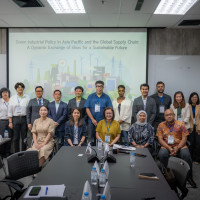
The CLACSO Forum “Climate, energy and industrial policy in the Global South: critical debates and alternatives” brought together ministers, researchers and activists in Bogotá on 9 June to discuss openly the structural barriers and transformative alternatives for green industrial policy. Organised by the Transnational Institute (TNI) and the CLACSO Working Group on Energy and Sustainable Development (CLACSO), the meeting sought to move from diagnosis to the design of a common agenda for the Global South.
Article by


Context and relevance of the Forum
The climate crisis and geopolitical reconfiguration are forcing us to rethink the development models of the 21st century. The energy transition is not merely a technical challenge: it is an open contest to determine the future of industrial policy and to achieve economic sovereignty. Within this framework, the Forum set out to articulate analyses and proposals from the Global South.
With two open panels, the event sought to lay the foundations for a permanent space for TNI–CLACSO cooperation. The diversity of participants, ranging from ministers to trade unionists, academics and activists from Latin America, Africa and Asia, turned the Forum into a living laboratory of ideas for a fair and inclusive green industrial policy.
Panel 1 “Green industrial policy in the Global South: structural barriers and power asymmetries”
Moderated by Esteban Serrani (Argentina, CLACSO and National University of San Martín), the panel opened with a provocative question regarding the real possibilities of building a green industrial policy for Latin America under current financial and technological asymmetries. Building on this starting point, the discussion centred on the clash between global rhetoric on transition and the concrete constraints faced by the Global South: insufficient funding, technological dependence and unfavourable trade frameworks. The panellists highlighted the need to look beyond the dominant discourses, to build our own productive and technological capacities, and to coordinate South–South cooperation to challenge industrial and energy governance. Thus, a critical and proactive framework was outlined for to consider the energy transition and green industrial policy as part of a project of structural transformation and socio-environmental justice.
Quotes
“Our main focus is on introducing more clean energy into the system and gradually building technological capabilities within the value chain of sustainable energy sources.” Edwin Palma Egea, Minister of Mines and Energy, Colombia
“More than 75% of the solar industry is dominated by Chinese companies.” Ignacio Sabbatella, Energy and Development Working Group, CLACSO Argentina.
“Technological and financial asymmetries perpetuate forms of dependency.” Hamza Hamouchene, TNI, Algeria.
Presentations
- Ignacio Sabbatella (Argentina, CONICET/FLACSO; CLACSO) contextualised the renewed prominence of industrial policy on a global scale, noting that “we are seeing a renewed interest in industrial policy around the world… now with a green dimension, fundamentally linked to the fight against climate change”. He explained how the Paris Agreement accelerated policies on all fronts, including the energy transition, but emphasised that recent disruptive factors, such as the pandemic and the Russia-Ukraine war, “highlighted problems for core countries regarding supply chains for strategic and industrial goods”. He also argued that the key factor behind the resurgence of industrial policy is China, noting that “more than 75% of the solar industry is dominated by Chinese companies… much of the competition is taking place in the automotive and electric battery sectors”. With these points, he emphasised that industrial and technological geopolitics is now a central arena for understanding the tensions surrounding the energy transition and the role of the Global South within it.
- Antonio Botelho (Brazil, Cândido Mendes University) emphasised that “the return of industrial policy to centre stage predates China by a long way, dating back to the rapid industrialisation of Korea and Malaysia – that is, the Asian Tigers – which had already highlighted the need for developing countries to implement a new industrial policy”. With this statement, he invited us to look beyond the current narrative centred on China, highlighting that “within the framework of green industrialisation, China’s approach is leading the way, but there are still industrial sectors, such as offshore wind power, where other countries play a significant role”. In this regard, he proposed broadening the scope of perspectives on industrial policy beyond current geostrategic disputes, whilst also paying attention to emerging opportunities in cooperation between Japan and the European Union with Latin America. With these ideas, Botelho called for a rethinking of the global map of green industrialisation and for the identification of areas for strategic action for countries of the South.
- Edwin Palma Egea (Colombia, Minister of Mines and Energy) offered a perspective from public administration and governmental experience. He recalled how Donald Trump’s arrival “set back” the climate and energy debate, noting that “in recent months we have seen that immediately following the change of government in the United States, a policy was promoted to expand oil drilling and return to a fossil fuel economy”. In contrast, he defended Colombia’s approach and highlighted that “we have increased our clean energy mix – predominantly solar – tenfold”, also outlining plans to establish local solar panel manufacturing in three regions of the country. He emphasised: “we are convinced that the transition must also be accompanied by an industrialisation framework that generates green jobs”, in line with the ILO’s recommendations for guiding this process from a regional perspective. With this speech, Palma Egea highlighted the role of the state as a key player in building a green industrial framework, integrating the energy transition with objectives of development, employment and technological sovereignty.
- Oscar Ugarteche (Mexico, UNAM): highlighted China’s decisive role in the global energy transition, noting that “in China, over 50% of the new energy added to its electricity grid is now based on renewables… this will impact the price of coal and oil in the coming years, and presumably, will aid the global energy transition”. He explained that the United States “has become tied to an automotive industry that is already outdated, whereas the global market today is seeking sustainable vehicles”. For this reason, he highlighted that China has a strategic advantage for the future given its firm commitment to electric cars. He concluded that the geopolitical dispute is also an industrial and technological one, within the framework of which Latin America must “build a vision for the future to overcome its current dependent position within the international economy”. With these reflections, Ugarteche urged the development of proactive policies that would enable the region to move from a peripheral position to a leading role in the global green economy.
- Tatiana Roa Avendaño (Colombia, Deputy Minister for the Environment and Sustainable Development) emphasised that “this resurgence of green industrial policy is a dispute over meaning: whilst countries in the global North frame it as a response to a climate crisis, we see it as a multiple and systemic crisis”. With this statement, she underlined that, from a Latin American perspective, the energy transition cannot be understood merely as a technical problem but as an interconnected political, social and environmental challenge. She added that “the seas are becoming barren and the situation facing coral reefs is growing increasingly complex; whilst it is suggested that these consequences of climate change should be tackled with strictly technical solutions, we propose addressing the socio-environmental roots of the crisis to arrive at genuine solutions for our peoples”. With these words, Roa Avendaño called for a rethinking of the energy transition and green industrial policy from a holistic approach that prioritises the needs and rights of communities, going beyond merely technocratic solutions.
- Osama Diab (Belgium, KU Leuven University) emphasised that “the Global South is not merely a recipient of external industrial policies; it also produces its own knowledge and technologies”. In this vein, he highlighted the need to strengthen endogenous capacities to avoid dependency and the reproduction of inequalities. In his own words, “if we do not build local capacities and do not challenge technological governance, we end up reproducing colonial hierarchies”. With this statement, he emphasised that the technological issue is not neutral, but is permeated by power relations, and that challenging this terrain is key to moving towards a just and sovereign transition.
- Hamza Hamouchene (Algeria, TNI) introduced a postcolonial perspective to analyse the energy transition. He noted that “technological and financial asymmetries reproduce old forms of dependency”, and therefore argued for the need for South–South cooperation capable of breaking with extractivist patterns. In his speech, he criticised the discourse on the “green energy transition” promoted by the North, as — he warned — “it shifts costs and risks to the Global South”. Finally, he called for the urgent need to build an “alternative joint strategy that allows for the recovery of sovereignty over critical resources”. With these reflections, he emphasised that the energy transition is not a neutral process, but a terrain of geopolitical dispute in which the ability of countries in the South to define their own path is at stake.
Conclusions from Panel 1
Esteban Serrani emphasised that this first panel made it clear that green industrial policy is not merely a technical or sectoral issue, but a field of strategic contention where history, economics, geopolitics and social justice intersect. He noted that, from various academic, governmental and activist perspectives, it was emphasised that the energy transition cannot be considered in isolation from global value chains, technological and financial asymmetries, and the relations of dependency that still persist. He noted that China’s central role in the reconfiguration of the green industry was highlighted, but so too was the need to look beyond this narrative to identify opportunities, diversify alliances and build industrial sovereignty in the Global South. Similarly, he stressed the importance of states taking an active role in building productive capacities, green jobs and indigenous technologies, challenging technological governance from a South–South perspective and with a comprehensive socio-environmental approach. In conclusion, Serrani stated that this panel invites us to rethink green industrial policy not as a package of isolated measures, but as a political project linking energy transition, social justice and sovereignty for the peoples of the South.
Panel 2 – “Building alternatives: the role of the state and regional cooperation”
Moderated by Daniel Chávez (TNI, Uruguay–Netherlands), the panel moved from discussing the diagnosis to seeking proposals. Chávez highlighted the need to prioritise the positive aspects, viewing industrial policy not only as a risk but also as a major opportunity for countries in the Global South. The panel set out to explore, using concrete examples, how to democratise industrial policy and strengthen South–South cooperation. It served as a forum for the exchange of experiences, in which trade unions, ministries, academic networks and activists demonstrated that there are diverse pathways towards green industrialisation with social justice. The speakers agreed in emphasising that regional cooperation, state planning and the participation of social actors are essential conditions for breaking with extractivist patterns and building technological sovereignty. In this way, the panel outlined an action agenda aimed at transforming the energy transition into a concrete opportunity for inclusive development for the Global South.
Key contributions
- Fernanda Cardona (Uruguay, Minister of Industry, Energy and Industry) reviewed the decisive role played by public policies and state-owned enterprises in Uruguay’s energy transformation. She recounted how the referendum of the 1990s halted privatisations and enabled the consolidation of a cross-party consensus which, over the last fifteen years, has also driven a profound change in the electricity mix. She noted that “today we have many public enterprises, including a state monopoly on the transmission and distribution of electricity, which was able to plan and carry out the first energy transition”. She also emphasised that “the Uruguayan experience has demonstrated, with objective data, that public policies and public enterprises can also be efficient, increase productivity and generate profits”. With these reflections, Cardona highlighted that the Uruguayan case challenges preconceptions about the public sector and demonstrates its key role in green industrialisation with social inclusion.
- Lala Peñaranda (Colombia, Trade Unions for Energy Democracy TUED) presented the trade union network’s experience and its critical view of current management models. She warned that “public–private hybrids lead us down a dead-end path, and the left and the trade union movement must be far more proactive, far more creative and bold in their proposals for public ownership to drive the development of our industrial policies”. She recalled that in Colombia more than 500 state-owned enterprises were privatised in just eight years and, to highlight the political challenge this represents, asked: “Can you imagine what it would be like if Petro’s administration tried to nationalise one?”. With these remarks, Peñaranda emphasised the need to revive the debate on public ownership and to build a trade union movement that is more active in shaping industrial and energy policies.
- Carlos Cabrera (Mexico, Oxford–Mexico Co-Lab) analysed the political shift currently taking place across Latin America regarding industrial and energy policy. He noted that “on the continent, the pendulum is already swinging back, and we need to think about where we are heading, how we rethink industrial policies, and in this regard, the state must set conditions”. He explained that planning must align green sectors with social development and stressed: “We cannot implement a European-style Green Deal, but we can plan and coordinate local actors.” Finally, he emphasised the importance of the state taking a leading role in articulating energy transition strategies that not only reduce emissions but also generate employment, technology and productive capacities in the region.
- Thea Riofrancos (United States, Climate and Community Institute) argued that “you cannot change the economy or achieve economic sovereignty in four or five years”. In her speech, she highlighted that “we need a long-term, transformative mobilisation spanning many years and involving diverse social sectors, in which farmers, indigenous peoples and material beneficiaries become protagonists”. Rather than listing specific policies, she invited a rethinking of the political and social foundations of the energy transition: she proposed conceiving of the state “not as a monolith but as a terrain of tensions” and called for “expanding democracy and long-term cycles” to sustain transition policies over time. Finally, he emphasised that a just and sovereign transition requires not only technical plans, but also enduring social movements, new forms of participation and an institutional framework capable of sustaining processes of structural transformation.
- Bank Ngamarunchot (Thailand, King Mongkut’s University of Technology Thonburi) highlighted Asia’s experience of productive integration and technology transfer. He argued that “regional cooperation in Asia has enabled the sharing of clean technologies and the creation of resilient value chains”. Building on this example, he explained the role played by technological universities in Thailand in local capacity building, applied research and collaboration with industry. Ultimately, rather than offering a diagnosis, Ngamarunchot presented an invitation: to adapt this model for Latin America, seeking to strengthen innovation and South–South cooperation around the energy transition and green industrialisation, in order to generate an endogenous base of knowledge and technology.
- Donna Andrews (South Africa, EthicsLab – University of Cape Town) brought the gender and care dimensions into the debate on the energy transition. She argued that “the energy transition cannot be separated from gender justice or the recognition of care work” and explained how women and communities in the Global South bear the social costs of transition policies most heavily. Building on this analysis, she called for the inclusion of equity criteria in green industrial policies, both in institutional design and in the distribution of resources and benefits. Through her contribution, she broadened the scope of the debate by emphasising that there can be no just transition without mainstreaming the gender perspective and without recognising care work as a central component of social and economic sustainability.
- Tin Hinane El Kadi (Algeria, Oxford University) placed the global rules governing the energy transition and green industrialisation at the centre of the debate. She warned that “without mechanisms for technology transfer and flexible intellectual property rights, green industrialisation reproduces colonial hierarchies”. She also raised the need to build technological sovereignty and critically review the international trade and finance rules that currently constrain countries in the Global South. In this regard, she emphasised that ecological transformation will be neither just nor emancipatory unless the intellectual property regime and the mechanisms that determine who accesses technology, under what conditions and with what degree of productive autonomy, are simultaneously challenged.
- Marco Antonio Rocha (Brazil, State University of Campinas) shifted the discussion to the financial sphere. He noted that “we need our own financial instruments so as not to depend on flows from the North and to be able to direct investment towards strategic sectors”. Based on this assessment, he proposed strengthening robust regional development banks and promoting the use of local currencies to finance the energy and productive transition. He also emphasised that without its own financial architecture, the Global South will continue to be constrained by the capital cycles of the North, and that moving towards technological and productive sovereignty also requires sovereignty over sources and mechanisms of financing.
Conclusions from Panel 2
Daniel Chávez concluded by highlighting that the presentations in the second panel confirm that the energy transition and green industrial policy are not merely a technological challenge, but a deeply political arena in which the sovereignty of Southern countries is at stake. He emphasised that the presentations had shown concrete ways to link public ownership of companies, state planning and international cooperation, and that the experience of trade unions, universities, ministries and social organisations provides concrete insights into democratising industrial policy and strengthening South–South cooperation. Chávez warned that without regional coordination and new financial institutions, the energy transition will remain in the hands of the global market, deepening inequality gaps and old dependencies. At the same time, he highlighted that there are alternatives: building our own financial instruments, challenging intellectual property rules, mainstreaming the gender perspective, and recognising care work as part of social sustainability. In summary, he concluded that this panel calls for a shift from diagnosis to collective action so that green industrialisation becomes a project of social justice and technological sovereignty for the peoples of the Global South.
Emerging debates
- An active and planning state: moving from scattered and inconsistent policies to long-term strategies with clear industrial goals, participatory governance and coordination with trade unions, universities and social organisations.
- Strategic public enterprises: strengthening their role as anchors of development and preventing the green transition from becoming privatised and market-driven.
- Technological and digital sovereignty: building local capacity, relaxing intellectual property restrictions and promoting technology transfer in renewable energy, storage and smart grids.
- Alternative financing: mobilising regional and national resources to reduce dependence on the North; without financial sovereignty, there is no technological sovereignty.
- Environmental and social justice: integrate the energy transition into agendas for green jobs, land rights, gender equality, care work and the democratisation of energy.
- South–South cooperation and inclusive governance: coordinate trade union networks, universities, development banks and social organisations to share technology, design value chains, coordinate standards and define priorities through joint councils; diversify international alliances to expand the Global South’s scope for action.
Agenda for possible next steps
- Consolidate and expand the TNI–CLACSO alliance on green industrial policy: coordinate research, training and action across multiple regions, including the organisation of annual travelling forums to monitor progress on key issues.
- Establish a South–South Observatory on Energy Transition and Green Industrialisation, with hubs in Latin America, Africa and Asia, to monitor policies, investments and value chains and generate comparative data.
- Promote a Regional Fund for Innovation and Technology Transfer to finance learning networks and joint projects between universities, trade unions, public enterprises and social organisations.
- Design training programmes for trade unionists, social organisations and activists on energy and industrial planning, with an emphasis on social justice, a just transition and a gender perspective.
- Launch the book series “Green Industrial Policy in the Global South” in 2026 in English and Spanish, with chapters on financing, technological sovereignty, gender justice and South–South cooperation.
- Incorporate new emerging themes: water and the energy transition, digital energy governance, critical minerals and recycling, cybersecurity and smart grids, as well as geopolitical diversification and models of inclusive governance.
Credits
More like this
-
Green Industrial Policy and the Global South – Challenges and Opportunities in the BRICS Countries Workshop reportPublication date:
-
Green Industrial Policy in Asia Pacific and the Global Supply Chain A Dynamic Exchange of Ideas for a Sustainable FuturePublication date: