
Trade and Investment Researching trade in a changing world
Analysis of global trade, investment and extraction, supporting movements advancing democratic and sustainable economic alternatives.
In a time of deepening geopolitical tensions, climate breakdown, and mounting pressure on multilateralism, trade and investment rules are being reshaped in ways that risk further concentrating corporate power and accelerating extraction. TNI’s Trade and Investment work produces critical research, reports, and timely analysis to expose the impacts of these policies, inform public debate, and support movements and policy-makers working towards democratic, equitable, and sustainable alternatives.

Photo credit: mana5280 / Unsplash
What we work on
Research and analysis on key issues shaping trade and investment today.


Trade and investment rules shape how economies develop, how resources are used, and how governments can respond to social and environmental challenges. In a rapidly changing global landscape, marked by geopolitical tensions, climate crisis, deepening inequality, and growing pressure on multilateral institutions, these rules are being renegotiated and contested.
TNI’s Trade and Investment work examines these dynamics, with a particular focus on the implications for countries and communities in the Global South and on the global power relations that shape trade and investment policy. Through research, analysis, and engagement with civil society networks, the programme contributes to debates on fairer and more sustainable economic alternatives.
Research focus
TNI researches and analyses the social, economic, and environmental impacts of trade and investment agreements, bilateral investment treaties, and emerging economic governance frameworks. We examine how these policies affect governments’ ability to regulate, deliver public services, respond to the climate crisis, and pursue equitable development.
A growing area of our work focuses on trade and investment policies linked to critical raw materials, mining, and extraction. This includes analysing how trade agreements, investment rules, and industrial strategies shape resource governance, energy transitions, and the impacts on communities and ecosystems, particularly in resource-rich countries in the Global South.
Our work focuses on two main areas, alongside cross-cutting research on extraction, critical raw materials, and industrial policy.
Free Trade Agreements (FTAs)
TNI’s work on Free Trade Agreements critically analyses global and regional trade dynamics, examining their impact on human rights, labour, public services, food systems, and the environment.
As trade policy is increasingly shaped by geopolitical competition, supply chain restructuring, and industrial policy shifts, including competition over critical raw materials, TNI investigates who benefits from these frameworks, how they affect policy space, and what alternatives are emerging.
Investment protection and dispute settlement (ISDS and ICS)
Investment protection mechanisms allow foreign investors to challenge government measures, including public interest regulation, through international arbitration systems. The best-known system is Investor–State Dispute Settlement (ISDS), with newer models such as the Investment Court System (ICS) now included in many agreements.
TNI has produced extensive research showing how these mechanisms can constrain democratic decision-making, create significant financial risks for governments, and shape policy choices in areas such as energy, infrastructure, and natural resources. Our work also examines ongoing efforts by governments and international bodies to reform or withdraw from these systems.
Learn more
Further information on our activities, research, and partnerships, including our reports on trade, extraction, and critical raw materials, can be found in our annual reports and publications.
Additional documentation and analysis on investment disputes in Latin America is available through the ISDS América Latina website.
Start here: Key readings on trade and investment
A selection of reports and briefings introducing key issues in trade and investment.
-
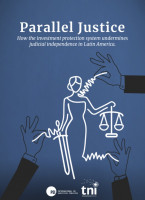
Parallel Justice How the investment protection system undermines judicial independence in Latin AmericaPublication date:
-
Red Carpet Courts 10 stories of how the rich and powerful hijacked justicePublication date:

-
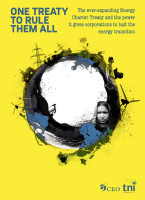
One Treaty to rule them all The ever-expanding Energy Charter Treaty and the power it gives corporations to halt the energy transitionPublication date:
-
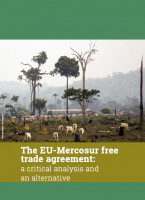
The EU-Mercosur free trade agreement A critical analysis and an alternativePublication date:
-
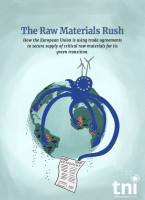
The Raw Materials Rush How the European Union is using trade agreements to secure supply of critical raw materials for its green transitionPublication date:


How we work
TNI combines research, knowledge sharing, and collaboration with civil society organisations and networks across regions.
Research and analysis
We produce evidence-based research on trade and investment agreements, the political economy of extraction and supply chains, and the changing global trade landscape. Our work takes a comparative and transnational perspective, drawing connections across regions.
Popular education and knowledge sharing
We translate complex policy debates into accessible materials, including reports, primers, briefings, and multimedia resources, and organise workshops, seminars, and public events. We prioritise producing materials in multiple languages to reach diverse audiences, particularly in the Global South.
Network building and movement support
We collaborate with regional and bi-regional networks, civil society coalitions, and social movements, facilitating exchange, strengthening alliances, and supporting shared strategies.
Campaigns and advocacy
Together with partners, we support initiatives that promote fairer and more sustainable trade and investment policies and contribute research and analysis to policy debates at national, regional, and international levels.
Communication and media outreach
We engage journalists, researchers, and public commentators to bring critical perspectives on trade and investment issues into public debate.
Media inquiries
TNI researchers are available for interviews, background briefings, and expert commentary on global trade and investment issues, including trade agreements, investment policy, critical raw materials and extraction, industrial policy, and alternative economic models.
For media inquiries, please contact: press[at]tni.org
Research team
Researchers and associates working on trade, investment, extraction, and economic governance.
-
Lucía Bárcena Project Coordinator

-
Luciana Ghiotto Associate Researcher

-
Rachmi Hertanti Researcher

-
Bettina Müller Researcher

-
Sofia Scasserra Researcher



The Problem with Global Trade
Investment Protection, in conversation with Luciana Ghiotto
Many poor countries sign trade agreements with the desperate hope of attracting investment from their wealthy counterparts. However, these agreements, or treaties, tend to have some very problematic clauses, which often lead to trouble down the road. Investors have used these treaties to sue countries for any actions, such as changes in policy, that they perceive to be a threat to their projected profits. And they don’t sue in the national courts either, but in a special parallel system that seems to always favour the foreign investors. Countries have had to use billions in taxpayer money, to pay these investors, at the expense of their own development.
