Green Banking or Public Banks? The Choice between Profit-driven and Public-driven approaches to Climate Finance
As climate finance falls short, this study challenges private-led models and explores public banks as engines of a just green transition. Examining US Green Banks, it reveals both their promise and limits, arguing democratic public–public partnerships are essential for decarbonization.

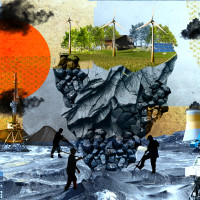
Illustration by Fourate Chahal El Rekaby
Introduction
To avoid climate catastrophe, states across the globe must quickly transform their economies towards sustainable ecological relations. We are currently failing to meet the goal of limiting average global temperature increases to 1.5°C above preindustrial levels, established in the 2015 Paris Agreement (Christophers 2024, xvi). Achieving this target, and even the less ambitious 2°C target, requires extensive investment in building, retrofitting and repairing infrastructure to support a green and just transition. This raises a central question for both developed and developing countries: how are we going to finance it?
Multilateral institutions such as the World Bank, the International Monetary Fund and the United Nations have all emphasized the need for climate-aligned development finance. Yet to date, they have failed to mobilize sufficient low-cost, long-term and stable financing to meet the needs of the green transition (Marois et al. 2024; Gabor 2025). A key part of the problem is the prevailing emphasis on leveraging private sector capital and attempting to deliver climate goals with profit-driven models, such as through public–private partnerships (PPPs). PPPs are agreements between public and private sector actors to deliver public goods, and while done in the supposed name of fiscal responsibility, they force the public sector to bear the costs and risks associated with public projects, while the private sector often enjoys the profit.
Fortunately, there is an alternative. Public banks can provide financing for our green transition needs. Public banks are financial institutions in the public sector which can be run in the public interest to meet policy objectives (Marois 2021). To create a livable and equitable future, we must align public financial institutions with the imperatives of pro-public climate change mitigation and adaptation. This can be done through public–public partnerships (PuPs): cooperative frameworks that support democratic governance and coordination across public institutions, including public banks at all scales (Marois et al. 2024; Steinfort et al. 2024).
Nonetheless, while there are potentially transformative models out there, we continue to see projects that put profits over people. This study examines a climate-aligned development finance model in the United States called Green Banks. It reveals that Green Banks despite using the rhetoric of mobilizing private finance, make significant gains in forwarding local level green transitions. Rather than focusing on large scale projects, they operate on a smaller scale and focus that ultimately allows them to more directly service citizens and small businesses.
It reveals that while the model contains interesting practices, states must go much further to bring about the climate transition. Despite their climate mandates, most Green Bank funds prioritize attracting private investors rather than approaching climate infrastructure investments as a public good that can involve and benefit working class communities. We conclude that a democratically controlled, public financing model can best deliver an equitable and effective climate aligned transition.
The first section describes what public banks are and their relationships to climate-aligned development finance. The second section briefly discusses the Public Futures project which seeks to capture the growing influence of public infrastructure projects. The third section provides an overview of Green Banks in the United States, briefly outlining the model and reviewing four case studies. The study ends by concluding that a model based on public–public partnerships is necessary to fully tackle the climate crisis in socially just ways.
Related

Public development banks and climate-aligned development finance
There are over 530 public development banks (PDBs) in over 150 countries worldwide. Together they have $23 trillion in assets and finance around 10–12 per cent of global investment (Güngen and Marois 2025).
What exactly are PDBs and what are their relationships to climate-aligned finance? Public banks are financial institutions that are publicly owned or governed, or have a public purpose mandate. PDBs differ from most public commercial and universal banks in that they often operate in accordance with governmental policy objectives. Unlike most commercial banks, public and private, PDBs tend to be driven by mandates rather than profit. They operate at national, sub-national and multilateral levels.
The scale of projects that PDBs invest in varies widely. Bigger public development banks with large-scale projects are typically the focus of policy-makers. Governments often prefer to invest in ‘transformative’ infrastructure projects, such as roads, bridges, dams, water and sewage systems, canals, railways, subways, harbors, airports, energy systems (in particular renewables), energy grids, communications, and oil and gas (Lewin et al. 2022). However, there are also PDBs that support municipalities, other public institutions, and private sector actors such as small and medium-sized enterprises and cooperatives, as well as large corporations (Güngen and Marois 2025).
Despite their potential, public banks are not inherently progressive them (Marois 2022). While public banks can and do pursue progressive policy goals, they also support private sector profit maximization. What public banks do depends on what society commands of them. Therefore, it’s better to see public banks as dynamic, contested, and adaptable institutions, as their function within the wider economy depends on the social forces shaping the economic development agenda (Marois 2021, 10).
This study looks into the relation between public development banks and climate-aligned finance. Climate financing refers to the monetary resources needed to transition our economies away from carbon-emitting activities. The globally agreed goal, established by the 2015 Paris Agreement, is to limit the increase in average global temperatures to 1.5°C above pre-industrial levels (Christophers 2024, xvi). Currently, the predominant approach to acquiring the monetary resources needed to achieve this involves private sector, profit-driven and market-oriented ‘blended finance’ practices.
Blended finance refers to using a ‘blend’ of public and private sector capital for development investments (OECD 2021). ‘Leveraging’ refers to using public finance to mobilize a larger amount of private finance for investment (Griffiths 2012). The story goes that leveraging X dollars of public money will lead to Y dollars of private money being attracted. The ratio of public to private dollars should be greater than 1:1, with advocates often promising much higher ratios. However, this approach blends not just public and private money, but also capacities, responsibilities and risks.
Blended finance is embedded in the framework of public–private partnerships (PPPs): agreements between government entities and private actors to deliver public goods and/or services. The government’s public policy goals are meant to align with the private partners’ objective to make a profit. The effectiveness of the partnership is based on the transfer of sufficient risk from the public partner to the private partner to ensure expected levels of profitability (Whiteside 2019, 4). Private firms which invest in PPPs make money either through being involved in the provision of the public service, or as owners of debt in the projects. The PPP model has been a dominant strategy in development policies for over a decade. It was at the heart of the World Bank’s and IMF’s 2015 ‘Billions to Trillions’ Agenda.
If the PPP model sounds too good to be true, it’s because it is. The attempt to leverage large amounts of private capital with small amounts of public finance has largely been a failure. It’s not from a lack of trying (Cingolani 2022; Summers and Singh 2024). In 2021 it was shown that the leveraging has been in reverse, with the public sector pouring in 4 dollars for every 1 dollar of private money (Steinfort et al. 2024, 1). The public sector has poured billions into PPP projects and market-oriented approaches, but the investment deficit remains. It is more aptly called the ‘Billions for Millions’ debacle. It is clear that the private-sector-driven and profit-oriented model is failing as the gap between what the world needs to reach various development goals and what is being invested continues to widen.
The Climate Policy Initiative (a research think tank that advocates for blended approaches) states that in order to achieve the 2015 Paris Agreement objects of reaching net-zero carbon emissions by 2050, annual climate financial flows must increase by at least fivefold. Specifically, $7.5 trillion per year of investment is needed between now and 2030 and over $8.8 trillion per year from 2031 to 2050, in the energy, transportation, building and infrastructure, industry, and agriculture, forestry, and other land use sectors (Baudry and Strinati 2025, 1). The United Nations’ Financing for Sustainable Development Report 2024 estimates the SDG financing and investment gap is between $2.5 trillion and $4 trillion annually (United Nations 2024). Multilateral institutions continue to disproportionately favour PPP/blended finance approaches.
The discourse has shifted markedly over the past decade. In 2015, the UN and World Bank spoke optimistically of transforming ‘billions to trillions’, yet today the World Bank’s president acknowledges that the phrase was ‘unrealistic’, and its chief economist referred to it as ‘a fantasy’ (The Economist 2025). States in Africa, Latin America and Asia are seeing little of the trillions they were promised in private sector investment. Despite this, the faith in the superiority of markets has not been shaken. If discussions at the UN’s July 2025 Financing for Development conference in Seville are any indication, structural changes to development financing are not likely to happen any time soon (Gabor 2025). That said, the 2025 Sevilla Commitment recognizes the need for accelerated public–public collaborations globally, and notably among public development banks (United Nations 2025).
The alternative: Public–Public Partnerships
The failures of the PPP and blended finance model are an opportunity to leverage the power of public banks and public institutions and infrastructure. And there’s already a model that acknowledges these widespread practices. Public–public partnerships (PuPs) are forms of cooperation within and between public sector institutions seeking to collaboratively achieve policy goals. They include cooperation between groups such as local, regional, provincial and/or state governments, school boards, NGOs, unions, community groups, cooperatives, communes, professional organizations, and Indigenous governments. The potential combinations are wide and varied. While decades of privatization and liberalization have eroded government capacity to steer the economy, PuPs are attempting to rebuild this capacity. This is done through a range of mechanisms, including jointly building capacity, sharing skills, and developing expertise. The model is based on collective solidarity between public institutions and the citizens who access their services. Collaboration, not competition, is the key. These forms of cooperation have the potential to redirect financing and bring about social transformation.
PuPs are powerful tools for achieving the green transition without relying on satisfying private investors’ profit motives. Rather than merely funding private profiteering, when properly resourced, governments are able to plan, manage and execute the transition accountably and according to public policy. They can incorporate clear mandates for the delivery of services as a public good, or in line with specific climate targets, into project or service design. PUPs open the door for more collective forms of governance of our economy (Steinfort et al. 2024). Combined with public–community collaboration, they can make sure that climate goals are delivered in people’s interest.
While less well known than PPPs, there are PuPs in a variety of sectors, including 130 globally in the field of water management. Successful cases of PuPs include peer learning partnerships and associations to govern public utilities. For example, in Cambodia in 2007 the Phnom Penh Water Supply Authority, which supplies water across the nation’s capital entered into a water-operator partnership with Binh Duong Water Supply Sewerage Environment Company, a Vietnamese public water company (Steinfort et al. 2024, 4). And in 2012, the Uruguayan State Water Department and the Municipal Department of Water and Sewerage of Porto Alegre, Brazil, began sharing technical expertise. Both providers committed to incorporating human rights principles into their operations to secure rights to water and sanitation in their respective regions (Ibid, 4). There are many more such pragmatic public-to-public models, which offer promising alternatives to the current dominant pro-private fallacy.
Mapping the Impact of Public Development Banks: The Public Futures project
Given the escalating economic crises and the challenge of financing just transitions, alternative institutions such as public banks are rising in popularity. Various projects are seeking to better understand and document this phenomenon.
The Finance in Common database, established in 2000, is a collection of globally active public development banks (PDBs Database 2025). To find out the extent to which public banks included in the database deliver on a public purpose, the Transnational Institute and the Public Banking Project reviewed 59 institutions established since 2000. By looking at their mandates, we found that many public financial institutions remain concerned with promoting market-oriented economic growth, developing private markets, and even enabling the privatization of public goods and services. This most likely reflects multilateral and national policy frameworks. Yet it is almost certain that this is not all, or perhaps even most, of what public developments banks do in practice. PDBs globally are very active in supporting public infrastructure, municipalities, public services, and other public banks (Marois 2021; Marois et al. 2024). We were unable to confirm, due to limited resources, whether their committed projects are in fact PPPs or some other form of investment, including PuPS.
We assessed which of the institutions we reviewed fit the criteria for inclusion in the Public Futures project, a collaborative database hosted by the University of Glasgow, Transnational Institute and Public Services International. The Public Futures project collects cases where formerly privatized services and infrastructure are brought back into public ownership and cases where new public services and infrastructure are established under public ownership. It distinguishes between services being provided by authorities and administrations at the municipal, regional, or national level, and services that are run by community organizations. Since 2007, our aim has been to build a body of knowledge on public service provision to strengthen the global network of practitioners, users, organizations, and researchers. As of August 2025, the database features 1,770 reclaimed and new public services across 78 countries, including 55 public–public partnerships, the majority being municipalities partnering to deliver an essential public service. Moving forward, the Public Futures partners are looking to include PDBs collaborating to finance publicly-owned services and infrastructure. This study should be understood as an initial part of this endeavour.
We have seen a notable increase in public financial institutions being created whose main objective is to mitigate or adapt to climate change. Whether they are publicly owned or just publicly funded, public financial institutions and banks are growing in prominence and relevance to the political economy of climate-aligned development transitions. The public financial institutions known as ‘Green Banks’ in the United States are a prime example of this and are the focus of the remainder of this study.
US Green Bank Case Studies
Introduction to US Green Banks:
The following section presents case studies of Green Banks in the United States. Green Banks are defined by the US Environmental Protection Agency as ‘public, quasi-public, or nonprofit financing entities that leverage public and private capital to pursue goals for clean energy projects that reduce emissions’ (US EPA 2025). A Green Bank advocacy group the Coalition for Green Capital (CGC) emphasizes that they are ‘mission-driven institutions that use innovative financing to accelerate the transition to clean energy and fight climate change’ (Coalition for Green Capital n.d.). According to the CGC there are about 41 Green Banks across the country. Although they are called ‘banks’, they are not depository institutions, meaning they do not create money or hold deposits for clients. Nor are they public development banks in the usual sense, which typically source capital from financial markets to lend on. They would more accurately be called ‘funds’, as they have a fixed amount of initial capital from which they engage in lending. While their mission is to promote green energy infrastructure, they are also profit-seeking institutions, meaning they seek some surplus from their lending activities but do not seek to maximize their profits like a typical private business.
This study introduces ten select Green Bank examples (see Table 1), and focuses on four case studies. The ten examples come from across the continental United States, including the West, Northeast, Midwest and South. All ten were started within the last 16 years, with the oldest having been created in 2009 and the newest in 2018. Seven have a state-wide mandate; one is county/municipality based; one is city based; and one is inter-state (New York State). Eight institutions are nonprofits. There is only one fully publicly run Green Bank and another quasi-public example.
Table 1: Green Banks
| Green Bank | Location | Established | Level | Type | Initial Capital |
| Colorado Clean Energy Fund | Colorado | 2018 | State | Nonprofit | $30 million |
| DC Green Bank | Washington, DC | 2018 | City | Nonprofit | $7 million/year for 5 years ($35 million total) |
| Nevada Clean Energy Fund | Nevada | 2017 | State | Nonprofit | $50 million grant in public funds |
| Montgomery County Green Bank | Montgomery County, Maryland | 2015 | County | Nonprofit | $14 million (initial); plus 10% annual fuel-energy tax revenue |
| New York Green Bank | New York State | 2014 | State | Public | $165.6 million |
| Solar Energy Loan Fund (SELF) | St. Lucie County, Florida | 2009 | County | Nonprofit | $2.9 million seed from Department of Energy (ARRA grant)* |
| NYC Energy Efficiency Corporation (NYCEEC) | New York City | 2010 | Inter-state | Nonprofit | $34.4 million Department of Energy (ARRA grant)* |
| Connecticut Green Bank | Connecticut | 2011 | State | Quasi-Public | --- |
| Michigan Saves | Michigan | 2009 | State | Nonprofit | $6.5 million Department of Energy ARRA grant* |
| Delaware Sustainable Energy Utility (DESEU) | Delaware | 2009 | State | Nonprofit | $72.5 million raised via tax-exempt bonds (2011) |
*The American Recovery and Reinvestment Act (ARRA) of 2009 directs funding from the Department of Energy to states to invest in renewable energy and energy efficiency.
Green Banks are the most common green public financial institution in the United States. However, the US public banking movement predates the Green Bank phenomenon (see the Public Banking Institute). The roots of public banks in the US extend back to the eighteenth century and colonial-settler ‘Landbanks’ (Marois 2021, 89); advocacy for public banking resurfaced during the Occupy Wall Street movement in 2011. Today, organizations such as the Public Banking Institute play a central role in advancing this agenda by producing research and advocating for the creation of public banks. Advocates frequently highlight the Bank of North Dakota, the US’s only state-owned and state-operated public financial institution, which has been in continuous operation since 1919 and is widely regarded as a model of resilience and success (Brown 2025). State, regional, and local activist groups such as the California Public Banking Alliance have worked to establish new public banks. Their efforts contributed to the passage of the California Public Banking Act in 2019, which authorized local governments to create public banks. However, no new public banks have yet been established through this legislation (Paul and Cumbers 2023). Federal legislation in 2023, the Public Banking Act (H.R. 6775) sponsored by Democratic Representatives Rashida Tlaib and Alexandria Ocasio-Cortez, sought to overcome legal barriers but the Act was not passed. Green Banks thus remain a predominant model of alternative public financing in the country.
From the ten examples listed in Table 1, we chose the four with the most socially progressive credentials for further research: the Colorado Clean Energy Fund, Nevada Clean Energy Fund, Montgomery County Green Bank, and New York City Energy Efficiency Corporation. To compile case studies on these four banks, we sourced data from publicly available information including their websites, financial reports, annual reports and news articles. The case studies offer brief reviews of the banks’ programs, the financial services they provide to households and the commercial sector, the green activities they promote, and the stakeholders they engage with. Table 2 contains more detail.
All four Green Banks use pro-market PPP language and strategy to justify their financing model, albeit to varying degrees. We found, however, that there are pro-public lessons to be learned from these banks and the projects they finance. Following the case studies, we draw conclusions about the model and how it can be built on to create more pro-public public banks and forms of public–public partnerships.
Green Bank Case Studies
Nevada Clean Energy FundThe Nevada Clean Energy Fund (NCEF) is a nonprofit organization established in 2017 with an initial $50 million in public grants (Coalition for Green Capital, ‘Nevada Clean Energy Fund’, n.d.). It focuses on providing funding to advance projects retrofitting or constructing new green infrastructure. NCEF offers a range of household-oriented programs that support energy efficiency upgrades and renewable energy installations. These include the Residential Energy Upgrade (RE-UP) and Nevada Solar for All programs. The fund provides unsecured low-rate loans, forgivable loans, rebates, and both financial and technical assistance. These are targeted at both single and multi-family homes. Public financing to households is significant but usually aggregated together as private finance alongside all other types of private and corporate business clients in PPP accounts. It may be better disaggregated and identified as purely household financing, and as a unique form of public–household project. NCEF also manages several commercial-oriented programs, such as the Clean Energy Financing Program, which provides low-cost financing of up to $1 million to nonprofits, developers and commercial property owners for major retrofits and renewable energy systems in new or existing buildings. Through its Property Assessed Clean Energy (PACE) program, commercial owners and tenants can access low-cost, long-term financing for upgrades and repay the loans through property tax assessments. This means borrowers have a consolidated bill to pay both their service and loan costs. NCEF also works with contractors, not only providing them with financing options but to connect them with customers through a certified network. Although not a program organized by the fund, it’s interesting to note the NCEF promotes the Nevada State Infrastructure Bank as another source of low-cost financing for local governments, tribal governments, and state agencies. Several examples can be highlighted to illustrate the fund’s investments. In its 2024 annual report, NCEF announced the launch of a Clean School Bus program, which included an $8.7 million investment to replace 25 diesel buses with electric ones. Through the RE-UP program, 31 loans were closed, more than $672,000 in financing was deployed, and 36 contractors were recruited to support clean energy efficiency and upgrades. Seven Nevada Indigenous tribes partnered with NCEF to access $3.4 million in federal funds for energy improvements and technical assistance. Over 50 per cent of financed projects were located in low-income, underserved, or tribal communities. In 2024, NCEF invested just under $1 million to support the installation of solar energy infrastructure at a new affordable housing facility in Reno, operated by The Empowerment Center, a nonprofit organization providing transitional housing for women in recovery. This project ensures that the facility is powered by clean energy while lowering utility costs, allowing more resources to be directed toward essential services. NCEF has a unique emphasis on community participation through community councils. Through its Nevada Solar for All Community Councils programs, these councils, composed of diverse stakeholder groups and supported by NCEF staff, provide feedback to shape solar initiatives tailored to local needs. Membership extends beyond the private business sector to include councils focused on:
The practice of using community councils, in particular ones focused on such topics, makes the NCEF stand out relative to other funds. Although all funds pay lip service to community engagement, the NCEF was the only one we found to use this more comprehensive council mechanism. Notably, it was the only institution we examined that acknowledged the Indigenous peoples of Turtle Island throughout its programs. |
Montgomery County Green BankThe Montgomery County Green Bank (MCGB) is a nonprofit organization established through county legislation in 2015 and formally designated in 2016, with $14 million in initial funding (Coalition for Green Capital, ‘Montgomery County Green Bank’, n.d.). It was preceded by the Solar and Energy Loan Fund (SELF), founded as a county initiative in St. Lucie County, Florida, in 2009 and incorporated as a nonprofit in 2010. Both institutions are included in this study. Unlike other cases where banks received only an initial capitalization, the Montgomery County Council passed legislation allocating 10 per cent of fuel-energy tax revenue to the MCGB, providing a steady annual stream of $18–22 million in capital. This model not only ensures consistent funding but also redirects revenue from fossil fuel consumption toward supporting the green transition. MCGB offers a wide range of household-oriented programs, including Energy Efficiency Financing, Renewable Energy Finance, and Access Solar Finance. These support energy efficiency improvements such as insulation, heating, ventilation, and air conditioning (HVAC) upgrades, as well as installing renewable energy technologies like solar panels, geothermal systems and energy storage for electric vehicles. Financing options include 100 per cent upfront coverage, low-interest loans, and rent-to-own models, with no out-of-pocket costs for installation or maintenance. Households may also choose on-bill repayment, which allows them to make financing payments directly through their utility bills, similar to the commercial PACE model. Programs can be targeted at multi-family units as well. Commercial-oriented programs include Tailored Structure Finance, Commercial Property Assessed Clean Energy (C-PACE), Affordable Multi-Family Housing EV Charging Program, Small Business Energy Savings Solutions (SBESS) and Power Purchase Agreements for renewable energy. These support efficiency upgrades, renewable installations including EV chargers, and broader retrofitting projects. These are targeted at small to medium-sized businesses, nonprofit organizations, developers and building owners. Commercial clients benefit from low-interest loans, zero out-of-pocket costs for system installations, access to upfront financing, and repayment mechanisms that can be tied to property tax bills. Examples can be pulled out to illustrate the fund’s investments. The 2024 annual report highlights several investments and impacts. MCGB reported the installation of 3,120 solar arrays, service to 1,183 low- and moderate-income households, and $63 million invested in disadvantaged communities. Notable projects financed include the installation of 1.13 MW of solar capacity at the Gateway Apartments complex, supported by a $2.1 million loan that covered 70 per cent of project costs. Similarly, a $2.08 million loan financed the future installation of 1.15 MW of solar capacity across five properties managed by Victory Housing, a nonprofit providing affordable housing and assisted living for seniors and families. MCGB also invested more than $5 million in private school energy efficiency improvements. For example, the Washington Episcopal School in Bethesda, Maryland, received a loan of over $500,000 for the installation of a 273.8 kW solar array. |
Colorado Clean Energy FundThe Colorado Clean Energy Fund (CCEF) was established in 2018 by the state of Colorado as a nonprofit (Coalition for Green Capital, ‘Colorado Clean Energy Fund', n.d.). It was initially capitalized with $30 million in 2021 and claims to have mobilized more than $164 million of private investment in 2024. While the exact number is unclear, it’s evident that a lot of this money is going into households or small to medium-sized businesses. The household-oriented programs include the Residential Energy Upgrade Loan (RENU) and an on-bill repayment program which finances renewable energy installations and energy efficiency improvements, including solar, HVAC, battery systems, EV charging, insulation, windows and doors and other projects. These provide financial services such as no-money-down, below-market interest rates, and repayment via utility bills. CCEF say that they cooperate with credit unions to provide cheaper overall financing. Overall, while focusing on green activities, they contain much fewer household-oriented programs than NCEF and MCGB. CCEF;s main programs for the commercial sector are the Energy Improvement Loan and the Bridge to Incentive Loan programs. These provide financial services such as 15-year terms, fixed below-market interest rates, and loans of up to $1 million. They cover renewable energy installations, energy efficiency improvements, insulation, and other energy upgrades including solar PV, battery storage, HVAC upgrades including heat pump technologies, EV charging infrastructure, LED lighting and, according to CCEF, any initiative that leads to reduced utility costs, decreased greenhouse gas emissions, increased electrification and/or electrification readiness. Finally, CCEF also organizes a contractor network that connects skilled laborers to customers in need, as well as providing contractors with potential financing options as commercial clients. Examples can be highlighted to illustrate the fund’s investments. In their 2024 annual report, CCEF reports having provided over $14.1 million in financing for projects and installed 3.0 megawatts of solar. 69 per cent of the projects were solar-related and 31 per cent involved energy efficiency. For example, the fund invested $3,750,000 in a new private construction project for low-income households, the Rifle Apartments. The project will house 60 units and will have an all-electric and photovoltaic design, with solar panels integrated into the building; construction has already started. Historically, this community was very reliant on coal extraction and was affected by coal operations being decommissioned. This project could potentially provide lower-cost housing that is also more energy self-sufficient. An example of a smaller project is the Fitch Ranch Artisan Meat Co., a small business that received a $468,720 loan to implement a 151.2 kWp roof-mounted solar array system at its meat processing facility. The project has the potential to reduce the company’s gas bill by 40% and generate an estimated $177,600 a year in savings. |
New York City Energy Efficiency CorporationThe New York City Efficiency Corporation (NYCEEC) was established in 2010 and was the country’s first local level green public bank/fund (NYCEEC, n.d.). Its initial funding of $34.4 million came from grants from the City of New York and New York state government. Despite the name, its area of operation includes several states within the US Northeast and Mid-Atlantic. Unlike the other case studies, NYCEEC focuses primarily on the commercial sector. NYCEEC gives loans for energy efficiency upgrades, installations of renewables, heating, ventilation and air conditioning installations, and other energy-related services. It supports contractors, developers, building owners and partners with the New York City Department of Housing Preservation and Development. Programs for building owners include direct loans for upgrades, PACE loans, and predevelopment loans, all focused on providing green infrastructure. There’s also a multifamily express loan and incentive bridge loan which both provide potential funding to cooperatives and condominium associates for various green projects. Developers can access the acquisition loans, energy service agreements, and predevelopment loans, which all support the purchasing, developing or installing of green infrastructure. These programs typically provide a minimum of $200,000 to $500,000 dollars in financing and can cover anywhere from 80 to 100 per cent of the costs of a project. As of July 2025, the fund claims that 63 per cent of its projects focused on multifamily affordable housing, 29 per cent on commercial and industrial buildings, and 8% on market-rate housing. 29 per cent of their capital goes to energy efficiency projects, 17 per cent to solar PVs, 13 per cent to retrofit electrification, and 28 per cent to new construction electrification. There are multiple cases of pre-development financing being given for energy efficiency and retrofitting projects on multifamily apartment units, including in Brooklyn, Upper Manhattan, East Harlem and the Bronx. There are also many community solar projects geared towards providing community-wide energy in Queens, Upstate New York, Rhode Island and Staten Island. In 2020 the NYCEEC gave a $450,000 loan for the installation of solar panels by Sunlight General Capital on the roof of various houses of worship in low-income communities. They did so in partnership with a nonprofit called Groundswell Inc, which focuses on developing solar projects for underserved communities. Through a Power Purchase Agreement, NYCEEC signed an eight-year deal to provide energy to the community centres, which will reduce their costs and release resources for other purposes. |
Green Banks: Promising Lessons and Building Forward
The targets of financing by the Green Banks are mainly individual households, nonprofits, small and medium-sized businesses, building owners, and sometimes government agencies. Funds support a variety of energy generation, efficiency and storage projects. Most of the Green Banks provided low-cost financing, sometimes below market rates, often widened eligibility for loans including reducing credit requirements, and can finance a large proportion of project costs often with no upfront costs (see Table 2 for details). Two promising lessons can be drawn: first, the importance of local and smaller-scale projects and, second, the importance of low-cost financing availability.
First, the local and smaller scale focus of Green Banks can be very effective in providing financing directly to building owners, small to medium-sized businesses, developers, and households. At first glance, Green Banks seem to be a smaller-scale version of the mainstream PPP and blended finance practices which are prevalent in international organizations. Green Banks themselves use some of the same language of leveraging and attracting private finance. However, in practice they are qualitatively different from the mainstream models. The mainstream narratives around climate finance tend to focus on large-scale projects as being the solution to fighting climate change. Big investors want these projects to be PPPs to deliver new revenue streams. Smaller-scale projects are insufficient sources of revenue for mega-investors. Nevertheless, households and local communities are ground-zero when it comes to advancing green transitions. The local scale of Green Bank financing can create local income, jobs, and opportunities for community wealth building, vitality, and sustainability that are often overlooked in corporate-driven projects. Large-scale transformative green infrastructure is necessary to resolve the climate crisis, but the adaptability of renewable technologies, such as solar, and the importance of energy efficiencies, such as found in housing retrofits, means smaller-scale infrastructure plays an important role.
Second, the emphasis on low-cost financing and on covering high proportions of capital costs is important. From the householder’s perspective, the high costs of greening your home can often be a deal breaker. Providing low-cost, potentially below market rate financing, on appropriate long-term conditions, and covering most capital investment costs, are pre-conditions for poorer communities to make the switch to renewables. Not only does making the transition to green technologies make sense from an economic standpoint, politically the availability of low-cost financing may also create support for expanding green infrastructure. That said, to decarbonize our societies as whole, we must also target renewable energy generation, energy efficiency, and energy storage as comprehensive and essential public infrastructure that needs public bodies to collaborate across scales and with active participation from community organizations and the workers running these sectors. Larger public development banks are critical for the delivery of essential public infrastructure.
These lessons are important. Nonetheless, there are areas in which most of these funds could be improved. The mandate commitments of these Green Banks limit their full potential. According to their mandates, these funds align themselves with the market-driven, private-sector solutions to the climate crisis. All funds emphasize their focus on ‘leveraging’ private sector financing and ‘expertise’, to varying degrees. Yet in practice the Green Banks tend to disproportionately support households and communities. Could a more intentional, pro-public and pro-community and pro-household mandate enhance their abilities to finance climate aligned development? The mainstream message employed by Green Bank officials downplays the achievements they have made and the potential for them to build toward an even more transformative model and democratic model.
Table 2: Green Bank programs, financial services, supported practices, and stakeholders
| Green Bank | Program Name | Financial Services & Instruments | Green Activities Promoted | Stakeholders Served |
| Nevada Clean Energy Fund (NCEF) | Residential Energy Upgrade (RE-UP) |
|
|
|
| Nevada Solar for All |
|
|
| |
| Clean Energy Financing |
|
|
| |
| Montgomery County Green Bank (MCGB) | Energy Efficiency & Renewable Energy Financing (Residential) |
|
|
|
| Access Solar |
|
|
| |
| Tailored Structured Finance |
|
|
| |
| Commercial PACE (C-PACE) |
|
|
| |
| Commercial Solar PPA |
|
|
| |
| Small Business Energy Savings Solutions (SBESS) |
|
|
| |
| Affordable Multi-Family Housing EV Charging Program |
|
|
| |
| Colorado Clean Energy Fund (CCEF) | Residential Energy Upgrade Loan (RENU) |
|
|
|
| On-Bill Repayment Program |
|
|
| |
| Energy Improvement Loan (Commercial) |
|
|
| |
| Bridge to Incentive Loan |
|
|
| |
| Contractor Network |
|
|
| |
| NYC Energy Efficiency Corp. (NYCEEC) | Direct Loan |
|
|
|
| PACE Loan |
|
|
| |
| Acquisition Loan |
|
|
| |
| Multifamily Express Green (MEG) Loan |
|
|
| |
| Incentive Bridge Loan |
|
|
| |
| Financing for Contractors & Developers |
|
|
| |
Conclusion
This study – part of the Public Futures series – set out to study the contemporary practices of climate finance. It began by outlining the pressing issues of funding the green transition. It then explained how the current dominant practices emphasize using private sector financing, markets, and public–private partnerships, which have failed to deliver on decarbonization, let alone new infrastructure. It contrasted this with the purpose-oriented and public-focused approach of using public banks along with public–public partnerships. This was shown to be a viable alternative to the private sector model. Public banks along with PuPs and other public bodies can not only provide finance but can also strengthen local and national government capacity to achieve decarbonization.
The remainder of the report evaluated whether the Green Bank model used in the United States offers a viable pathway for climate-aligned development finance. It’s clear that alone, this model cannot resolve the climate crisis, but this does not mean there are not seeds of practices to be built on. The emphasis on low-cost financing and the targeting of small and medium-sized projects that directly affect individual households and communities are good points of departure. Thinking further, funds that are administered collectively and are driven by purpose, not profit, can give power directly to communities to bolster the projects they need. Interweaving these practices in networks of public–public partnerships can redirect the entire productive chain toward collective purpose, rather than private profits.
The broader lesson to be drawn from these case studies is that we must overcome the limits of private profiteering. Mitigating climate disaster, providing high quality and accessible services, and doing this collectively, cannot be achieved through practices designed to protect and attract private capital. The scale of investment required, and the urgency of the crisis, demand institutions that are stable, accountable, and oriented around collective needs.
When focusing on a smaller scale, Green Banks made an outsized impact. However, the world needs massive investment to resolve the climate crisis and bring electricity to the millions across the world who still do not have it. Public institutions, in particular banks, when democratically governed and aligned with public goals, offer a stronger and more coherent foundation for climate finance. Along with public–public partnerships, these policy tools can help chart a path towards genuine sustainable development.
Credits
Bibliography
Baudry, Charles, and Costanza Strinati. 2025. Assessing Top-Down Climate Finance Needs: Methodology. Climate Policy Initiative. https://www.climatepolicyinitiative.org/wp-content/uploads/2024/05/Asse….
Brown, Ellen. 2025. “Roundtable: Public Banking: Why Public Funds Should Be Deposited in Publicly-Owned Banks.” Just Money, July 8. https://justmoney.org/why-public-funds-should-be-deposited-in-publicly-….
Chavez, Daniel, and Lavinia Steinfort. 2022. “The Future Is Public! The Global Reclaiming and Democratization of Public Ownership Beyond the Market.” Development 65 (2–4): 207–16. https://doi.org/10.1057/s41301-022-00350-3.
Christophers, Brett. 2024. The price is wrong: why capitalism won’t save the planet. Verso.
Cingolani, Marco. 2022. “Public and Private Financing of Sustainable Development Goals (SDGs).” Review of Political Economy 36 (2): 792–826.
Coalition for Green Capital. n.d. ‘What Is a Green Bank’-. Accessed August 18 2025. https://coalitionforgreencapital.com/what-is-a-green-bank.
Coalition for Green Capital. 2023. “SELF Leads Climate Resiliency Efforts Across The South.” Accessed August 18 2025 Coalition for Green Capital, March 21. https://coalitionforgreencapital.com/self-leads-climate-resiliency-effo….
Coalition for Green Capital. n.d. ‘Colorado Clean Energy Fund’ . Accessed October 11, 2025. https://coalitionforgreencapital.com/colorado-clean-energy-fund/.
Coalition for Green Capital. n.d. ‘Montgomery County Green Bank’. Accessed August 18 2025. https://coalitionforgreencapital.com/montgomery-county-green-bank.
Coalition for Green Capital. n.d. ‘Nevada Clean Energy Fund’. Accessed October 11, 2025. https://coalitionforgreencapital.com/nevada-clean-energy-fund/.
The Economist. 2025. “The Chimera of Private Finance for Development.” May 15. https://www.economist.com/middle-east-and-africa/2025/05/15/the-chimera….
Gabor, Daniela. 2025. “After Seville.” Phenomenal World, July 24. https://www.phenomenalworld.org/analysis/after-seville/.
Griffiths, Jesse. 2012. ‘Leveraging’ private sector finance: How does it work and what are the risks? Bretton Woods Project. https://www.brettonwoodsproject.org/2012/04/art-570165/.
Güngen, Ali Rıza, and Thomas Marois. 2025. Public Development Banks. PBP Evidence Brief No. 2025/01. https://publicbanking.mcmaster.ca/app/uploads/2025/01/EB-2025_01-1.pdf.
Lewin, Chris, Matthew Levine, Paul O’Mahony, et al. 2022. Infrastructure Investment - an Introductory Guide. Institute and Faculty of Actuaries. https://actuaries.org.uk/media/sethm52e/infrastructure-investment-an-in….
Marois, Thomas. 2021. Public Banks: Decarbonisation, Definancialisation and Democratisation. 1st ed. Cambridge University Press. https://doi.org/10.1017/9781108989381.
Marois, Thomas. 2022. “A Dynamic Theory of Public Banks (and Why It Matters).” Review of Political Economy 34 (2): 356–71. https://doi.org/10.1080/09538259.2021.1898110.
Marois, Thomas, Ali Rıza Güngen, Lavinia Steinfort, and Maria José Romero. 2024. Fostering a Global Public Financial Ecosystem for Development and Climate Action. Policy Brief. T20 Policy Brief. G20 Brasil. https://www.t20brasil.org/media/documentos/arquivos/TF03_ST_02_Fosterin….
Marois, Thomas, and David A. McDonald, eds. 2024. Public Banks, Public Water Exploring the Links in Europe. Routledge.
Marois, Thomas, David A. McDonald, and Susan Spronk, eds. 2025. Public Banks and Public Water in the Global South: Financing Options for Sustainable Development. Routledge.
NYCEEC. n.d. ‘Our Impact’. Accessed July 31 2025. https://nyceec.com/our-impact.
OECD. 2021. “Making Blended Finance Work for Sustainable Development.” September 9. https://www.oecd.org/en/publications/making-blended-finance-work-for-su….
Paul, Franziska Christina, and Andrew Cumbers. 2023. “The Return of the Local State? Failing Neoliberalism, Remunicipalisation, and the Role of the State in Advanced Capitalism.” Environment and Planning A: Economy and Space 55 (1): 165–83. https://doi.org/10.1177/0308518X211050407.
PDBs Database. 2025. “Public Development Banks and Development Financing Institutions Database.” PKU AFD. http://www.dfidatabase.pku.edu.cn/.
Summers, Lawrence H., and N.K. Singh. 2024. “The World Is Still on Fire.” https://www.project-syndicate.org/commentary/imf-world-bank-spring-meet….
United Nations. 2024. Financing for Sustainable Development Report 2024: Financing for Development at a Crossroads. Report. Inter-agency Task Force on Financing for Development. https://desapublications.un.org/publications/financing-sustainable-deve….
United Nations. 2025. “Sevilla Commitment: Outcome Document Adopted at the Fourth International Conference on Financing for Development.” United Nations, July. https://unctad.org/system/files/official-document/aconf227-2025-l1_en.p….
US Environmental Protection Agency. 2025. “Green Banks.” Overviews and Factsheets. January 24. https://www.epa.gov/statelocalenergy/green-banks.
Whiteside, Heather. 2019. “Public-Private Partnerships: Market Development through Management Reform.” Review of International Political Economy, July 3, 1–23. https://doi.org/10.1080/09692290.2019.1635514.
More like this
-
Publication date:
-
Publication date:
-
Democratic and collective ownership of public goods and services Exploring public-community collaborationsPublication date:
-
Money for People and Planet State Spending as a Source of Public FinancePublication date: