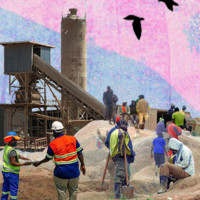
The Paradoxes of Green Industrial Policy in Southern Africa
Topics
Regions
This case study examines the challenges of Southern Africa’s green industrial policy at the intersection of critical mineral wealth, energy transition needs, and structural economic vulnerabilities. Although the region – in particular South Africa, Zimbabwe, Namibia, and Botswana- possesses significant resources for the global green transition (such as platinum, cobalt, lithium, and manganese), the shift toward sustainable industrialisation encounters tensions between export-driven extractivism and domestic beneficiation strategies. South Africa's Just Energy Transition Investment Plan and Presidential Climate Commission framework propose innovative governance strategies that aim to balance decarbonisation efforts with job preservation. However, communities dependent on mining face job losses without sufficient support for the transition, foreign firms predominantly control the emerging green hydrogen sector, and local content policies encounter implementation challenges. To ensure a successful and genuine ‘green’ transition, it is crucial to strengthen the state’s capacity, encourage democratic participation, and establish regional cooperation frameworks to avoid repeating past patterns of resource extraction that fail to create added value.
Longread by


Overview
The resurgence of industrial policy discourse globally has generated significant enthusiasm for 'green industrial policy' as a vehicle for combining climate transition with economic development in the Global South. However, research conducted through a series of collaborative seminars with researchers, policy analysts, trade unionists and civil society actors across Southern Africa between November 2024 and September 2025 reveals fundamental paradoxes: while institutional frameworks for green industrial policy have become increasingly sophisticated, the actual implementation capacity and political will to deploy these frameworks remain severely constrained. The past five years have witnessed the resurgence of industrial policy as a legitimate object of serious academic and policy debates. For decades, industrial policy had been effectively prohibited for developing countries through the architecture of international trade rules and the conditions attached to development finance (Chang, 2002; Rodrik, 2008; Stiglitz, 2010). The standard refrain from the International Monetary Fund and World Bank was that industrial policy was the policy 'that shall not be named': a relic of protectionism and import-substitution industrialisation that had purportedly failed and should be abandoned in favour of market-led development.
Consensus regarding the inappropriateness of industrial policy for development has shifted dramatically. The rise to power of governmental teams in the United States and European Union committed to state-directed industrial policy, combined with the rise of China as a world power and the urgency of climate transition, has rehabilitated supposedly green industrial plans and strategies as serious policy instruments. Suddenly, research centres and universities in the region and across the world are producing work on industrial policy at scales that would have been unthinkable a decade ago (Asiama et al., 2025). The language has changed from scepticism to enthusiasm.
However, the enthusiasm with which industrial policy is now discussed in Global North policy circles contrasts sharply with the cautious and often ambivalent reception it receives in the Global South. Here, industrial policy has become entangled with climate politics, development finance, and the question of who bears the costs and captures the benefits of economic transition. It is in this context that a series of collaborative research seminars was organised by TNI and the GreenPaths project across Southern Africa in 2024 and 2025, bringing together researchers, policy analysts, trade unionists, and civil society actors to interrogate the actual trajectories of green industrial policy implementation in the region.
Drawing on seminar transcripts with diverse social, political and institutional stakeholders, our analysis argues that the disconnect between policy ambition and political reality reveals something more profound than simple implementation failure. Instead, it demonstrates how green industrial policy can become a mechanism for legitimising continued extractivism and reinforcing subordinate positions within global value chains, unless grounded in transformative approaches to state capacity, democratic participation, and power redistribution.
Our case study identifies four critical paradoxes that must be confronted: the budget defunding paradox, the politics-policy disconnect, the extractivism contradiction, and the distributional question of who industrial policy actually benefits. These paradoxes are not technical problems requiring better policy design; they are fundamentally political questions requiring political solutions.
Our research demonstrates that the paradoxes identified in this investigation are not incidental or peculiar to Southern Africa, but rather reflect fundamental features of how green industrial policy has been conceptualised and implemented across the Global South in contexts of constrained state capacity, weak democratic participation, and entrenched power asymmetries. Addressing these paradoxes requires moving beyond technical solutions toward a genuine transformation of political structures and power relations. Without such transformation, green industrial policy risks becoming another mechanism for imposing the Global North's development agenda on the Global South, with benefits accruing to capital and costs borne by workers and communities.
Our research is situated within longer traditions of intellectual and political collaboration across the Global South. Such traditions have sometimes been marginalised by the dominance of Global North knowledge production, but remain valuable resources for thinking about alternative development futures. Our seminars represent not simply data collection for research purposes, but part of a broader project of solidarity research and South-South knowledge production aimed at strengthening the capacity of researchers, policy analysts, and civil society actors across the Global South to think critically about green industrial policy and to articulate alternative visions grounded in the interests and experiences of their own communities.
Research questions
Our research investigation is structured around several central inquiries. How do institutional frameworks for green industrial policy become disconnected from political capacity and political will? How can green industrial policy function as a mechanism for continued extractivism and subordination rather than genuine transformation? Who benefits from industrial policy, and on what terms are benefits distributed? What political conditions and power configurations would be necessary to make green industrial policy genuinely transformative in the service of workers and communities rather than capital? How do the experiences of Southern Africa compare to industrial policy trajectories in Asia and Latin America? How might we reimagine green industrial policy through the lens of justice and participation, ensuring that diverse communities have a meaningful voice in policy design and implementation? These research questions emerged through collaborative consultation with research partners across the region, reflecting both academic concerns and practical challenges identified by policymakers, activists, and community leaders.
Underlying these questions is a fundamental proposition: the bottlenecks constraining green industrial policy lie not primarily in the technical or institutional policy domain, but rather in the political terrain. Genuine transformation requires shifts in power configurations, changes in the distribution of interests, and the political actors' will and capacity to challenge entrenched structures of extraction and subordination. Our research operates from the conviction that understanding these political dimensions is essential for developing effective responses to green industrial policy challenges in the Global South. Policy frameworks, however sophisticated, cannot overcome political constraints and the absence of genuine democratic participation and state autonomy. Addressing these challenges requires moving beyond technical solutions to engage fundamentally with questions of power, distribution, and political will.
Methods
Research Context and Institutional Partnerships
Our article draws on qualitative research conducted through a series of collaborative seminars organised by the Transnational Institute (TNI) and the GreenPaths project (https://greenpaths.info/) in partnership with several university-based research centres and think tanks. The seminars were designed as spaces for sustained dialogue among diverse research and policy communities, including academic researchers in development economics, political economy and environmental sciences; independent policy analysts and think tank researchers; government officials working on industrial policy, energy transition, and economic development; trade unionists and labour movement representatives; and civil society activists working on environmental protection, human rights, and social justice. Participant selection reflected deliberate efforts to bring together people working on green industrial policy from different disciplinary backgrounds and institutional locations.
Three seminars were held at the University of Cape Town, the University of Johannesburg, and Stellenbosch University between November 2024 and March 2025. A fourth seminar was organised by TNI in Johannesburg in September 2025, in partnership with the Pretoria-based TIPS research centre and the TIDE Centre of the University of Oxford. Our geographical spread reflected deliberate efforts to engage with research communities across the region, while acknowledging that universities remain important sites of knowledge production and contestation, even in contexts where academic autonomy faces significant constraints. The diversity of individual participants, institutional backgrounds and expertise proved crucial, as it prevented the conversations from being captured by any single disciplinary frame or institutional interest.
All seminars operated under Chatham House rules, allowing open discussion without attribution of specific comments to named individuals. Our methodological choice was very appropriate, as it enabled participants to discuss sensitive political and policy issues, including criticism of government policies, analysis of corruption and state capture, and frank assessment of China's or Europe's role in African development, with greater frankness than might otherwise have been possible. Without Chatham House protection, some of the most candid and valuable discussions would likely not have occurred.
Horizontal and Collaborative Knowledge Production
The seminars operated explicitly on a principle of collaborative knowledge production rather than extractive research. Rather than researchers interviewing passive subjects or observing communities from a position of external authority, the seminars brought together diverse communities of practice with distinctive knowledge, experience, and analytical frameworks to collectively interrogate shared problems and think through potential solutions.
The conversations were structured around several key themes developed in advance through consultation with research partners: the conceptualisation of green industrial policy and its relationship to broader development objectives; the actual role of the state and state capacity in implementing industrial policy across different contexts; the distributive question of who benefits from industrial policy and on what terms; regional cooperation and collective capacity building in the Global South; and the intersection of industrial policy with extractivism, environmental protection, and democratic participation of civil society in policy design and implementation. Although these themes provided structure, the seminars explicitly rejected a rigid research instrument approach, instead operating on the principle of collaborative interrogation, where initial questions served as entry points for discussion rather than fixed frameworks. Some of the most important insights emerged when researchers and practitioners were given space to pursue lines of questioning rooted in their own experience and preoccupations.
Our approach reflected commitment to research grounded in the recognition that Southern African researchers, policy analysts, labour organisers and civil society activists possess both intellectual sophistication and practical knowledge that should genuinely inform research directions, conclusions, and recommendations. We operated from scepticism toward the typical pattern in which Global North researchers parachute into the Global South to study development problems, then return to Northern universities to publish analyses that often minimise or marginalise the knowledge and agency of Southern researchers and activists.
The theoretical frameworks used to interpret the conversations were drawn from critical political economy traditions: state capacity and autonomy theories; analyses of extractivism and neo-colonialism in development; scholarship on democratic participation and deliberation; and research on regional integration and South-South cooperation. However, these frameworks were held lightly, employed to interpret and organise emerging findings rather than as impositions that would constrain how participants could think and speak about their own contexts and experiences.
Our research forms part of a broader, ongoing research endeavour launched by TNI's Global Green Industrial Policy Lab within the Horizon Europe GreenPaths project, which involves the production of four comprehensive reports on industrial policy experiences in four regions: North Africa, Southern Africa, Southeast Asia, and Latin America. The Southern Africa seminars should be understood not as an isolated research exercise but as part of a comparative, multi-regional investigation of how green industrial policy is being conceptualised and implemented across the Global South.
Our broader context shapes our analysis in important ways. Our research brings a comparative perspective enriched by understanding how industrial policy is being pursued in other regions, what lessons emerge from Asia, Latin America, and other parts of Africa, and what patterns are common across diverse contexts. Connecting local research communities across regions facilitates the exchange of knowledge and experience that might otherwise remain isolated. Our research represents part of a broader project of solidarity research and South-South knowledge production aimed at strengthening the capacity of researchers, policy analysts, and civil society actors across the Global South.
Findings and results
The Budget Defunding Paradox
One of the most striking observations to emerge from the seminars was the paradox of budget defunding. Research participants repeatedly noted that green industrial policy has become ubiquitous in policy discourse and has featured prominently in government frameworks, academic research, international development agendas, and the strategies of multilateral development banks (Asiama et al., 2025). Nevertheless, this discursive prominence coexists with the systematic defunding of the actual machinery of industrial policy at the state level.
Governments announce industrial policy frameworks and strategies with considerable rhetorical flourish. International institutions praise the sophistication of governance arrangements. Nevertheless, the actual fiscal allocation of resources to implement these strategies remains severely constrained. One seminar participant captured the contradiction with particular clarity: 'You can see green industrial policy everywhere except on the budget, even though that's not true of all countries. But, at the same time, the expectation is that green industrial policy can solve the problems of Mpumalanga's energy transition, where the aim is to essentially manage down coal and coal-based energy. People will lose jobs, but somehow industrial policy alone is expected to come in and solve those problems, create the jobs to replace those that would have been lost, and deal with the social and environmental spillovers that have been accrued over decades.'
A grotesque situation has thus emerged in which enormous expectations are loaded onto what green industrial policy can accomplish: solving unemployment, managing just transitions, creating new industries, and building productive capacity. The actual resources dedicated to industrial policy have been systematically reduced. Such defunding reflects broader patterns of austerity and fiscal constraint that have characterised macro-economic policy in much of Southern Africa and the rest of the Global South for the past two decades (UNCTAD, 2023). However, it also reflects the reality that industrial policy itself has never been a priority for the kinds of administrations and international institutions that have wielded significant influence over African economies. The rehabilitation of industrial policy rhetoric has not, in most cases, been accompanied by the rehabilitation of industrial policy finance.
In South Africa's coal transition in Mpumalanga, workers displaced from coal mining are offered access to reskilling programmes that lack adequate resourcing, economic diversification strategies that are poorly funded, and alternative employment opportunities that simply do not exist at the scale required (Bhorat et al., 2024). Seminar participants noted that the defunding of industrial policy reflects political choices about what matters. Mining communities affected by coal transition have been expected to absorb the costs of decarbonisation, while receiving minimal public investment in economic alternatives.
The budget defunding paradox connects directly to a broader crisis of financing mechanisms that emerged as a central concern at the TIDE-TIPS-TNI convening. Participants emphasised that the green transition is fundamentally shaped by entrenched power asymmetries in the control and deployment of financial flows. A recurring concern was the profound disconnect between those who control financial resources, primarily donors, multilateral development institutions, and governments in the Global North, and the communities in the Global South most affected by environmental degradation and economic transition. Civil society organisations are frequently compelled to align with donor priorities, compete with state institutions for scarce resources, or serve merely as implementers of externally defined programmes. Solutions require radical restructuring of both domestic and international financing systems: moving from donor-driven agendas and debt-based climate finance toward redistributive mechanisms such as progressive taxation, public investment, and mobilisation of domestic resources. Reframing financing for green transitions as redistributive justice recognises the ecological debt owed by industrialised nations and the right of Global South communities to determine their own development pathways.
The Politics-Policy Disconnect
The second paradox concerns the relationship between policy and politics. Contemporary policy literature typically treats these as analytically distinct domains. Policy analysis focuses on the design of institutions and instruments; political analysis examines the configuration of interests and power. However, the seminars revealed that analytical separation obscures a crucial aspect of green industrial policy in the Global South: the fundamental inadequacy of policy frameworks when political structures remain oriented toward different objectives. One participant raised the essential tension directly: policy without accompanying political transformation proves pointless. The formulation expresses something that policy professionals often avoid: the recognition that even well-designed policies, implemented by competent bureaucracies, will fail if the underlying political structures and power relations are oriented against them.
Resource governance and beneficiation present particularly acute problems. Across Southern Africa, governments have articulated sophisticated policies regarding critical minerals beneficiation, resource governance, and the relationship between resource extraction and domestic development. Zimbabwe established lithium export bans in 2022 with the explicit objective of ensuring that lithium processing would occur domestically rather than being exported as raw ore. The policy is politically intelligible and economically rational (Lebdioui and Riofrancos, 2025). Nevertheless, implementation has largely failed. Chinese firms dominate the sector; infrastructure remains inadequate; corruption and smuggling undermine export controls. Why? The answer cannot be found in policy design. Rather, it reflects the reality that powerful political interests, both domestic elites and transnational capital, benefit from continued extractivism and export of raw materials while mining communities and the environment bear the costs of extraction.
Changing this pattern would require shifting the balance of political power: strengthening labour organisations, empowering mining communities, constraining the influence of transnational capital, and increasing state autonomy. It would, in other words, require a political transformation. Much of the contemporary discussion of green industrialisation implicitly addresses the policy domain as a technical problem. The focus is on improving mining taxation systems, designing better contractual arrangements, and strengthening institutional capacity. These are important elements. However, they are secondary to the political question of whether governments actually possess the political will and support to subordinate capital's interests to those of workers and communities (Cherif and Hasanov, 2019).
Seminar participants raised particular concerns regarding Southern Africa's diverse political contexts. Several countries in the region are governed by what might be termed authoritarian regimes. In such contexts, the problem is not merely technical; it is fundamentally political. Democratic participation in policy design and implementation becomes impossible when political systems are not genuinely democratic. The politics- policy gap reveals that the bottleneck in green industrial policy lies outside the policy domain. The bottleneck is political. It concerns the distribution of power, the configuration of interests, and whether political actors have the will and capacity to challenge entrenched structures of extraction and subordination. Policy design must be grounded in a realistic assessment of political constraints and possibilities. It must ask not only 'what policy would be optimal?' but also 'what political conditions would be required to make policy effective?' Moreover, it must address a crucial question: 'What political work would be required to create those conditions?'
The Extractivism Paradox
The third paradox concerns the relationship between green industrial policy and extractivism. On the surface, the two appear to represent opposed orientations. Extractivism is associated with raw-material exports, limited value addition, and the subordination of development to the logic of capital accumulation in the Global North. Green industrial policy, by contrast, promises industrial development, value addition, and the subordination of resource use to environmental and social objectives (Hamouchene and Sandwell, 2023). The seminars, however, revealed a more troubling reality. Green industrial policy, as it has been conceptualised in much of the Global South, can function as a new form of extractivism, as some scholars term it, green colonialism. The logic remains familiar: the Global South provides raw materials; the Global North processes and manufactures finished goods. The only difference is that the materials now support renewable energy rather than fossil fuel infrastructure. Critical minerals (lithium, cobalt, nickel, and rare earths) are essential for renewable energy technologies, electric vehicles, and battery storage. The Global North's renewable energy transition, therefore, depends on expanding critical minerals extraction in the Global South. In this sense, green industrial policy in mineral-producing countries can become a strategy for managing increased extraction in ways that appear environmentally and socially responsible, while maintaining the fundamental structure of subordination.
Seminar participants articulated the contradiction with particular force. One observed: 'It's extractivism versus extractivism, because the way critical minerals are extractable is very much extractivism as usual. Extractivism comes from the place of power within the global value system and the global geopolitical value system. So how does Africa, Latin America, and Asia shift the power dynamics, so that when we're talking about green extraction, we're not part of the same process?' Breaking with the logic of extractivism gets to the heart of the matter. Is it possible to imagine a green industrial policy that breaks with extractivism? Such a policy would focus on value addition, beneficiation, and the capture of mineral rents for deployment into diverse industrial sectors. It would prioritise domestic processing and manufacturing over the export of raw materials. It would ensure that the wealth generated from resource extraction is redistributed to workers and communities rather than accumulated by capital.
It would use industrial policy as a mechanism for structural transformation rather than for reinforcing existing hierarchies. Implementing such a policy would, however, require challenging the logic of global supply chains dominated by firms from the Global North, and increasingly by those from China. It would require that resource-rich countries refuse to accept the role assigned to them within global value chains. It would require regional cooperation at scales never yet achieved in Southern Africa. Furthermore, it would require that states possess sufficient political autonomy to pursue such strategies despite pressure from multinational corporations and international financial institutions. The extractivism paradox reveals that green industrial policy, unless explicitly grounded in an anti-extractivist political project, can become merely a more sophisticated mechanism for continuing subordination. Such an outcome is not inevitable. However, it is likely to be the default unless significant political work is done to reshape industrial policy toward genuinely transformative ends.
The Distributional Paradox
The fourth paradox is deceptively simple: industrial policy is never simply about economic efficiency or technical rationality. It is fundamentally about distribution, meaning who benefits and who bears the costs (Bhorat et al., 2024). Nevertheless, policy analysis often treats distribution as secondary, focusing instead on the technical question of how to increase productive capacity or build manufacturing sectors.
The seminars returned repeatedly to distributional questions. Who actually benefits from industrial policy? Who bears the costs? What are the mechanisms through which benefits are distributed and costs allocated? Consider a major investment in renewable energy manufacturing in a particular location. Such an investment might create employment. But at what wages? What are the working conditions? Are the jobs permanent or temporary? Are they available to local workers, or do they require skilled migrants? Who owns the manufacturing facility? Are profits retained in the country or remitted elsewhere?
Alternatively, consider the case of green hydrogen development in water-scarce regions of Southern Africa. Projects promise development benefits and employment. Yet they also represent massive water extraction in regions where water is increasingly scarce. Who benefits from the hydrogen production? Who bears the cost of water depletion? How are costs and benefits distributed between communities, national governments, and transnational corporations? Seminar participants noted that distributional questions are rarely central in policy discussions of green industrial policy. Instead, the focus is typically on aggregate economic metrics: growth rates, employment numbers, investment flows. However, aggregate figures can obscure deeply unequal distributions.
An industrial policy that creates substantial employment can still be regressive if the employment is concentrated in precarious, low-wage positions while profits are concentrated in capital ownership. An industrial policy that attracts significant foreign investment can still impoverish communities if the investment is structured to minimise local capture of rents. The gender dimension of industrial policy was highlighted as a particular concern. In renewable energy manufacturing, women tend to be concentrated in the lowest-paid, least secure positions while technical and management roles remain predominantly male. In mining communities affected by energy transition, women often bear disproportionate burdens of household economic destabilisation while having less access to alternative employment and reskilling opportunities.
Far from being incidental to industrial policy, the distributional question is fundamental. Industrial policy is always a choice about whose interests will be served and whose will be subordinated. It is a choice between development oriented toward workers and communities or toward capital accumulation. It is a choice about whether benefits will be widely distributed or concentrated in a few hands. Unless distributional questions are central to how we think about industrial policy, we risk developing sophisticated policy frameworks that ultimately serve to reinforce existing patterns of inequality and exploitation.
Main results
The seminars generated extensive qualitative data documenting the perspectives, experiences, and analyses of over 45 researchers, policymakers, trade unionists, civil society activists, and community organisers from 22 countries across the Global South. Analysis of seminar discussions, conducted through a systematic review of transcripts and notes, identified four central paradoxes characterising the implementation of green industrial policy in the region. Our findings reveal fundamental disconnections between policy frameworks and political realities, between stated development objectives and distributional outcomes, and between rhetorical commitment to green transitions and actual resource allocation.
The methodological significance of conducting this research through collaborative seminars cannot be overstated. Rather than imposing external analytical frameworks on the region, the seminars allowed for dialogue-based knowledge production that reflected the lived experiences and analytical sophistication of researchers, policymakers, and activists working across Southern Africa. The diversity of participants ensured that emerging findings reflected not the views of any single institutional perspective or disciplinary frame, but rather a consensus that emerged across multiple communities of practice.
One of the most methodologically significant findings concerns the gap between announced frameworks and lived implementation. Countries have shown considerable creativity in designing governance frameworks and policy instruments for green industrial policy. However, the actual fiscal allocation of resources to implement these strategies remains severely constrained. Industrial policy exists as a set of ideas and institutional arrangements, but lacks the financial sinews to become an effective practice. Analysis of these four paradoxes reveals that the problem with green industrial policy in the Global South is not primarily a problem of policy design or institutional innovation. Instead, the problem is the unwillingness of dominant political and economic actors to commit the fiscal resources required to make industrial policy effective. The following sections present the primary findings, organised around four critical paradoxes that emerged consistently across seminars held in partnership with universities and research centres across Southern Africa.
Discussion and conclusions
Our research findings demonstrate that the disconnect between sophisticated policy frameworks and constrained political will is not simply a management problem that can be resolved through better coordination or improved communication. Instead, it reflects fundamental conflicts of interest between those who would benefit from a genuine transformation of development patterns and those who benefit from maintaining current structures of extraction and subordination. Understanding this dimension is essential for developing effective strategies for change.
The four paradoxes identified in our research are not incidental problems that can be solved with better technical solutions. They are fundamental features of how green industrial policy has actually been implemented in the Global South. They reflect the reality that, however sophisticated, policy frameworks cannot overcome political constraints or the absence of genuine democratic participation and state autonomy. Our findings are sobering. Across Southern Africa, implementation of even well- designed policy frameworks falls dramatically short of their ambitions.
South Africa's just transition framework presents a particularly instructive case. The Presidential Climate Commission (2022) articulated a comprehensive framework of policy objectives. Communities in Mpumalanga, the heartland of South African coal mining, report limited consultation with workers about their futures. Reskilling programmes exist but are frequently inaccessible or irrelevant to actual labour market opportunities. The stated commitment to a just transition coexists with coal plant closures that proceed without parallel investment in alternative livelihoods. The result is that workers and communities experience policies as inadequately resourced gestures rather than as comprehensive programmes genuinely committed to meeting their needs.
A broader observation emerged from the seminars: that industrial policy can only be as transformative as the political movement supporting it. Without powerful labour unions, community organisations, and civil society pressure, governments will typically align themselves with business interests. With such movements, governments can be pressured and constrained into adopting policies more aligned with workers' and communities' interests. Another dimension of the policy-practice gap concerns state capacity. Even when political will exists, states often lack the technical and administrative capacity to implement complex industrial policies effectively. Administering beneficiation requirements, conducting due diligence on mining contracts, managing development banks, and directing investment strategically all require significant state capacity that many Southern African countries struggle to maintain. Capacity deficits are themselves partially political. Decades of neoliberal austerity have systematically defunded state institutions, particularly in technical and administrative areas. Such movements represent the organised voice of those most affected by industrial policy decisions and possess the power to constrain governmental alignment with narrow business interests. Seminar participants consistently emphasised this fundamental reality.
Underlying the implementation gap is a fundamental question of political will. Technically well-designed policy frameworks can still fail if political actors lack genuine commitment to implementing them. Enormous expectations are being placed on green industrial policy to meet economic and social objectives, in a context where industrial policy has been systematically defunded. If implementing just transition comprehensively would require significant state investment in economic alternatives to mining, such investment would necessarily reduce capital accumulation by mining companies and their owners. The question becomes: will governments privilege the interests of displaced workers and communities, or will they accept the subordination of social concerns to continued capital accumulation? The answer, as suggested by implementation evidence across Southern Africa, is sobering. Governments have frequently chosen the latter course. Mining and energy companies are permitted to proceed with closures and retrenchments without comprehensive transition support.
Comparative analysis with Asia and Latin America reveals important contrasts and commonalities. China and Indonesia have made more substantial state deployments of industrial policy than Southern Africa. However, these experiences reveal important limitations. China's overseas mining investment frequently subordinates local interests to Chinese capital, while Indonesian policy achievements coexist with significant negative externalities and contested distributional outcomes. In Latin America, where some countries maintain stronger traditions of state-led development and state-owned enterprises, the picture was more mixed. Brazil has articulated an ambitious industrial policy framework addressing multiple sectors beyond extractive industries. Chile's Codelco remains a significant state-owned copper producer, though the terrain of publicly-owned mining is contested. Mexico's recent decision to nationalise lithium represents an effort to reassert state control, though the capacity to translate policy decisions into effective industrial development remains constrained.
What emerged from comparative discussion was that no simple model exists that can be transplanted from one context to another. Industrial policy that works in the context of strong state institutions, significant domestic capital accumulation, and particular labour force characteristics may not work in contexts with weaker institutions and different structural conditions. Yet, the comparison also revealed that what is possible in Asia and Latin America is not, in principle, impossible in Southern Africa. The constraints are political more than structural. Our project demonstrates that researchers, policy analysts, civil society actors, and some progressive government officials understand these stakes and are committed to struggling for transformative approaches. Whether such struggles will prove successful remains an open question. What is clear is that incremental reforms to policy frameworks, without accompanying transformations of political power and state capacity, are unlikely to deliver the combination of climate transition and genuine development that the region requires.
Who Drives Industrial Policy? The Question of Actors and Coalitions
One theme that emerged throughout the seminars was that industrial policy cannot be analysed simply as state action. Rather, it involves a complex constellation of actors: private firms, state-owned enterprises, development banks, labour organisations, civil society organisations, and international institutions. Each group possesses distinctive interests and varying degrees of power.
A participant framed this challenge with particular clarity: 'Who are the actors? Who's going to drive this? One analogy I think is quite useful is that every country wants to put on this play, this production, or make a movie. But who are the actors? Do you have private capital, whether it's domestic or foreign, that's aligned? Do you have public capital aligned?' The implication is that policy frameworks are not self-executing. They require actual actors with power and interest in implementation. The question is which actors and what constellation of interests will dominate in determining how industrial policy actually unfolds.
One set of actors that emerged as increasingly important across discussions was development banks and development finance institutions. The role of development banks is critical in this space, as they are influential actors that can navigate the relationships among the public, the state, and the private in a developmental way. Rather than relying on private foreign direct investment or state budgets, development banks can serve as intermediaries that mobilise capital, direct it toward strategic objectives, and maintain some degree of public accountability. Seminar participants noted that the capacity of African development banks to finance green industrialisation remains underdeveloped. While the World Bank and other multilateral development banks deploy substantial resources, they typically come with conditionalities constraining policy autonomy. Strengthening African development banks, giving them the capacity and autonomy to finance industrial development in line with regional priorities, emerged as important in seminar discussions.
Labour, Civil Society, and Counter-Hegemonic Coalitions
If industrial policy is to serve worker and community interests rather than capital interests, then labour organisations and civil society movements become crucial actors. Yet across Southern Africa, labour movements have weakened considerably over recent decades, as a consequence of deindustrialisation, structural adjustment, and deliberate state and capital suppression of labour organising. Rebuilding labour power emerges as a precondition for transformative industrial policy. Worker participation in state institutions governing industrial policy; worker veto power over major industrial investments; worker ownership of enterprises; collective agreements establishing wages, working conditions, and profit-sharing arrangements, all require labour movements capable of exercising significant power.
Similarly, civil society organisations focused on environmental protection, land rights, and community wellbeing become important actors in constraining industrial development that would otherwise proceed on terms dictated purely by capital. Mining- affected communities, environmental organisations, and human rights activists can provide a counterweight to pressure from corporations and governments oriented toward rapid capital accumulation. One dimension that emerged as potentially significant across the seminars was regional cooperation. Several participants noted that individual countries in Southern Africa, even relatively industrialised ones like South Africa, lack the scale and productive capacity to shape their own development in the face of global capital flows and integrated value chains. However, if Southern African countries could coordinate their industrial policy strategies, they might collectively possess greater autonomy.
The Southern African Development Community (SADC) has articulated frameworks for regional cooperation on energy transition and green industrialisation. The SADC Renewable Energy Strategy and regional cooperation around critical minerals beneficiation represent gestures toward such coordination. Nevertheless, implementation remains limited, constrained by insufficient funding, inadequate institutional capacity, and the difficulty of coordinating policies across countries with different economic structures and political interests. Seminar participants suggested that more ambitious regional cooperation would be necessary to genuinely challenge subordinate positions within global value chains. Coordinated mineral processing standards that require processing within the region rather than exporting raw ore, collective requirements for technology transfer as conditions for market access, and explicit governance structures ensuring that workers and communities have a voice in regional industrial policy decisions would strengthen collective bargaining power.
The vision that emerged was not of a regional bloc pursuing isolationist development, but rather of Southern African countries using regional coordination to enhance collective bargaining power vis-à-vis transnational capital and international institutions. Regional cooperation would be a mechanism for building the scale and productive capacity necessary to dictate terms to capital rather than accepting the terms that capital offers.
Lessons from Asia and Latin America: Comparative Perspectives on Industrial Policy
The seminars were part of a broader research initiative examining green industrial policy experiences across diverse regions of the Global South. Participants drew on research and knowledge from other regions to contextualise the Southern African experience. Regarding Asia, particularly China and Indonesia, what emerged was a picture of much more substantial state deployment of industrial policy compared to Southern Africa. China has made massive investments in critical minerals processing and manufacturing capacity, both domestically and overseas, while Indonesia has attracted significant foreign investment in nickel battery production with notable state and domestic capital ownership. However, these experiences reveal important limitations. China's overseas mining investment frequently subordinates local interests to Chinese capital, while Indonesian policy achievements coexist with significant negative externalities and contested distributional outcomes. The critical questions remain unresolved: To what extent does state participation actually capture rents versus allowing transnational capital to dominate? Does the resulting employment prove secure or precarious? Does expanded processing capacity translate into broader industrial development that benefits workers and communities, or primarily enriches capital? These uncertainties underscore that scale and state involvement alone do not guarantee transformative outcomes.
Regarding Latin America, where some countries maintain stronger traditions of state- led development and state-owned enterprises, the picture was more mixed. Brazil has articulated an ambitious industrial policy framework addressing multiple sectors beyond extractive industries. Chile's Codelco remains a significant state-owned copper producer, though the terrain of publicly-owned mining is contested. Mexico's recent decision to nationalise lithium represents an effort to reassert state control, though the capacity to translate this political decision into effective industrial development remains constrained. What emerged from comparative discussion was that no simple model exists that can be transplanted from one context to another. Industrial policy that works in the context of strong state institutions, significant domestic capital accumulation, and particular labour force characteristics may not work in contexts with weaker institutions and different structural conditions. Yet, the comparison also revealed that what is possible in Asia and Latin America is not, in principle, impossible in Southern Africa. The constraints are political more than structural.
Recommendations
Addressing the four paradoxes requires what might be termed transformative green industrial politics: politics and policies grounded in deliberate efforts to enhance state autonomy, extend democratic participation, and use industrial policy as an instrument for redistributing power. What would such a policy look like in practice? Our seminars generated several consistent proposals, though it is important to note that these remain contested and subject to ongoing debate among researchers, activists, and policymakers.
First, rebuilding state fiscal capacity. Governments in Southern Africa must reclaim fiscal space through debt restructuring, mobilising domestic resources, and using monetary policy powers to direct development (UNCTAD, 2023). Such efforts may involve capital controls, exchange rate management, and the deployment of development banks to finance strategic investments. It requires treating fiscal space as a political choice rather than a technical constraint. The role of development banks is exceptionally important in this space, as they are influential actors that can navigate the relationships among the public, the state, and the private in a developmental way. Strengthening African development banks, giving them capacity and autonomy to finance industrial development according to regional priorities, emerged as important in seminar discussions.
Second, extending democratic participation beyond consultation. Current frameworks for stakeholder participation in industrial policy typically involve consultation and information-sharing. Transformative approaches would involve workers and communities exercising veto power over major industrial developments affecting their livelihoods. Such participation might involve worker representatives on state development agencies with genuine decision-making authority, community veto rights over extractive projects, and revenue-sharing arrangements giving mining communities direct control over development investments. If industrial policy is to serve worker and community interests rather than capital interests, then labour organisations and civil society movements become crucial actors.
Third, deploying state ownership as a developmental instrument (Chavez and Steinfort, 2022). Rather than accepting private ownership of strategic industries, states might use public ownership to ensure that industrial policy serves public purposes rather than private profit. Such approaches might involve state-owned enterprises in critical minerals processing, state participation in renewable energy manufacturing, and state direction of development finance toward strategic objectives.
Fourth, subordinating extraction to processing and manufacturing. Industrial policy should be oriented toward moving away from raw material exports toward processing, manufacturing, and value addition. Such reorientation requires refusing to accept the roles assigned to resource-rich countries within global value chains. It requires willingness to restrict or prohibit raw material exports in the absence of domestic processing. It requires regional coordination to ensure that no country undercuts others by accepting less advantageous terms.
Fifth, prioritising domestic and regional markets. Instead of orienting industrial policy purely toward export markets, states might prioritise production for domestic consumption and regional trade. Such approaches require creating regional market integration, harmonised standards, and coordinated tariff policies that protect emerging industries until they reach competitive capacity.
Sixth, investing in worker and community capacity. Transformative industrial policy must prioritise investment in worker training, community productive capacity, and the development of worker-owned and community-owned enterprises. Such investment requires treating workers and communities not as passive recipients of development but as active agents capable of determining development directions.
Credits
Authors
This study is part of the GreenPaths project; you can explore this and other case studies at:
The GreenPaths project is funded by the EU’s Horizon Europe research and innovation programme under grant agreement 101112305. Views and opinions expressed are however those of the author(s) only and do not necessarily reflect those of the European Union or the Research Executive Agency. Neither the European Union nor the granting authority can be held responsible for them.

References
Asiama, R., Avenyo, E., Habiyaremye, A., Ncube, P., and Tregenna, F. (2025). The new era of industrial policy in Africa: From SDG perspective. Vienna: United Nations Industrial Development Organization.
Bhorat, H., Kupeta, T., Martin, L., Collins, S., and Steenkamp, F. (2024). Just Transition and the Labour Market in South Africa: Measuring Individual and Household Coal Economy Dependence. Cape Town: Development Policy Research Unit (DPRU), University of Cape Town.
Chang, H.-J. (2002). Kicking Away the Ladder: Development Strategy in Historical Perspective. London: Anthem Press.
Chavez, D. and Steinfort, L. (2022). The future is public! The global reclaiming and democratisation of public ownership beyond the market. Development, 65(2), 207- 216. https://doi.org/10.1057/s41301-022-00350-3
Cherif, R. and Hasanov, F. (2019). The return of the policy that shall not be named: Principles of industrial policy. IMF Working Paper 19/74. Washington, DC: International Monetary Fund.
Hamouchene, H. and Sandwell, K. (eds.). (2023). Dismantling Green Colonialism: Energy and Climate Justice in the Arab Region. London: Pluto Press and Transnational Institute.
Lebdioui, A., and Riofrancos, T. (2025). Critical minerals and resource nationalism 2.0: Why the policy is more critical than the mineral. Oxford: Technology and Industrialisation for Development (TIDE) Centre, University of Oxford.
Presidential Climate Commission. (2022). A just transition framework for South Africa. Pretoria: Department of Energy, Government of South Africa.
Rodrik, D. (2008). One Economics, Many Recipes: Globalisation, Institutions, and Economic Growth. Princeton, NJ: Princeton University Press.
Stiglitz, J. E. (2010). Freefall: America, Free Markets and the Sinking of the World Economy. New York: W.W. Norton & Company.
UNCTAD. (2023). Trade and Development Report 2023. Growth, Debt and Climate: Realigning the Global Financial Architecture. Geneva: United Nations Conference on Trade and Development.
Collaborators
More like this
-
Green industrial policy and ecological transformation in Latin America A transformative perspectivePublication date:

-
Green industrial policy in Southeast Asia Developmental states, export-oriented manufacturing, and the paradox of “green” transitionsPublication date:

-
Green Industrial Policy in North Africa Between Energy Sovereignty, Authoritarian Governance and Neocolonial ExtractionPublication date: