TNI Obituary Muzan Alneel Muzan Alneel has left us but her legacy lives on
Topics
With complete disbelief we learned of the early death of Muzan Alneel. Words fail us in finding ways to describe our shock and sadness at her loss. Born in Omdurman, Sudan in June 1986, she died at the very young age of 39. Her loss leaves an eternal gap, for she is irreplaceable. Survived by her parents to whom she was the first child, by her three siblings: Misdar, Marine, and Malab, and her husband Ahmad. To them we extend our heart-felt condolences and offer our deep sympathies (البركة فيكم).
Announcement by


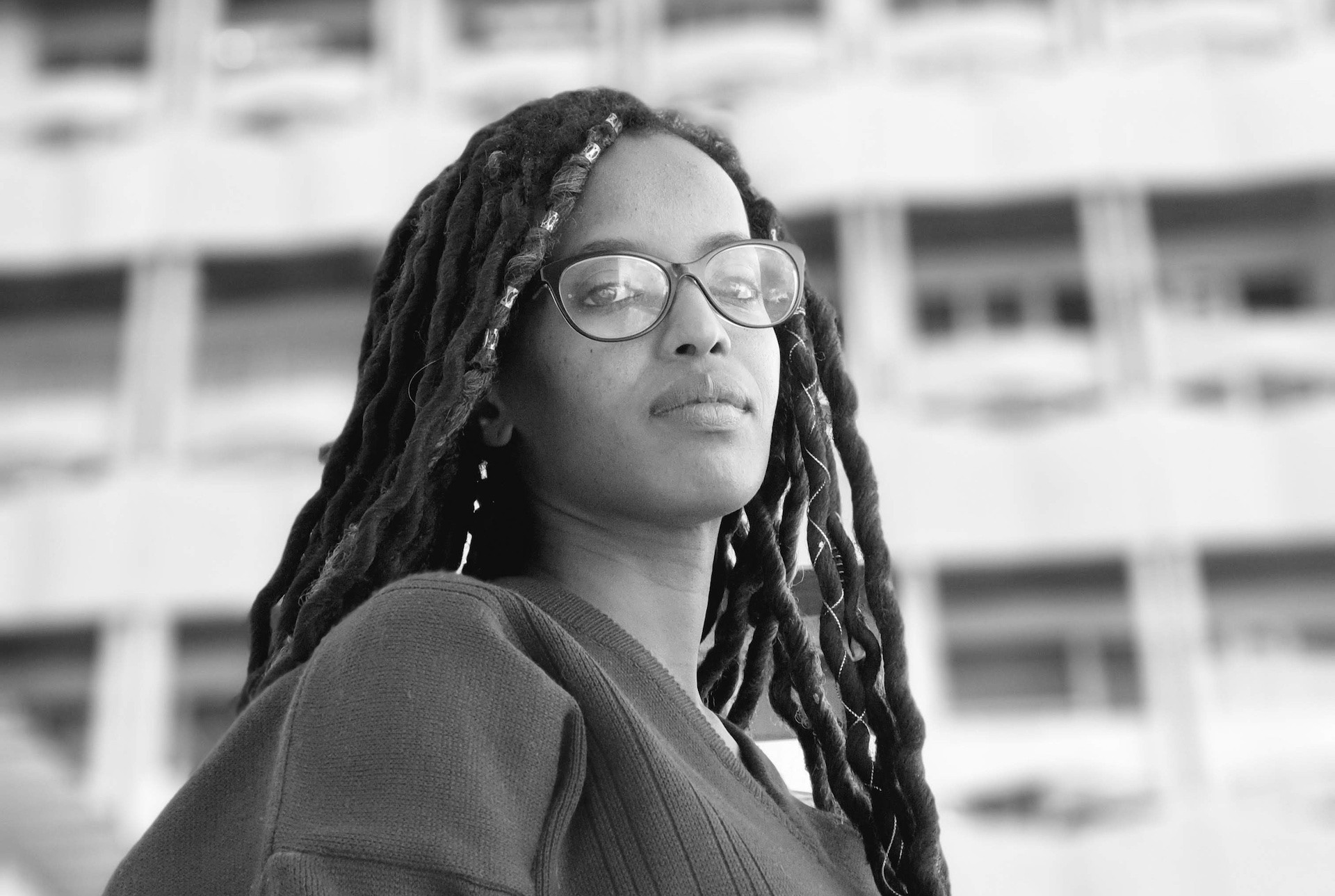
In "All for the Cause", William Morris frames death of comrades not as personal tragedy, but as a sacrifice for the future. The sentiment emphasizes that those who die for the movement live on through the continued struggle. It is true, even before turning 40, Muzan was a well-known multitalented widely published author. Looking at her contributions in quantitative terms, hers was a life well lived... but this feels meaningless at this moment. The death of such a bright, kind and young person at the start of a well-forged path in life and with so much potential, is immensely unfair. It is difficult to fathom; some say that it’s always the good souls that go first. Such a passing makes us feel at a loss and for now we choose to sit with this feeling. Muzan has left us. We feel profound sorrow at her loss. While we shed tears in her memory, we recall her achievements.
We got to know Muzan through our interactions with her around the second wave of the Arab Uprisings that started in Sudan in December 2018 and then spread to Algeria, Iraq and Lebanon. We remember her sharp analysis and passion in several conversations including a webinar TNI organised during the pandemic (June 2020) under the title ‘The Arab Spring lives on: Uprisings in times of pandemic’. Her commitment to people’s liberation was uncompromising and her fierce voice has deeply marked us. We therefore invited her to contribute to a collective book we co-edited in 2021 under the title ‘The Arab uprisings, a decade of struggle’, and Muzan rarely says no; her generosity of spirit and intellect was clear to us from the beginning. Her chapter ‘Why “it hasn’t fallen yet”? Lessons from the Sudanese revolution’ was an outstanding essay and remains an important contribution towards the debates around revolution in Sudan and beyond.
Few were able to reflect on the Sudanese revolution the way Muzan could for the fundamental yet simple reason that she inhabited both the theory and the praxis of revolutionary transitions. Since the beginning of the 2018 December revolution in Sudan, Muzan worked and acted as a resource person with several Sudanese grassroots-organisations and initiatives with the aim of providing the public with technical knowledge, necessary for efficient and meaningful participation in decision making around public resources and needs. She was Fanonian in praxis; her vivid focus and attachment to the masses, the wretched of the earth, their lives and their struggles have been extraordinary. Muzan’s concern with what ordinary people do and say and think and her belief that they make their own history, is centre-stage in her prolific writing. Not only is liberation a protracted struggle informed by praxis, but it must also be based on confidence in the masses and their revolutionary potential in figuring out the liberating alternative. And Muzan as an organic intellectual played her role in formulating what collective action is needed, guided by the necessary task of political education and opening up minds and equipping her people with knowledge to take things in their own hands and have some control of their destiny.
Muzan was ubiquitous during the Sudanese revolution, from delivering valuable teach-ins, trainings and workshops (even during dangerous times); actively organising initiatives and events; public speaking and analysing, chanting in protests as well as writing and analysing in both Arabic and English. With some of her friends and comrades, she quickly realised that scientific knowledge must be democratised and used for the service of liberating her people. That’s why she was one of the co-founders and the managing director of ISTinaD Center – Sudan, a research centre that works in the field of innovation, science and technology for people-centred development.
In her most recent contribution Back to the Future, co-authored with her close friend Gussai H. Sheikheldin, she revisits Julius Nyerere’s concept of self-reliance and projects of industrialisation, offering a much-needed perspective for the Contemporary Global South on the importance of rebuilding a development vision based on self-determination and South-South solidarities. Nyerere was not only one of the most original political anticolonial thinkers, but he had also explicitly linked Africa’s demands and needs to a global strategy for liberation and self-determination that must confront imperialism, a vision that Muzan fully embraced. She was a very close collaborator of TNI’s Global Green Industrial Policy Lab and without exaggeration, she helped us reframe and better articulate what we mean by inclusive and just green industrial policy for the South. In a meeting discussing the precise terminology in Arabic for industry, industrialisation, industrial policy and manufacturing, she even came up with a neologism, a testimony of her wit, creativity and desire to have our own words in our own languages, rooted in our local realities that our people can understand and embrace. We remember her powerful words when she said: “What is green if not people-centered?”
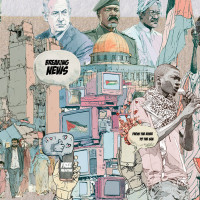
Muzan thought not only of Sudan. She thought about Africa, the Arab region and the Global South. Her interventions connecting Palestine and Sudan were a breath of fresh air and were particularly important seeing also how Sudan has been deliberately pitted against Palestine by reactionary forces in order to divide the movement. The emergence of oppression Olympics has been an attempt to break anti-imperial solidarities, but such liberal identity politics also exposes the racist ignorance which consider Arab, African, Black or Muslim as separate categories. Her piece Failing Palestine by Failing the Sudanese Revolution (which is also a chapter in the forthcoming book Towards Palestinian Liberation: Global Perspectives on Anti-Colonial Resistance and Solidarity edited by Abi Bae & Hamza Hamouchene) is a must-read. In it, she examines the intersecting struggles of the two countries as they each face genocidal violence. In particular, she shines a light on the competition for public and global attention in the context of the simultaneous wars, examining how these dynamics pose challenges to organisers supporting both Sudan and Palestine across the world. She draws out important lessons for how we can engage in effective political action and work towards sustainable transnational liberation.
Whether her revolutionary internationalism, critiques of mainstream and liberal industrial policy, focus on people-centered development paths, rethinking engineering projects, developing Sudan’s agricultural policy, and her collaborations in community organizing during the revolution, all her efforts shared an essential objective: how can this work be in the service of justice and done through people-centred praxis? The Sudanese saying laaloob baladna wa la tamur an-naas (Better our laaloob than people’s dates) is about the bitter-sweet date of the desert tree and means that it is better to be content with what you have than trusting abstract promises from elsewhere. Muzan’s universalist intellect and her authentic method come together in this beautiful Sudanese call for self-reliance and political autonomy.
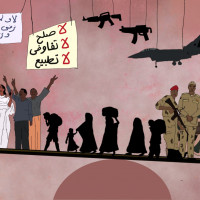
Her sobering analysis about the contradictions of revolutions; the ultimate question regarding the role of the military and militia groups and who owns communication and logistical infrastructures, as well as her assessments of grassroots committees, could not prevent but did explain the coup of October 2021. Her clearsighted analysis exposed how the Sudanese Armed Forces and the Rapid Support Forces engendered the counter-revolution, and her brave documentation provided political oxygen.
Spring 2023 felt like the beginning of the end for the 2018 Sudanese revolution. But she did not shy away from self-criticism and demonstrated that saying things out loud is actually what makes us understand our situations better. Even during the devastating war in Sudan, Muzan did not stop thinking and organising in spite of being displaced and exiled from her country. In several publications, the themes of communities taking their destinies in their own hands and launching their won initiatives (including in industry and manufacturing) are prominent. The last paper she was finalising for TNI was on thinking about industrialisation from the perspective of communities in a context of war. We will publish this posthumously to make sure her original and thought-provoking thinking continues in spite of her passing.
It is crucial to learn from Muzan’s thinking because it illustrates how, in the midst of the worst disasters, the masses find the means of reorganising themselves and continuing their existence when they have a common objective. In that respect, Muzan’s description of the conduct of the masses is of great importance as they show how through their own, often not chosen, circumstances, they go forward. This is perhaps one of the greatest legacies of Muzan. Her radical and generous vision is rooted in the people’s daily struggles that open up spaces for new ideas and imaginings. She regarded her role as a radical intellectual, one who is primarily engaged in and with people’s movements in order to come up with new ideas and concepts in the service of emancipation.
For her, the ‘we’ was always a creative ‘we’, a ‘we’ of political action and praxis, thinking and reasoning. Muzan embodied the idea that a thinker cannot be truly productive in their mission halfway, without being committed to full radical change. She fully committed herself in her short life to that cause. Thus, Muzan gave us two very important life lessons. Firstly her political analysis tells us that for revolutions to have a chance they must rely on self-organised resistance and build a socialism from below. Secondly, revolutionaries must hold on to each other – and not be scared to share vulnerabilities – for her passing teaches us that life is fragile and must be cherished and celebrated whenever possible, to fortify us for the struggles to come. Morris implores us to "Mourn not therefore, nor lament it, that the world outlives their life; Voice and vision yet they give us, making strong our hands for strife.". It is true that we can find solace in her writings and thinking, but first we grieve.
The shock of Muzan’s sudden death caused ripple effects across movements. Even if her life was worth several lives (see for a selection of her work on her TNI fellow page), this does not console the death of someone in their prime. In a striking coincidence, the premature death of Muzan reminded us of the passing at an early age of other revolutionary thinkers such as Frantz Fanon and Walter Rodney. When Rodney, the 38-year-old Guyanese intellectual and Pan African socialist activist left, many commented how ahead of his time he was both in life and in death and taken away too soon. Realizing the great potential by someone who still had so much more to offer but that can never be fulfilled because of their death, makes us immensely sad. The soul-piercing “Poem for Walter Rodney” dedicated to him expresses our farewell to Muzan Alneel, and so with innocent hope that these two inspirational rebels are together somewhere engaged in animated conversation we share an extract of Edward Kamau Brathwaite’s heartrending poem:
to be blown into fragments: your flesh
like the islands that you loved
like the seawall that you wished to heal
bringing equal rights and justice to the brothers
a fearless cumfa mashramani to the sisters whispering their free/zon
that grandee nanne's histories be listened to with all their ancient fleches of respect
until they are the steps up the poor of the church
up from the floor of the hill/slide
until they become the roar of the nation
that fathers would at last settle into what they own
axe adze if not oil well: torch
light of mackenzie
that those who have all these generations
bitten us bare to the bone
gnawing our knuckles to the dead
price fix price rise rachman and rat/chet squeeze
how bread is hard to buy how rice is scarcer than the muddy water where it rides how bonny baby bellies grow doom laden dungeon grounded down to groaning in their hunger
grow wailer voiced and red eyed in their anger
that knocks against their xylophones of prison ribs and bars
that how we cannot take our wives or sweethearts or our children or our children's children
on a trip to kenya: watch
masai signal from their saffron shadow
the waterbuck and giraffe wheel round wrecked manyatta
while little blonder kinter who don't even care
a fart: for whom this is the one more yard
a flim: for whom this is the one more start
to colon to cortes to cecil rhodes
to whom this is the one more road
to the thathi headed waiter aban/
died out of his shit by his baas at the nairobi airport hotel
lets his face sulk into i soup
lets his hairshirt wrackle i sweat
cause i am wearing the tarn of i dream in i head
As we mourn her, we must also celebrate her life and make sure her legacy will endure and therefore as TNI we will organise a memorial meeting in due course.
Goodbye dearest Muzan, you will be truly missed!
Credits
Authors
More like this
-
Back to the Future Nyerere's Vision of Industrial Development and its Lessons for the Contemporary Global SouthPublication date:
-
Failing Palestine by failing the Sudanese Revolution Lessons from the intersections of Sudan and Palestine in politics, media and organisingPublication date:
-
The Sudan conflict An interview with Muzan AlneelPublication date:
-
Why “it hasn’t fallen yet”? Lessons from the Sudanese revolutionPublication date: