Susan George (1934–2026) Honorary President, Transnational Institute
Susan George was one of TNI’s most renowned figures for her long-term and ground-breaking analysis of global issues. She passed away in 2026 at the age of 91.

Across a career spanning more than five decades, she wrote seventeen widely translated books. Among her most influential works was Shadow Sovereigns: How Global Corporations Are Seizing Power. She described her work in a cogent way that came to define TNI’s mission:
‘The job of the responsible social scientist is first to uncover these forces [of wealth, power and control], to write about them clearly, without jargon… and finally… to take an advocacy position in favour of the disadvantaged, the underdogs, the victims of injustice.’
Susan George served for many years as President of TNI’s Board, later becoming its Honorary President in recognition of her foundational role in shaping and sustaining the Institute from its earliest days. She remained closely engaged with TNI’s work throughout her life.
Honours and Awards
She received honorary doctorates from the University of Newcastle-upon-Tyne and the Universidad Nacional de Educación a Distancia of Madrid, as well as the first ‘Outstanding Public Scholar Award’ of the International Political Economy section of the International Studies Association. Susan George was also a Fellow of the Royal Society of Arts.
Media and Public Engagement
Susan George was a frequent interviewee in print, radio and television and regularly contributed articles to Le Monde diplomatique, openDemocracy, El País, New Internationalist and The Nation. Her clarity of analysis and willingness to challenge entrenched power made her a respected and widely cited public intellectual.
Selected Works
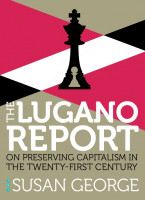
- The Lugano Report: On Preserving Capitalism
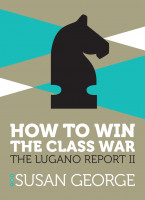
- The Lugano Report II: How to Win the Class War
- Shadow Sovereigns: How Global Corporations Are Seizing Power
- Faith and Credit: The World Bank’s Secular Empire
- A Fate Worse Than Debt
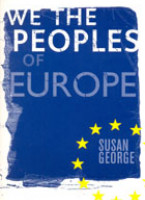
- We the Peoples of Europe
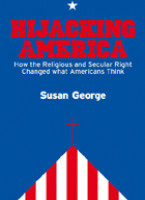
- Hijacking America: How the Religious and Secular Right Changed What Americans Think
Latest work
-
History in Action - Part 5 2020-onward! - A counter history by the Transnational Institute
 Publication date:
 -
History in Action - Part 4 2008-2020 - A counter history by the Transnational Institute
 Publication date:


Key documents
-
Susan George: How to win the Class War The Lugano Report IIPublication date:
-
The Lugano Report On Preserving Capitalism in the 21st CenturyPublication date:
-
Hijacking America How the religious and secular right changed what Americans thinkPublication date:
-
Publication date: