
Foreword to the Palestine collection
Topics
In this foreword, Karma Nabulsi reflects on a century of organising for Palestine, tracing solidarity, resistance and the shared struggle for justice that continues to inspire movements worldwide

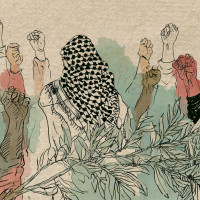
Illustration by Fourate Chahal El Rekaby
Organising for Palestine has been taking place for more than a century around the world. Generation after generation have passed on the torch after lifting it, in order to liberate the land, while taking part in the struggle for its people’s return to it. In this collection you will find the current generation’s hopes, hearts and ideas, as well as their commitment to that struggle for justice. It will also immediately confirm that the struggle for Palestine is, and always has been, an international one: ‘Free Palestine’ holds intimate meaning for the peoples of the world, especially those at the sharp end of life. It means something to people (and peoples) everywhere who struggle for freedom in myriad ways, and for myriad ends.
As you will see in this collection, it is a real gift to be able to devote oneself to the struggle for Palestine: you meet the most extraordinary people, you participate in the most unexpected and miraculous events, you constantly touch the profound beauty of a people who are fighting for their freedom. As the old saying goes, nothing is as beautiful as a people fighting for their freedom.
With Palestine, one of the most important first things to learn is how to stand strong and ‘raise the flag for Palestine’ wherever you are: learning to do so successfully is essential; it encourages others to join you.
You also read (and learn to read) with a growing sense of universalism, and the growing understanding that this is not a position, it is instead (like love or freedom) a collective practice. This practice comes from an abiding love of the land, a commitment to serving a struggling people, and a yearning for the possibilities of revolutionary emancipation.
This is not to say one does not witness or suffer the ugliness, cruelty, and impunity-driven madness of the enemy, as well as the disappointing limits of those who are too fearful or overwhelmed to confront it. However, working for Palestine shows you pretty quickly that freedom comes from organising with others on a popular level, and without pause. There is no time to denounce, or spend your day pointing fingers, when your people suffer, when you seek to change this for them, appreciating the urgency to turn the world upside down.
You can also learn here about the Palestinian people, and our quest for freedom. Since the Nakba, the Palestinian people have sought a physical unity that could gather its collective spirit across the borders and continents where we were driven by armed aggression, against our will. This unity is so we can determine our fate and free ourselves and our land, as one people.
This constant dream of unity is specific in its aim – for the most central thing to appreciate in this struggle for justice is that the majority of Palestinians were expelled outside of the borders of Palestine. Those inside our borders and those outside remain one people until liberation. This is why the internationally recognised right to return to our land is our common aim as a people. In order to advance it, we must constantly restore our body politic, to debate together, and to decide together, collectively. As during an earlier era when the revolution had life, it is only once this restoration reoccurs that strategies can be designed and agreed upon together, and then abided by: they are publicly recognised as emerging from the popular will.
For today, an internationalist liberation movement that fights for Palestinian liberation and return continues. Its unity is not the homogeneity of ideologies. It is, instead, shaping a common platform of unity across many ideologies on points of common and urgent concern.
Palestinians find themselves today in an extraordinary predicament; it has been so for some time. They have needed to acquire a particular tradition of humanity, style, and fierce determination which has become a tradition that celebrates life and serves the living, while honouring those who struggled before them. This is a thread that ties Palestine to the peoples of the world, as well as all those who come to work for Palestine.
One of the many lessons these articles show, and that generations of practice have taught us, is that young thinkers, organisers and activists for Palestine, no matter their starting point, are often brought to this fight for justice via struggles in other arenas. Also, Palestine has been, and continues to be, the first training ground for thousands of organisers involved in a wide realm of issues: there is nothing so difficult, so unique, or so challenging as overturning the status quo on Palestine – and it is where you learn how to do so.
We can also learn in this collection from different continents and peoples of the world much more about their intimate connection to Palestine. They ask of us to locate, listen and to learn from older generations of revolutionaries. They have much to teach us, not only in terms of principle, but in terms of innovative, effective anti-colonial practices that work. They offer lessons in how to increase in strength, in voice, and principle, in how to unify instead of how to divide, and how to remain steadfast on principle until achieving it.
For most peoples, Palestine remains the measure. Mahmoud Darwish has explained our regenerating purpose. It is one of many contributions by Palestinians: ‘we cultivate hope’.
Karma Nabulsi
Oxford, UK
March 2026
Towards Palestinian Liberation
View the collection-
Publication date:
-
Introduction: The long and arduous road to a liberated Palestine Reclaiming anti-colonial resistance and solidarityPublication date:
-
Framing Palestine Israel, the Gulf states, and American power in the Middle EastPublication date:
-
Palestine in a world of struggle The role of Palestinians in Third World solidarityPublication date:
-
Sustainability fantasies/genocidal realities Palestine against an eco-apartheid worldPublication date:
-
Out-Organise the Enemy! Eqbal Ahmad and the liberation of PalestinePublication date:

-
African attitudes to, and solidarity with, Palestine From the 1940s to Israel’s Genocide in GazaPublication date:
-
Failing Palestine by failing the Sudanese Revolution Lessons from the intersections of Sudan and Palestine in politics, media and organisingPublication date:
-
“The condition for freedom is for the Egyptian masses to take to the streets” Egypt’s centrality in the struggle for PalestinePublication date:
-
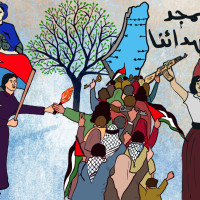
Vietnam, Algeria, Palestine Passing on the torch of the anti-colonial strugglePublication date:
-
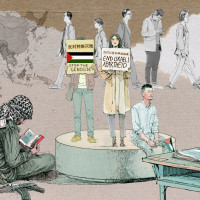
From Global Anti-Imperialism to the Dandelion Fighters China’s Solidarity with Palestine from 1950 to 2024Publication date:
-
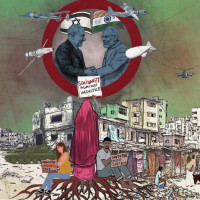
India, Israel, Palestine New equations demand new solidaritiesPublication date:
-
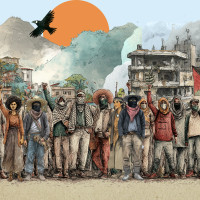
Yalla, Yalla, Abya Yala Reaching out to Palestine from Latin America in times of genocidePublication date:
-
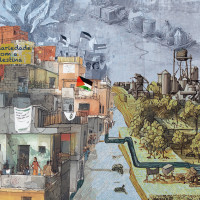
From the Favelas and Rural Brazil to Gaza How militarism and greenwashing shape solidarity with Palestine and resistance in BrazilPublication date:
-
From Turtle Island to Palestine Resisting settler colonialism and genocidePublication date:
-
Publication date:


Credits
More like this
