
Coca Chronicles: Coca review denouement Issue #7: The UN drug scheduling system in dispute
Topics
Regions
After a two-year critical review, the WHO has decided to retain the coca leaf in Schedule I of the 1961 Single Convention. Despite finding no evidence of meaningful public health harms, the Expert Committee relied on a controversial interpretation of the ‘convertibility’ principle to justify its recommendation. This decision raises serious legal, scientific and human rights concerns and casts doubt on the UN drug control system’s capacity to confront its colonial legacy.
Longread by


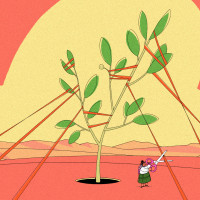
Illustration by Anđela Janković
Introduction
Last June, we noted that for the World Health Organization (WHO), the critical review of the coca leaf “presents an opportunity to help correct the serious error of placing coca in Schedule I of the 1961 treaty, an injustice for which the organization bears significant responsibility.” We asked whether the WHO “can meet the moment” and “confront its colonial legacy and right a historic wrong.” Unfortunately, the answer has proven to be a resounding “no”. Far from meeting the challenge and taking advantage of the opportunity afforded by the coca review to correct its own historic mistakes, the WHO conducted and concluded the review in ways that perpetuate injustices and spotlight serious flaws in the UN drug scheduling system.
In December, the WHO Expert Committee on Drug Dependence (ECDD) announced the outcome of its coca review, which recommends retaining the coca leaf in Schedule I of the 1961 Single Convention on Narcotic Drugs. This disappointing and disputable conclusion of the WHO-ECDD reveals the defects and politicization of the treaty scheduling system and the WHO review procedure. The outcome also puts into question the capacity of the UN drug control system to rectify its foundational wrongs and inconsistencies, and to align itself with new scientific evidence and human rights obligations.
As anticipated, the four international teams of academic experts contracted by the WHO for the critical review—after spending more than a year going through all the available scientific literature—did not find evidence that coca leaf is harmful, while affirming that it may have some therapeutic properties. For its 48th ECDD meeting on 20-23 October 2025, the WHO secretariat then selected fourteen other experts in pharmacology, toxicology, psychiatry and drug dependence to discuss the critical review report and to draw conclusions for scheduling recommendations. Due to WHO funding constraints, the days available for the meeting were less than usual. Moreover, the secretariat had deliberately excluded anyone from the Andean region or with any prior expertise on coca, with the argument that they might have pre-conceived opinions that could compromise the strictly scientific and independent assessment of the ECDD. As usual, representatives of the INCB and UNODC participated at the meeting as observers. The idea that in this case it would be appropriate to also have someone present with specific Indigenous expertise or an observer from OHCHR, was categorically rejected.
In this setting, the ECDD ultimately concluded that the coca leaf should remain classified as a Schedule I drug based on grounds that have nothing to do with the evidence presented in the critical review report. A small group of technical experts, none with special expertise on coca leaf, Indigenous knowledge, human rights or legal treaty interpretation, supported by representatives from the WHO, INCB and UNODC secretariats, thus sealed the fate of this historical opportunity. Because the WHO recommends a continuation of the status quo, when Member States convene in Vienna in March for the 69th session of the UN Commission on Narcotic Drugs (CND), there will be no votes taking place on the scheduling of the coca leaf. A process that began with expectations for achieving meaningful reforms by using the machinery of the drug control regime itself ended in disappointment and further doubts about the UN drug regime’s willingness and capacity to undergo the reforms that would make it ‘fit for purpose’ in the 21st century.
This Coca Chronicle unpacks the main arguments used by the WHO-ECDD to conclude that coca leaf should remain in Schedule I, based on dubious contentions that: (1) cocaine extraction from the leaf meets the scheduling criterion for ‘convertible substances’; (2) descheduling would weaken international controls on cocaine production; and (3) traditional uses are already allowed under existing national exemptions.
Related

(1) The ‘convertibility’ principle
An intensive year-long review of the available evidence by a team of scientific experts contracted by the WHO ‘did not reveal evidence of clinically meaningful public health harms associated with coca leaf use’, and established that it is ‘not associated with significant dependence or abuse potential’. The evidence with regard to therapeutic properties is considered to be preliminary, but the potential is of ‘great interest for future developments to establish their efficacy and safety for use in human medicine’. The conclusions in the critical review report thus contradict the original justification of the WHO in the 1950s to include coca leaf in Schedule I of the 1961 Single Convention, namely that coca chewing was a harmful and addictive practice that had to be abolished. The primary principle for scheduling a substance under the 1961 Convention—its ‘similarity’ with the harmful and addictive properties of other narcotic drugs in the schedules, in this case the similarity of the effects of coca leaf to that of cocaine—is thereby convincingly rejected.
The ECDD’s argument for nevertheless keeping coca leaf in Schedule I is based fully on the secondary scheduling principle of ‘convertibility’, namely that coca leaf can be easily ‘converted’ or ‘transformed’ into cocaine. To justify its conclusion, the ECDD quotes the latest version of the WHO Guidance document (the ‘blue book’), approved by the WHO Executive Board in 2010: “A substance is convertible if it is of such a kind as to make it, by the ease of the process and by the yield, practicable and profitable for a clandestine manufacturer to transform the substance in question into controlled drugs” [§49]. The ECDD therefore concludes, “as coca leaf is used to manufacture cocaine, one controlled substance (cocaine) is made from another (coca leaf), thereby meeting the Convention’s criterion for convertibility.”1
The assumption behind the ECDD conclusion is that the WHO Guidance, by using the term ‘transform’, has given a broader interpretation of ‘convertibility’, which is generally understood to refer to the chemical transformation of a precursor into a controlled drug. The ‘spirit’ of the Convention, according to the explanation given by the WHO at the interactive dialogue during the reconvened CND session in Vienna in December 2025, is that if something can be changed easily into something that is dangerous, it should be scheduled as well, no matter what process of manufacturing is used, be it conversion or extraction. This interpretation of the treaty’s scheduling criteria lacks any solid legal basis in the Convention itself, the Commentary, the Conference proceedings or any other travaux préparatoires, and even in the WHO Guidance itself.
The terms ‘conversion’ and ‘transformation’ are used interchangeably in the Convention and the Commentary. Where the English version of the treaty refers to a substance that ‘is convertible’, the French and Spanish versions use ‘est transformable’ and ‘puede ser transformada’. There is nothing to suggest that the use of the term ‘transform’ in the WHO Guidance indicates a broader interpretation, even more so because the quote the ECDD refers to is directly taken from the Commentary. Substances that are ‘convertible’ to drugs under the terms of the Single Convention refer to precursors whose molecular structure can easily be chemically transformed into a harmful narcotic drug. Also the WHO Guidance, in a paragraph preceding the one quoted by the ECDD in its recommendation, refers to “substances convertible to narcotic drugs” as the “control of precursors” [2010 WHO Guidance, §47].Only a limited number of substances have been included in the schedules of the 1961 Convention based on the convertibility principle: other ecgonine alkaloids present in the coca leaf that are convertible to cocaine (methylbenzoylecgonine); thebaine—an alkaloid present in certain varieties of opium poppy—that is convertible to morphine; and some precursors of methadone and pethidine.
The ECDD has now argued that coca leaf needs to be retained in Schedule I, based on the convertibility principle that thus far has only been applied to precursor chemicals. Other plant materials on the schedule, such as cannabis (flowering tops and resin) and opium, were—just as coca leaf—included because of their purported harmful and addictive properties. Unfortunately, Schedule I of the 1961 Convention does not distinguish between drugs that were scheduled because of their harmful effects, and convertible substances that have no dangerous properties themselves. All are classified as ‘narcotic drugs’ and therefor subject to the same control provisions, including the limitation to medical and scientific purposes, and the criminalising requirements of the 1961 and 1988 conventions.
As the WHO Guidance points out, the 1971 Convention lacks a similar precursor scheduling regime for substances convertible to psychotropic substances. The 1961 and the 1971 conventions both include an identical general provision calling on the Parties “to apply to substances which do not fall under this Convention, but which may be used in the illicit manufacture of drugs, such measures of supervision as may be practicable”, without specifying those substances or introducing mandatory control measures. The 1988 Convention, as explained in the WHO Guidance, “fills the void that existed for controlling precursors of psychotropic substances and the control of other chemicals frequently used in the illicit production of all controlled substances” [§47].
Indeed, no plant materials have ever been scheduled under the 1971 or 1988 conventions. Many listed substances—such as cathinone, psilocybin, mescaline and DMT in the 1971 schedules; or (pseudo)ephedrine and safrole in Table I of the 1988 Convention—can be extracted from plants, mushrooms or cactii. But none of those botanical raw materials were scheduled as psychotropic substances or considered for inclusion in the 1988 tables as a ‘convertible substance’ or ‘precursor’. “A precursor, stricto sensu, is a chemical substance that in the manufacturing process becomes incorporated in full or in part into the molecule of a narcotic drug or psychotropic substance”, according to the 1988 Commentary [p. 252, footnote 540].
The question of convertibility is a standard item in the WHO review process, and in the case of coca leaf the critical review in that section of the report describes the cocaine that is present in several subspecies of the coca plant as “an alkaloid that is naturally synthesized by the plant”, and that the production of cocaine and other alkaloids from coca leaf does not require “chemical transformation” but falls within the definition of “solvent extraction”, a “physical separation process [that] does not involve any modification of the molecular structure of the extracted alkaloids”.
By conflating the scheduling principle of the convertibility of precursors with the treaty controls over plant raw materials used in the illicit production of narcotic drugs, the ECDD appears to misunderstand the basic logic of the treaty system, and the distinctions made therein between the control of plants, extracted alkaloids and chemical precursors. In none of the previous WHO reviews of psychoactive plants—poppy straw, cannabis, khat or kratom—has the Expert Committee ever used the argument of ‘convertibility’ or ‘ease of extraction’ of their alkaloids to recommend their inclusion in the schedules.
The WHO also contradicts the treaty interpretation provided by the countries that requested this review, without providing solid counter arguments or legal justifications. At the CND reconvened session in December 2025, representatives from the US, Colombia and civil society requested further explanation from the WHO about this interpretation of the convertibility concept, and whether they had benefitted from any expert legal advice on the matter, given the fact that the mandate of the ECDD and the expertise of its members is limited to medical and scientific determinations. In response, the WHO explained that legal advice had been provided during the ECDD session by a representative of WHO’s own legal department, as well as by the observers from the INCB and UNODC who were present at the meeting. Beyond the already mentioned references to the WHO Guidance and the ‘spirit’ of the law, however, no further details were given about the legal reasoning that led the committee to arrive at its controversial conclusion.
(2) Descheduling vs. cocaine control
The other main argument the ECDD uses for retaining coca leaf in Schedule I refers to the “marked increase in coca leaf cultivation and in the production of cocaine-related substances [and] significant, increasing public health concern about cocaine use”. In that context, “the Committee considered that reducing or removing existing international controls on coca leaf could pose an especially serious risk to public health.” Again, no legal explanation is given about the actual impact of descheduling, or how that would supposedly ‘reduce or remove’ the existing international controls on the use of coca leaf for illicit cocaine production.
This argument, presented by the ECDD as an important consideration to arrive at its recommendation, was clearly influenced by the political statements against descheduling expressed on several occasions by some Member States, especially by the US, France and Peru. At the CND thematic discussion in October 2025, for example, the US said that “removing the coca leaf from Schedule I would derail our joint efforts and only reward the narcoterrorists”. France expressed concern about the “health and security risk that rescheduling of the coca leaf might entail” because it would lead to “a likely significant increase in the availability of cocaine”. And Peru stated that “the removal of coca leaf from schedules could become a perverse incentive for transnational organized crime”.
Coca leaf is of course the raw material for cocaine production, and the critical review report mentions that the “extraction of coca paste from coca leaf and the purification of cocaine from coca paste are easy to follow and do not require specialist expertise”. But control provisions regarding coca cultivation and against the use of coca leaf for illicit cocaine production are laid down in Articles 2.6, 2.7, 23, 26 and 27 of the Single Convention, and in Article 3.1 of the 1988 Convention. Those provisions would stay in force if the coca leaf were to be removed entirely from the schedules of the 1961 Single Convention and no longer be classified as a narcotic drug itself.
Adolphe Lande, one of the architects of the 1961 and 1971 conventions, and the author of their Commentaries, described in his 1973 paper for the US National Commission on Marihuana and Drug Abuse (Shafer Commission) the “somewhat anomalous legal situation” that would be created if “cannabis and cannabis resin would no longer be listed in any of the Schedules of the Single Convention”. According to Lande, because “they would no longer be drugs in the meaning of the Single Convention [..] their production would not be limited to medical and scientific purposes”. While non-medical use would thus be legalized, however, their production “would continue to be controlled by the same strict regime as the production of opium, but would be authorized for any purpose.”2
The same applies to coca leaf: if descheduled, coca leaf in its natural form could be used for any purpose, but all licensing requirements and control measures on international trade would stay the same, to prevent that coca can be diverted to illicit cocaine production. The ECDD, while repeating political concerns about cocaine market dynamics, fails to articulate how descheduling of coca leaf would reduce control measures against illicit cocaine production and how that would “pose an especially serious risk to public health”.
In fact, several contributions to the review process have argued exactly the opposite: (a) a strictly regulated legal market in coca leaf products could separate more clearly the now quasi-legal Andean coca markets from the illegal cocaine production; (b) enabling export for legal coca products could considerably increase viable alternative livelihood opportunities for farmers now dependent on illicit coca cultivation, more likely to be successful than existing alternative development programmes; (c) making mild coca-based natural stimulants more available on the international market could even reduce to some extent the demand for cocaine.
Finally, the fear that an international market in natural coca products could become a new source for illegal cocaine extraction, is completely unrealistic. The draft report confirms that the ‘simplicity and profitability of extraction contribute to its role in illicit cocaine production’. This is applicable to large-scale practice of cocaine production close to illicit cultivation areas, but certainly not to legal trade in coca products. Regarding price and volume, there is no way it could be ‘practicable and profitable’ for clandestine manufacturers to extract cocaine from retail quantities of coca tea or mambe powder on international markets. For example, a rough calculation shows that around 700,000 coca tea bags would be needed for the extraction of one kg of cocaine at a cost of almost US$ 90,000, based on Colombian coca tea retail prices. That price would be at least twice as high on the European market, which means the production costs would be almost ten times higher than the wholesale price of cocaine on the illegal market in Europe, currently around US$ 20,000 per kg—and in spite of record seizures, supply is abundant.
(3) Traditional uses
The last time coca leaf had been discussed, in 1992, the ECDD concluded that “the coca leaf is appropriately scheduled […] since cocaine is readily extractable from the leaf”, which may have been used now as a precedent to justify making the same mistake. Back then, however—though it was labelled as a ‘pre-review’—the conclusion was reached without any new WHO study or consultation process. Still, in 1992, the ECDD also “discussed the advisability of prohibiting under the international conventions plant products containing psychoactive substances that are traditionally used by indigenous populations”. On balance, the Committee members felt “that the social problems resulting from the prohibition of these products under international controls might outweigh any health benefits”, and recommended that the WHO “consider studying these patterns of use and their health and social implications”.
This time, the Expert Committee did have the benefit of a wealth of new information. A detailed WHO critical review report; four extensive documents submitted by Bolivia and Colombia in support of their request for a critical review; answers from Member States to the WHO questionnaire; and numerous inputs to the consultation process and information meetings from human rights entities, Indigenous Peoples, academic experts and civil society. Many arguments and questions raised in those contributions appear to have been discarded, ignored, or at least remain unanswered. Lengthy sections that referenced these materials and engaged with social, human rights, regulatory and historical issues, were found in the critical review report's Annex, which was only available to the expert committee and not in the version that was shared publicly.
“The evidence presented in the critical review and other information considered by the Committee indicate that traditional coca leaf use by chewing or in tea does not appear to pose a particularly serious public health risk, although the safety of long-term use is not well documented”, according to the ECDD. After thousands of years of accumulated Indigenous knowledge about coca, this conclusion reveals an almost insulting denial of the relevance of Indigenous knowledge in the WHO review process. In addition, the ECDD “recognized that coca leaf has an important cultural and therapeutic significance for Indigenous peoples and other communities and that there are exemptions for traditional use of coca leaf in certain national frameworks.”3 Traditional coca uses in the Andean region have indeed managed to survive thanks to the struggle of Indigenous Peoples and other coca growing communities against decades of repression following the prohibition of coca leaf imposed by the 1961 Single Convention based on a WHO recommendation. The call on the WHO to finally end the UN condemnation of their culture and to repeal the grave historical mistake they made in the 1950s, has been a long-standing demand. Revoking the UN ban was meant and hoped to be the crown on their decades of struggle, to finally end stigmatization and criminalization, to enable them to share the benefits of their sacred plant with the rest of the world, and to allow them to use it as a resource for the development of their communities.
The ECDD conclusion is a slap in their face, or rather has been felt by many as a blow below the belt. This review offered the WHO an opportunity to explicitly distance itself from its blatantly racist positions in the past, and to publicly apologise for the serious harms they caused. But the WHO refused to reflect critically on its own problematic history, or to take any responsibility for the decades of violations of rights and repression that followed. Instead, the ECDD simply decided to maintain—albeit on other grounds—the UN prohibition of all non-medical uses of coca leaf, perpetuating the illegality under international law of millennia-old Indigenous cultural and spiritual practices. Indigenous Peoples are told that they should just feel satisfied with the imperfect semi-legal national spaces they managed to conquer despite the UN ban that the WHO helped to impose. Moreover, those local exemptions do not apply to everyone. Andean migrants in Europe, for example continue to face criminal prosecution for bringing coca products home for personal consumption. The same happens on an almost daily basis to traders smuggling coca leaf to the semi-legal consumption markets in Chile and Argentina.
The US has defended the idea that descheduling of coca leaf is unnecessary for the fulfilment of Indigenous rights, arguing that “the practices identified as traditional are largely medical or industrial, and therefore legitimate within the context of the Single Convention”. Welcoming the WHO decision, the US stated in December that “the Schedule I status of the coca leaf should not prevent countries from enacting domestic regulatory systems that allow for these practices while maintaining control measures to prevent diversion.”4 The EU has expressed a similarly hypocritical discourse, claiming that European support for the WHO recommendations is consistent with the Union’s full respect for Indigenous rights because traditional uses are allowed to persist under national exemptions and treaty reservations. Already forgotten seems the fact that the US and several EU Member States formally registered objections when Bolivia applied for a reservation under the Single Convention to allow for those domestic traditional uses.
Conclusions
On several occasions in the past, the ECDD has shown it can play an important role, as a source of scientific evidence and a neutral voice in the often politicised UN drug policy arena. Indeed, ECDD’s work prevented the possible scheduling of ketamine and kratom, and led to the deletion of cannabis from Schedule IV. This time, it was clear to everyone that a recommendation by WHO-ECDD to delete coca leaf from the schedules altogether—the first such recommendation since the 1961 Single Convention came into effect—would have triggered a major political controversy that many Member States and the Vienna bureaucracy wanted to avoid. On the other hand, strong arguments were presented in the review process about the racist and colonial background of the WHO decision to ban coca leaf in the 1950s, and the enduring violation of Indigenous rights ever since.
From the start, the WHO pushed back against any consideration of Indigenous rights, claiming it fell outside of the ECDD mandate. And the excuse used in the end is that traditional uses can continue anyway in the Andean countries, implying that the rights of Indigenous Peoples can sufficiently be covered under national exemptions. Finally, a justification for keeping coca leaf in Schedule I was found in a questionable reinterpretation of the ‘convertibility’ principle, basically concluding that coca leaf can be considered to be a ‘precursor’ under the terms of the Single Convention.
The WHO conclusion lacks a solid legal foundation, in terms of the basic rules of treaty interpretation as well as the absence of human rights considerations. A politically convenient reinterpretation of the scheduling criteria and the basic control logic of the treaty system, cannot rely on superficial linguistic assumptions and vague references to the ‘spirit’ of the treaty. It also requires consistency with previous reviews and a comparison with other plants, alkaloids, extracts, preparations and precursors. It was probably unrealistic to expect from the ECDD members a thorough analysis of the implications of the decision they arrived at in the short time available. Given the historical gravity, the political tensions and the complexity of this review, and amidst an overload of documents and contradictory arguments, the compromise put on the table—with the legal green light from the observers present at the meeting—offered a welcome escape from the conundrum they confronted.
The big question now is: what comes next? The outcome may have serious repercussions for future scheduling reviews, especially for plant-based drugs. It will also taint the reputation of the WHO Expert Committee as a fully independent body that has the capacity to guide the UN drug control system into a more evidence-based and human rights compliant direction. The coca review was a unique opportunity and a litmus test for the capacity of the system to evolve using existing treaty-based procedures. Unfortunately, it has failed the test. The independent panel to review the UN drug control machinery, will have to analyse the obstacles to systemic evolution, including the lessons learned from this review process. Perhaps a more technical expert group (WHO, INCB, UNODC with governmental and independent experts) could advice on how to overcome the inconsistencies of the scheduling system, with regard to the now even more conflated concepts, definitions and criteria for the control of plants, alkaloids, extracts, preparations and precursors across the three conventions. Meanwhile, progressive Member States will have to explore more pro-actively other pathways to advance with necessary reforms, by means of treaty reservations or inter se agreements, and by appealing to human rights obligations.
Credits
More like this
-
WHO Critical Review of Coca Leaf A Comprehensive OverviewPublication date:
-
Coca Chronicles: Monitoring the UN Coca Review Issue #1: Bolivia Challenges UN Coca Leaf BanPublication date:
-
Coca Chronicles Issue #3 A Conversation on Coca with Wade DavisPublication date:
-
Conflicted over Coca Issue #4: Andean-Amazonian Indigenous Peoples see promise and peril in lifting coca banPublication date:
-
The UN Coca Leaf Review and Indigenous Peoples’ Rights: Can the WHO Meet the Moment? Coca Chronicles #5Publication date:
