Coca review denouement: The UN drug scheduling system in dispute TNI Statement to the CND
Topics
Regions
This written statement was submitted by the Transnational Institute (TNI) to the 69th session of the UN Commission on Narcotic Drugs (CND), March 2026.
This statement summarises the key arguments of the briefing Coca review denouement: the UN drug scheduling system in dispute (CC#7).

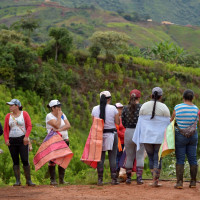
Photo credit: Martin Jelsma
In December, the WHO Expert Committee on Drug Dependence (ECDD) announced the outcome of its coca review, recommending that it remain in Schedule I of the 1961 Single Convention on Narcotic Drugs . This disputable conclusion exposes structural defects in the treaty scheduling system and in the WHO review procedure, and raises serious doubts about the capacity of the UN drug control regime to rectify its foundational wrongs and inconsistencies, and to align with new scientific evidence and human rights obligations.
The ECDD’s reasoning rests primarily on three arguments: (1) that coca leaf meets the Convention’s criterion of “convertibility” because cocaine can be extracted from it; (2) that descheduling would weaken international controls on cocaine production and pose public health risks; and (3) that traditional uses are already accommodated through national exemptions. A detailed critique was published in Issue #7 of the TNI/WOLA Coca Chronicle series, a summary of arguments is presented below.
(1) The ‘convertibility’ principle
An extensive year-long review found no evidence of clinically meaningful public health harms, and concluded that coca leaf use “is not associated with significant dependence or abuse potential.” The findings of the critical review report contradict the justification used by the WHO in the 1950s to place coca leaf in Schedule I—namely that coca chewing was harmful and addictive and should be abolished.
The ECDD’s argument for nevertheless keeping coca leaf in Schedule I is based fully on the secondary scheduling principle of ‘convertibility’, namely that coca leaf can be easily ‘converted’ or ‘transformed’ into cocaine. To justify its conclusion, the ECDD quotes the WHO Guidance document (the ‘blue book’), approved by the WHO Executive Board in 2010: “A substance is convertible if it is of such a kind as to make it, by the ease of the process and by the yield, practicable and profitable for a clandestine manufacturer to transform the substance in question into controlled drugs” [§49]. The ECDD then concludes, “as coca leaf is used to manufacture cocaine, one controlled substance (cocaine) is made from another (coca leaf), thereby meeting the Convention’s criterion for convertibility.” This interpretation lacks a solid legal basis in the Single Convention , its Commentary, the travaux préparatoires, or consistent WHO practice.
The concept of convertibility historically applies to precursor substances whose molecular structure can be chemically transformed into a narcotic drug. The WHO Guidance itself refers to “substances convertible to narcotic drugs” as the “control of precursors” [§47]. Plant materials such as coca leaf, cannabis, and opium were included in the schedules due to alleged harmful and addictive properties—not because of ease of extraction of their active compounds.
The critical review itself clarifies that the manufacture of cocaine from coca leaf does not require “chemical transformation” but falls within the definition of “solvent extraction”, a “physical separation process [that] does not involve any modification of the molecular structure of the extracted alkaloids”. By conflating the convertibility of precursors with the treaty controls over plant raw materials used in the illicit production of narcotic drugs, the ECDD appears to misunderstand the distinctions made within the treaty system between the control of plants, extracted alkaloids and chemical precursors. In none of the previous WHO reviews of psychoactive plants—poppy straw, cannabis, khat or kratom—has the Expert Committee ever used the argument of ‘convertibility’ or ‘ease of extraction’ of their alkaloids to recommend their inclusion in the schedules.
(2) Descheduling vs. cocaine control
The ECDD also justified its recommendation by citing increases in coca cultivation and cocaine production, and suggested that reducing or removing international controls on coca leaf could pose “an especially serious risk to public health.” Again, no legal explanation is given about the actual impact of descheduling, or how that would supposedly ‘reduce or remove’ the existing international controls on the use of coca leaf for illicit cocaine production. The ECDD fails to demonstrate how descheduling would materially weaken cocaine control. Its reasoning appears influenced by political statements made by certain Member States warning that descheduling would lead to a “significant increase in the availability of cocaine” (France), “become a perverse incentive for transnational organized crime” (Peru) and “only reward the narcoterrorists” (US).
Coca leaf is of course the raw material for cocaine production, and the critical review report mentions that the “extraction of coca paste from coca leaf and the purification of cocaine from coca paste are easy to follow and do not require specialist expertise”. But treaty provisions governing coca cultivation and cocaine production are contained in Articles 2(6), 2(7), 23, 26 and 27 of the 1961 Convention and Article 3(1) of the 1988 Convention . These obligations would remain in force even if coca leaf were deleted from the schedules.
If descheduled, coca leaf in its natural form could be used for any purpose, but all licensing requirements and control measures on international trade would stay the same, to prevent that coca can be diverted to illicit cocaine production.
The ECDD fails to articulate how descheduling of coca leaf would reduce control measures against illicit cocaine production and how that could “pose an especially serious risk to public health”. In fact, several contributions to the review process have argued the opposite: (a) a regulated legal market in coca products could more clearly separate traditional and licit markets from illicit cocaine production; (b) enabling export of legal coca products could create viable alternative livelihood opportunities for farmers, potentially more effective than existing alternative development programmes; (c) the availability of mild natural coca-based stimulants could modestly reduce demand for cocaine.
Fears that legal coca products on international markets would become sources for illicit cocaine extraction are unrealistic. While extraction may be simple in proximity to cultivation areas, it is economically impractical from retail products. A rough estimate indicates that approximately 700,000 coca tea bags would be required to extract one kilogram of cocaine, at a cost far exceeding current illicit wholesale prices in Europe. Extraction from legal consumer products would in no way be “practicable and profitable” for clandestine manufacturers.
(3) Traditional uses
When coca leaf was last discussed by the ECDD in 1992, the Committee—without undertaking a review—already questioned whether prohibiting plant products traditionally used by Indigenous populations might create greater social harms than health benefits.
In the current review, the ECDD had access to extensive new information: a detailed critical review report; comprehensive submissions from Bolivia and Colombia; responses from Member States; and numerous inputs from Indigenous Peoples, human rights bodies, academic experts and civil society. However, many arguments raised in those contributions were not reflected in the final recommendation.
Sections of the critical review report engaging with social, historical and human rights issues reportedly appeared in annex materials not included in the publicly available report.
The ECDD acknowledged that traditional coca use does not appear to pose a serious public health risk, and “that coca leaf has an important cultural and therapeutic significance for Indigenous peoples and other communities and that there are exemptions for traditional use of coca leaf in certain national frameworks.” Yet maintaining Schedule I status perpetuates the international legal prohibition of non-medical coca uses, leaving Indigenous practices technically illicit under international law. National exemptions exist despite—not because of—the treaty framework, and they remain incomplete and unevenly applied. Informal trade to semi-legal markets in neighbouring countries like Argentina and Chile continues to be criminalized, and Andean migrants in Europe continue to face prosecution for possessing coca products for personal use.
Conclusions
A recommendation to delete coca leaf from the schedules would have generated political controversy that many Member States and the Vienna-based drug control bureaucracy preferred to avoid. The conclusion the ECDD reached—retaining Schedule I status on convertibility grounds—offered procedural closure without confronting systemic inconsistencies. However, the reasoning underpinning the recommendation stretches treaty interpretation, conflates distinct regulatory categories, omits substantive human rights analysis, and risks setting a problematic precedent for future plant-based reviews. The decision also affects the credibility of the WHO as an independent body capable of guiding the UN drug control system toward evidence-based and human rights–compliant reform.
The forthcoming independent panel reviewing the UN drug control architecture should examine the structural barriers revealed by this process. Clarification is urgently needed regarding the control criteria applicable to plants, alkaloids, extracts, preparations and precursors across the three conventions. A more technical expert group—comprising WHO, INCB, UNODC and independent specialists—could provide recommendations to resolve inconsistencies in scheduling definitions and procedures.
The coca leaf review reveals a structural tension between outdated treaty provisions and contemporary standards, and underscores the limits of systemic evolution through existing treaty mechanisms. Addressing that tension is essential for the credibility and future relevance of the international drug control regime. Meanwhile, progressive Member States may need to explore alternative legal pathways for reform. These could include reservations, inter se agreements among like-minded States, or reliance on human rights obligations to justify departures from outdated treaty provisions.
For more details, see:
www.tni.org/en/drugs-and-democracy/coca-leaf
Related

Download
Credits
More like this
-
Coca Chronicles: Coca review denouement Issue #7: The UN drug scheduling system in disputePublication date:

-
WHO Critical Review of Coca Leaf A Comprehensive OverviewPublication date: