
Fascist by design Italy’s Lessons for Neoliberal Democracies
Topics
Regions
Technocratic neoliberalism made fascist protections of capital interests in Italy redundant. However its undercurrents persisted in state institutions and in racist formulations of identity that are now being used to police migration, criminalise protest, and systematically erode social rights.
Longread by


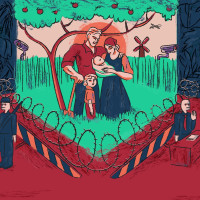
Illustration by Sana Nasir
The word fascism has lost much of its meaning. It still carries the stench of twentieth-century-style dictatorships, so accusing contemporary leaders like Giorgia Meloni, Donald Trump, Viktor Orbán, Narendra Modi or Javier Milei of being fascists is often not taken seriously. Yet these are all leaders of countries where democracy is being eroded and coercion is increasingly presented as order. If we are even a little worried about the future of our democracies, it is worth asking what we are facing, and remaining open to the idea that just because it does not look like the fascism of the past, it does not mean it is not fascism.
Italy offers a crucial vantage point for this question. It was both the birthplace of fascism and the laboratory for its reinvention. Beyond Mussolini’s dictatorship, the far-right resurfaced twice: during the anni di piombo (literally ‘years of lead’, 1969–1982) and again over the past decade. Each revival reveals how fascism’s instruments of violence adapt to political and economic transformations.
After her election in 2022, many were quick to offer reassurance that there was little to worry about Italy’s new prime minister, Giorgia Meloni. Though head of a post-fascist party, Fratelli d’Italia (Brothers of Italy) with direct lineage to Mussolini’s National Fascist Party, she has been portrayed as a conventional conservative with a liberal foreign policy, often compared to Margaret Thatcher.
Three years into her government, however, attacks on the judiciary and the press, growing restrictions on civic space, and the systematic use of legislation by decree to avoid parliamentary scrutiny all point to an illiberal turn. The government has repeatedly accused magistrates of politically motivated interference, seeking to delegitimise investigations and court rulings that contradict government policy. Journalists have been targeted through public intimidation, as well as attempts to discredit critical reporting and mounting pressure on public broadcasters. At the same time, civil society organisations (CSOs) have reported a narrowing of civic space, with new administrative obstacles, threats of funding cuts and increasing hostility towards non-governmental organisations (NGOs) working on migration, rights or social justice. Politicians have intensified efforts to criminalise activism and dissent, targeting NGOs, journalists, minorities, and protesters. This trend has been reinforced by the government’s extensive reliance on emergency decrees, which allow legislation to be passed without open parliamentary debate. In parallel, the government has used defamation laws to intimidate intellectuals, university professors and journalists, deterring them from criticising it.
The state broadcaster, RAI, has also come under growing government influence. Journalists have gone on strike, denouncing what they describe as ‘suffocating control’, and increasing censorship. The most emblematic case was the cancellation of author Antonio Scurati’s televised monologue on 25 April 2024, Italy’s Liberation Day, which commemorates the end of fascism. Scurati’s text criticised the persistence of fascist nostalgia in Italian politics, and its last-minute removal was widely read as political interference.
The 2025 Security Law is another alarming example. Passed as an emergency decree to bypass parliament, it restricts protest and public assembly through vague and arbitrary wording, granting police excessive discretion in defining threats to public order. The Organization for Security and Co-operation in Europe (OSCE) and the Council of Europe warned that the legislation risks undermining the rule of law and disproportionately targets migrants, racial minorities, and prisoners. Equally concerning are the discussions surrounding another constitutional reform to grant more power to the Prime Minister at the expense of parliament. This weakening of checks on executive power, which the scholar Nancy Bermeo calls ‘executive aggrandisement’ lies at the core of Italy’s current erosion of democracy.
To grasp the essence of Italy’s current government, it is useful to recall the concept of post-fascism, which Enzo Traverso defined as follows:
Meloni’s Italy exemplifies this tension. She insists that the Italian right ‘has consigned fascism to history for decades now’, yet her party maintains networks preserving its ideological legacy. The youth wing of Fratelli d’Italia, Gioventù Nazionale, is a window into this ecosystem. A journalistic investigation documented members performing fascist salutes, chanting fascist and Nazi slogans, and admitting that they deliberately self-censored when speaking to the press to appear more moderate. Off-camera, militants openly identified as fascists and racists, one even boasting family ties to those behind the neofascist bombing of Bologna Station in 1980, which killed 85 and injured over 200.
These circles extend into a dense network of cultural and financial organisations that sustain Italy’s far-right. On social media is easy to see how Gioventù Nazionale and its student branch, Azione Studentesca, maintain ties with groups like CasaPound, an Italian neofascist accelerationist movement and militant organisation, as well as Passaggio al Bosco, a publishing house promoting fascist and neofascist literature and writers. For book promotion, Passaggio al Bosco has collaborated with the Fondazione Alleanza Nazionale, which many consider to be Fratelli d’Italia’s financial arm, where Arianna Meloni, the Prime Minister’s sister, sits on the board. Fondazione Alleanza Nazionale has in turn financed far-right associations such as Forza Nuova. FN and its leader, the convicted criminal and militant Roberto Fiore, remain connected to the Alliance for Peace and Freedom, a pan-European platform linking neofascist movements across the continent.
Accompanying this structure has been a growing discourse of intolerance centred on supposed threats to Western and Italian culture. The Deputy Prime Minister, Matteo Salvini, for instance, routinely posts alarmist messages about migrants and Islam. Similar tactics include Giorgia Meloni’s false claim that migrant arrivals have driven an increase in rapes, and the warnings by Francesco Lollobrigida, Minister of Agriculture, about so-called ethnic replacement. This rhetoric has been reinforced by efforts to rewrite the history of the resistance to fascism, which has erroneously been labeled as purely communist. It has reached the point where both Meloni and the President of the Senate, Ignazio La Russa, have promoted a false account of a Nazi reprisal during World War II in order to shift blame onto the antifascist resistance and therefore onto communists.
The combination of such political narratives with legislations aimed at targeting groups perceived as threats to a supposed homogenous, family-based and Christian Italian identity, results in the legitimisation of an insidious form of authoritarianism in which repression is legalised and opposition delegitimised.
These developments echo what Johan Galtung called cultural violence, which involves ‘those aspects of culture, the symbolic sphere of our existence [...] that can be used to justify or legitimise direct or structural violence’. Structural violence being violence ‘built into the structure and [showing up] as unequal power’.
This cultural and structural violence is what allows a far-right project to thrive within democratic institutions, and to erode them from within. Taking two foundational characteristics of fascism, political violence and anticommunism, and following how they evolved through the genealogy of Italy’s far-right, we can also see how democracy itself has changed. As capitalist democracies became increasingly neoliberal by incorporating the interests of capital within their own institutional structures, new forms of fascism and its violence have adapted in response. With countries becoming more technocratic, and increasingly shaped by market imperatives, fascism no longer needed to be fully totalitarian – and for now, no longer fully authoritarian. Violence is becoming increasingly embedded in the state rather than paramilitary, absolving fascist movements of such responsibility. Anticommunism, on the other hand, has survived as a way of stigmatising any challenge to the economic order, often accompanied by perceived threats to a constructed national identity, which have been instrumentalised to garner support for a political agenda aimed at the preservation of a homogeneous society.
Through Italy’s history, we can observe this transformation at work: from squadrismo in the 1920s, to the strategy of tension in the 1970s, to the neoliberalism of recent decades. Each stage reveals a shift in how fascism defends capital and legitimises violence within democracy. Understanding this lineage allows us to see not only what fascism has become in Italy, but also how the Italian and other democracies have allowed themselves to develop.
State of Power 2026

A brief history of the rise of fascism and neofascism in Italy
Squadrismo
Benito Mussolini’s seizure of power in 1922 was not a revolution, but the culmination of deliberate political choices by conservatives and liberals seeking to quell the social unrest of 1919–1920, known as biennio rosso (the red biennium).
Post-war Italy faced one of capitalism’s gravest crises. The Italian economist Clara Mattei writes that an anti-capitalist awakening was possible given the state interventionism that Italy employed like the other warring nations to confront the enormities of the war-production efforts. Entire sectors were collectivised as the government employed more workers and regulated the cost and supply of labour, showing that wage relations were political choices rather than natural economic equilibrium. Unions became more powerful, and workers realised that they had the leverage to demand more social rights, supported by the work of leftist intellectuals like Antonio Gramsci and Palmiro Togliatti.
With inflation skyrocketing, an unprecedented social upheaval swept the country. The revolutionary movement culminated in 1920, concentrated in northern Italy but expanding across the whole national territory. In this context where landowners, industrialists and centre-right politicians feared the subversion of society and erosion of national values, Benito Mussolini, a failed politician, gave them a tool to protect their interests: squadrismo.
Squadrismo was the movement of fascist action squads targeting socialists, communists, and revolutionaries. Through these squads, fascism took root as a violent counter-revolutionary force wherever elites perceived the state to be unable to protect property and hierarchy. It also answered a sense of national victimhood and decline that followed World War I. Decline was blamed on individualistic liberalism, falling birth-rates, class conflict, and foreign influences. News outlets like The Economist and Il Sole mirrored elite sentiment, portraying fascists as patriots who had ended the Bolshevik threat by ‘abandoning legal ways’ to save the nation. The new ways involved beatings, kidnappings, murders and the forced administration of castor oil, especially in socialist towns, while state authorities turned a blind eye.
Within a short time, squadrismo became entrenched in local politics, and Mussolini’s popularity among elites soared. In 1921, the liberal Prime Minister Giovanni Giolitti called elections and put forward a conservative alliance known as Blocco Nazionale, a right-wing coalition including Mussolini’s new Fasci di Combattimento. The socialist front held, however, and Blocco Nazionale did not win, but Mussolini became the third most voted parliamentarian and gained 35 seats. Successive government crises in 1921 and 1922 allowed him to consolidate power within parliament.
Mussolini used fear of socialism, conservative compliance, state authorities’ acquiescence, and threat of violence to finally seize power. On 28 October 1922, tens of thousands of fascist Blackshirts, Camicie Nere, were camped outside Rome – poorly equipped and in dire conditions – a bluff that could have been easily exposed by the royal garrisons defending the city. Yet the monarch, Victor Emmanuel III, did not sign the martial law decree and offered the position of prime minister to Mussolini. On official royal invitation, Mussolini arrived in Rome on 30 October. The following day, tens of thousands of Blackshirts were allowed in the city for a royal salute. The ‘vigorous fascist revolution’ (la gagliarda rivoluzione fascista) immortalised in memory was the mythification of this bluff.

Illustrazione Italiana, 1922, n. 45, Public domain, via Wikimedia Commons |
Once in power, Mussolini destroyed the very liberal democracy that gave him the tools and expedients to neutralise socialist unrest. Every time they faced a political choice, elites chose the anti-socialist, counter-revolutionary one, paving Mussolini’s road to power by accepting compromise after compromise in an attempt to save and restore the country’s capital and order through the means of fascist squadrismo. It was not the strength of the Blackshirts but the cowardice of the monarchy and conservatives’ refusal to risk their own force that secured power for Mussolini. In November 1922, the Italian stock market soared: capitalism had been saved.
This first iteration of far-right political violence shows how the defence of capitalism and the fear of social upheaval led elites to tolerate and legitimise violence as an instrument of order. Here, political violence was not just the use of force but a deliberate political strategy, framed as necessary to preserve both capitalist order and national identity. What began as extra-legal violence by squadristi was then absorbed into the state itself, giving life to the fascist dictatorship under Il Duce.
This essay will not narrate the horrors of this period. After 20 years, Italy was freed from Nazi-Fascism by the resistance and the Allies. Mussolini was killed by partisans in 1945 as he was fleeing to Switzerland. He was hung upside down in Milan’s Piazzale Loreto.
Strategy of tension
The history of neofascist terrorism in Italy during the anni di piombo (1969–1982) is a history of rogue secret services, state complicity, cover-ups, and foreign interference. The expression was borrowed from Margarethe von Trotta’s film Die bleierne Zeit, which won the Golden Lion at the 38th Venice International Film Festival in 1978.
Marked by political violence from both far-right and far-left actors, the period saw the latter, such as Brigate Rosse, Prima Linea, and Nuclei Armati Proletari, aiming their attack towards the heart of the state by targeting authorities, officials, and trade unionists. Neofascist terrorism, in contrast, operated covertly as part of a strategy of tension, defined as the use of political violence to instill fear among the population and thereby justify an authoritarian turn.
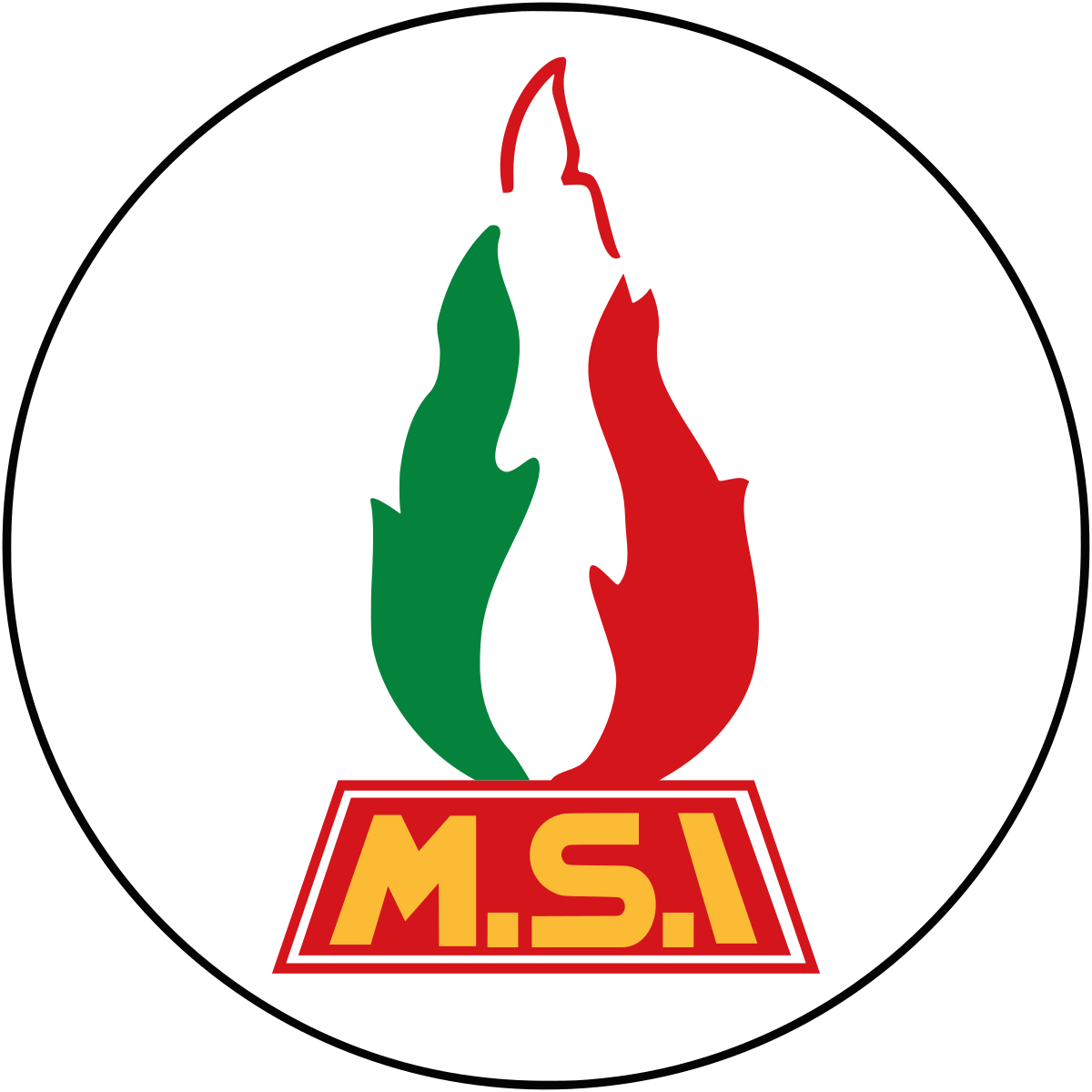
This period cannot be separated from the incomplete process of defascistisation after 1945. The 1946 Togliatti amnesty ensured that large parts of the civil service, judiciary, police and military remained staffed by former fascists, allowing fascist culture and networks to persist within the state apparatus. And although the Constitution banned the re-organisation of the Fascist Party, former fascist officials quickly returned to politics and public life. For example, Giorgio Almirante, former Head of Cabinet in the Nazi-fascist Repubblica di Salò and writer for La Difesa della Razza, founded the Movimento Sociale Italiano (MSI) party to preserve fascism’s political legacy. Licio Gelli, a former liaison between fascist authorities and Nazi Germany, became Venerable Master of the clandestine far-right Masonic lodge, Propaganda Due (P2), which had an important role in the years of lead.

© La Repubblica |
During the Cold War, Italy became a geopolitical frontline. The presence of the largest communist party in Western Europe, combined with renewed labour mobilisation in 1968, alarmed conservative forces and Western allies. Just as in the 1920s, it was when the capitalist hierarchy appeared fragile that far-right violence re-emerged. In this context, this was closely rooted in MSI and its offshoots, Ordine Nuovo and Avanguardia Nazionale. Key figures moved between these organisations, maintaining both political and operational continuity.
The Piazza Fontana bombing in Milan, which killed 17 people and injured 88, is the event that marked the beginning of the anni di piombo and the so-called massacre phase of the strategy of tension. Initial investigations blamed anarchists, following a ‘red trail’. Later inquiries uncovered a ‘black trail’, exposing the role of neofascist groups and deliberate efforts to shift responsibility onto the left. The Istituto Treccani describes the massacre as an act of extremist groups, notably Ordine Nuovo, acting alongside rogue sectors of the Italian security apparatus in response to the powerful cycle of social struggles in 1968 and 1969, and to the electoral rise of the Italian Communist Party (PCI).
The involvement of rogue sectors of the state during this period proved to be on a much larger scale and of a more systematic nature. For example, the judgments in the Piazza della Loggia bombing in Brescia exposed that gendarmerie officials diverted the investigations of the attacks. Moreover, reports indicated the strategic involvement of the CIA in instigating and supporting these waves of right-wing terrorism in Italy during the 1970s. This support probably came in connection with a broader European, NATO-linked ‘stay behind’ operation which in Italy, under the code name Gladio, took the form of a covert paramilitary structure.
Judicial and parliamentary inquiries revealed links between neofascist militants, sectors of the secret services, national gendarmerie units and the far-right Masonic lodge P2 to sustain the strategy of tension. These relationships involved systematic obstruction through depistaggi (cover-ups and false leads) that diverted investigations. Members of P2 also participated in the failed Golpe Borghese coup attempt of 1970.
Yet this strategy ultimately failed, not because Italian society was immune to authoritarianism, but because the dominant political and economic elites did not require an overt authoritarian restructuring of the state to protect the capital order, as neoliberalism took hold of Italy in the 1970s and 1980s. As Nicos Poulantzas argued, the capitalist state proved capable of containing social unrest through what he called authoritarian statism: intensified state control combined with the hollowing out of democracy.
From the Years of Lead to Authoritarian Statism
By the end of the anni di piombo, the far-right had to recontextualise itself in a world where socialist revolution had failed, the Soviet Union was collapsing, and capitalism was no longer under threat.
With the political crisis of the early 1990s and the dissolution of the mainstream parties, the MSI leader Gianfranco Fini rebranded the party as Alleanza Nazionale (AN) while rhetorically embracing the constitution and anti-fascism. In 1994, AN entered government through an alliance with the business tycoon and P2 member Silvio Berlusconi’s Forza Italia. In 2019 Berlusconi himself stated that Forza Italia had ‘legitimised and constitutionalised the Fascists’ back in 1994. This eventually led to the rise of Giorgia Meloni, who began in the MSI and later joined Alleanza Nazionale.
It is here that Nicos Poulantzas’ concept of authoritarian statism becomes crucial for understanding Italy’s trajectory. Writing in the late 1970s, Poulantzas argued that neoliberalism does not diminish the state but re-organises it, producing ‘an intensification of state control over every sphere of socio-economic life, combined with a decline in democratic institutions and popular freedoms.’ The state becomes stronger and more centralised, as democratic participation and social protections are hollowed out.
As neoliberalism took hold in the 1980s, key levers of democracy were outsourced to technocratic institutions. The former Minister of the Economy Guido Carli wrote:
The European Union implies … the abandonment of the mixed economy, the abandonment of economic planning, the redefinition of the modalities of composition of public expenditure, the restriction of the powers of parliamentary assemblies in favor of government . . . the repudiation of the concept of free social provisions (and the subsequent reform of healthcare and social security systems) … the reduction of the presence of the state in the financial and industrial systems …the abandonment of price controls and tariffs.
This meant that the terrain of left-wing struggle (economic planning, redistribution, social rights) had gradually moved beyond democratic reach. The revolutionary left that had fuelled the biennio rosso and 1968 protests could no longer grasp the system it opposed. And while Berlusconi always maintained an almost comical stance against communism, with slogans like ‘you will always be poor communists’ (sarete sempre dei poveri comunisti), he embodied exactly this shift. As Enzo Traverso observes, Berlusconi’s governments did not revive classical fascism, but they ‘introduced a cultural and political environment in which fascist genealogies could reappear without scandal’. Under Berlusconi, media concentration, personalised executive power, and the demonisation of critics as communists reshaped the political field. The police brutality and human rights violations that surrounded the 2001 G8 in Genoa, where protesters were beaten, tortured and forced to chant fascist slogans, were a clear demonstration of authoritarian statism in practice – where coercion was no longer presented as dictatorship, but as the defence of public order within a neoliberal democracy that now safeguarded the social and capital hierarchy within its own state structure.
Post-fascism or pre-fascism?
From Berlusconi onwards, fascism’s political legacy in Italy has been steadily normalised. The far-right no longer needed to overthrow the liberal order; it could operate within it. Neoliberal restructuring had already eroded the capacity of democratic institutions to represent popular interests. Power shifted from parliaments to executives, citizens to markets, politics to technocracy. Within this landscape, the old fascist logic of hierarchy, nationalism and exclusion could comfortably reassert itself.
Giorgia Meloni’s rise therefore must be understood as the culmination of this process rather than its end. Similar to Fasci di Combattimento, and therefore the National Fascist Party itself, Fratelli d’Italia was portrayed as a rupture from mainstream parties but emerged in continuity with their neoliberal policies. With this inheritance and the persistence of ‘red phobia’ in Italian public life, when the so-called migrant crisis began in 2013 and peaked in 2015, it provided fertile ground for parties like Fratelli d’Italia and Matteo Salvini’s Lega, which rode the wave of the discontent caused by the 2008 financial crisis and redirected it against migrants, Roma people, Muslims, LGBTQ+ citizens, and even cultural outsiders.
Exclusion of social heterogeneity is now becoming law, for example with the Security Bill punishing peaceful protesters with sentences of up to 20 years or with provisions against ‘gatherings’ aiming at raves and, arbitrarily, any invasion of terrains and buildings deemed dangerous to the public order. Other laws criminalise surrogate parenthood performed abroad, with a major impact on LGBTQ+ families. These are clear expressions of the interplay between what Galtung defined as cultural and structural violence, and how they affect real lives.
 |
 |
|
Logos of Movimento Sociale Italiano and Fratelli d’Italia |
|
Meloni’s leadership parallels other neoliberal democracies. Italy’s long fascist lineage helps us identify the substance of fascism, namely anticommunism and the defence of capital, and recognise how these traits adapt to neoliberal conditions. This continuity makes Italy an illustration of a wider pattern. Even in countries with no fascist past, democracies are turning towards illiberal forms of (national) protection. The essence remains the safeguarding of capital and a homogeneous cultural identity against perceived threats.
This form of post-fascism has been particularly subtle. Elections continue, but their meaning narrows as the space for contestation shrinks. Violence persists, not as open terror but as structure, in the policing of migration, the criminalisation of protest, the systematic erosion of social rights. The shift from physical to structural violence, from paramilitary to bureaucratic control, marks the adaptation of fascism to neoliberalism, whereby the state has absorbed the responsibility of protecting capitalism in a way that has allowed post-fascism to remain post-fascist.
For now.
Openly illiberal and violent behaviours are increasingly normalised. The assault on the US Capitol on 6 January 2021 and Jair Bolsonaro’s attempted coup in Brazil a year later should be understood not as anomalies but as warnings. As these politics spread across democracies, far-right movements grow emboldened to pursue violent projects that are not condemned by international allies who share their worldview.
But if neoliberal democracy had been sufficient to preserve the capitalist status quo, it would not explain why the system continues to harden under Meloni, Trump, Modi, Orbán and Milei alike.
In addressing authoritarian statism, Nicos Poulantzas affirmed that in advanced liberal democracies it was likely to take the form of selective internationalism, intensified technocracy, and police violence. In other contexts, particularly in countries dependent on larger imperialist powers, it could produce exceptional forms such as fascism or military dictatorship, like in Latin America in the 1960s-1970s. What remains is the question of whether the subtler form can evolve into the other.
My contention is that the logic Poulantzas described now operates inside advanced democracies through a different mechanism. Dependency no longer runs only along an imperialist chain of states but also through a transnational capitalist class whose mobility, resources and influence are rendering nation states increasingly dependent. What this means is that while at the dawn of neoliberalism only the countries at the bottom of the imperialist chain were particularly susceptible to overtly authoritarian regimes, now this risk has spread across countries at the top of the imperialist chain because they have lost their independence to financial markets and the transnational capitalist class, which now controls the levers of global policy-making. In this way, the increasing incidence and intensity of right-wing governance projects in neoliberal democracies such as Italy can be seen as a symptom of this change.
Just as the rise of fascism in the twentieth century was facilitated by the dependency of states on foreign loans, markets, and external economic constraints, today many of the countries that once constituted the neoliberal and imperial core find themselves in a comparable position of dependence. Their vulnerability no longer lies primarily in inter-state hierarchies, but in their subordination to a transnational capital. This renewed dependency endangers once again the democratic substance of political life in Italy and other neoliberal democracies, creating the conditions in which authoritarian practices can resurface once again.
Further reading
To State of Power 2026-
Lifeboats, steampunk and colonialism – fascism today A conversation with Alberto Toscano and Harsha WaliaPublication date:
-
Publication date:
-
Follow the money: The business interests behind the far right Interview with Théo BourgeronPublication date:

-
Authoritarian Extractivism in India Land, Energy, and the Making of a Far-Right Development RegimePublication date:
-
Fascist by design Italy’s Lessons for Neoliberal DemocraciesPublication date:

-
Mirror and Mismatch China and the global politics of the far-rightPublication date:

-
Techwashing and fascist politics A case study of Israel’s ‘Start-Up Nation’Publication date:
-
The Rise of the Techno-Tyrants Silicon Valley’s right-wing past, present and futurePublication date:
-
Weaponising Gender How gender became the perfect scapegoat for far-right and authoritarian actorsPublication date:
-
‘For some of us, it was always like this’ Anti-migrant politics as a fascist touchstonePublication date:
-
The New Blood and Soil Nature, culture, and eco-fascism on the identitarian rightPublication date:
-
Is Our Homeland the Other? Care as a response to hatePublication date:

-
Against the Stage Towards a Politics Beyond PerformancePublication date:



Credits
Authors
Irene Crestanello holds a BA in International Affairs from John Cabot University (2021) and an MA in International Conflict and Security from the University of Kent (2023). In 2024, she was selected to participate in PRIO’s Summer School in Peace Research. She currently works as a Public Affairs consultant in Brussels.
ACKNOWLEDGEMENTS: Thank you to NOOR for financial support and to the following for reviews and comments on drafts: Anuj Vaidya, Francesco Martone, Ilias Alami, Josephine Solanki, Max Haiven and the Editorial Advisory Board
EDITORIAL ADVISORY BOARD: Abigail Taylor, Anuradha Chenoy, Deborah Eade, Helen Lackner, Naureen Shameem, Nuria del Viso
ILLUSTRATOR: Sana Nasir
SUPPORTED BY: NOOR – www.wearenoor.org