The Rise of the Techno-Tyrants Silicon Valley’s right-wing past, present and future
Topics
The Silicon Valley has thrown much of its support behind Trump for reasons of opportunism, appeasement or fear. But the roots for its fascist turn were laid long before by a culture steeped in racial hierarchies, jingoism, and militaristic utopian visions.
Authors
Longread by


Illustration by Sana Nasir
Among the many iconic images of the US presidential inauguration ceremony in late January 2025, one was particularly striking. The world’s most powerful tech industry elites dutifully lined up to pay homage to Donald Trump, ‘kissing the ring’ of the new leader. The CEOs of Alphabet-Google, Amazon, Meta, and X (formerly Twitter) – Sundar Pichai, Jeff Bezos, Mark Zuckerberg, and Elon Musk respectively – were prominently seated in the second row, behind Trump’s inner circle of family and friends.
Together, the four tech titans have a net worth of nearly US$ 1 trillion; their companies have a combined market capitalisation of some US$ 9 trillion. They are among the most powerful CEOs on the planet. Astute observers noted that Trump’s cabinet nominees were seated behind the billionaires, perhaps indicating their relatively insignificant roles in the new administration. The ceremony was held in the US Capitol rotunda, in the same building where the country’s two legislative bodies meet, and where far-right Trump supporters launched a short-lived insurrection on 6 January 2021. (Trump pardoned the vast majority of the rioters on his first day back in office.)
The inaugural spectacle signalled a tectonic shift in the tech elites’ political alignments. In 2016, as Trump campaigned against Hillary Clinton, Jeff Bezos noted that Trump’s hinting that he might not concede an electoral loss ‘erodes our democracy around the edges’. He added, ‘To try and chill the media and threaten retribution, retaliation – which is what he has done in a number of cases to people involved in the media – is not appropriate’. Elon Musk also expressed reservations about Trump: ‘He doesn’t seem to have the sort of character that reflects well on the United States’, he said. Sam Altman, founder and CEO of Open AI, tweeted in 2017: ‘I think Trump is terrible and few things would make me happier than him not being president’.
Such sentiments – combined with a sense that Silicon Valley and other US tech hubs have long been bastions of liberalism – gave some the impression that Trumpism and far-right politics would never take hold in the tech industry, or among its business leaders. That impression was wrong. Altman, Bezos, Musk and many other tech elites now support a right-wing agenda. What makes these changes even more troubling is that fact that the tech billionaires’ shifting political inclinations are not affecting only the US, but are having a global impact. For example, in recent years, Elon Musk has enthusiastically supported far-right candidates in at least 18 countries, across six continents.
The rightwards shift is not just symbolic. Apart from Musk’s sudden entry into the world of government as the head of Trump’s new Department of Government Efficiency (DOGE) during the first few months of 2025 – an organisation that, according to Reuters, eliminated more than 250,000 federal jobs during the first five months of the year – other changes are underway. In July 2025, AI firms such as Google, Open AI, xAI, and Anthropic secured Defense Department contracts worth hundreds of millions of dollars to incorporate large learning models for national security applications, ushering in a new era in militarised AI. Amazon, Google, Meta, Microsoft and other tech firms phased out their diversity, equity and inclusion (DEI) policies, apparently capitulating to Trump’s ‘anti-woke’ agenda.
The billionaires’ philanthropic priorities also appear to have changed dramatically. Last year, the Bezos Earth Fund (founded by Jeff Bezos) reportedly changed its policies, towards a corporate-friendly carbon-offsets strategy. In early 2025, the Chan-Zuckerberg Initiative (founded by Mark Zuckerberg and his wife Priscilla Chan) announced that the organization would shift away from social advocacy projects and programmes supporting primary schools in low-income San Francisco Bay Area communities, a move that will leave hundreds of parents scrambling to find other options.
Opportunism, appeasement, fear – or perhaps all three – might help to explain the tech billionaires’ rightwards turn. But there are also other factors to consider. To begin with, it’s easy to forget that Silicon Valley, the birthplace of the tech industry, has historically been steeped in an ethos of ‘winner-takes-all’ capitalism, strict racial hierarchies, jingoism, and militaristic utopian visions. These ideas were common among the US ruling class 150 years ago and they are well aligned with elements of today’s far-right ideologues. The past is a vivid backdrop to the present.
There is a recurring narrative about Silicon Valley, one that many in the region often tell themselves, and that others repeat without much reflection. It goes something like this: Silicon Valley was built by smart, enterprising young men who embodied the US virtues of individualism, entrepreneurship and free markets. In this history, the city of Palo Alto looms large, as does its most venerable institution, Stanford University, which was founded in 1885 by the railroad magnate, robber baron – and later, California governor – Leland Stanford.
In a recent book chronicling Palo Alto’s history, the journalist Malcolm Harris describes an ideology that has gripped the region since the 1849 Gold Rush. Harris calls it the ‘Palo Alto System’, and it hinges on maximising (and normalising) the exploitation of people, land, and the natural environment. It is characterised by a fanatical obsession with increasing productivity and amassing wealth. The Palo Alto System squared well with social evolutionism, a theory fashionable in the late 1800s that seemed to explain why some societies were more ‘civilised’ than others. It appeared to provide a scientific basis for justifying racial inequality, colonialism, and the concentration of power in the hands of a select group of (mostly white) men. So too did the science of eugenics, championed by several influential figures at Stanford, including the university’s first president, David Starr Jordan, and the renowned psychologist Lewis Terman.
I mention these facts not to suggest that one can draw a straight line from northern California’s peculiar history of hyper-capitalism, periodic manifestations of race ‘science’, and segregation to more recent manifestations of ‘technofascism’, but rather to illustrate that crucial components of Silicon Valley’s reactionary far-right agenda have circulated for at least 150 years, even before the birth of European fascism. You might say these ideas and practices are in the region’s DNA, periodically expressing themselves across generations.
Silicon Valley’s origins are tightly linked to the growth of Stanford University from the 1940s, owing largely to the work of Frederick Terman (Lewis Terman’s son) who was dean of the university’s engineering school from 1944 to 1958, and provost from 1955 to 1965. In the early 1950s, and with cooperation from the city of Palo Alto, Terman succeeded in dedicating part of Stanford’s expansive campus to an industrial park. He encouraged promising graduate students to create companies and move them to ‘the Park’ with the idea of facilitating collaboration between academics and the nascent tech industry. By 1957, dozens of companies had established research and development (R&D) centres there, including Hewlett-Packard, General Electric and Lockheed. Terman forged close relationships between Stanford and the US military during the Cold War by steering much of the university’s research towards the development of military technologies including microwaves and electronic warfare systems. Terman’s outsized impact on the region has led many to call him ‘the father of Silicon Valley’.
Another man credited with helping to transform Silicon Valley into the epicentre of the tech industry was William Shockley, a physicist and engineer whose research team created the world’s first transistor in 1956. For this achievement, Shockley – who spent most of his life in Palo Alto and the surrounding area – was awarded the Nobel Prize for Physics, along with his colleagues.
In 1965, two years after accepting a position as an engineering professor at Stanford, Shockley began openly championing eugenics. Among other things, he suggested that Black people were afflicted with ‘dysgenesis’ or ‘retrogressive evolution’, and proposed replacing welfare programmes with a ‘Voluntary Sterilization Bonus Plan’ that would offer cash to ‘low IQ’ women who agreed to be sterilised. Shockley was roundly criticised by biologists and anthropologists for espousing pseudoscience, but his efforts helped to rehabilitate eugenics as an ideology for future generations. (Some have recently suggested that the ‘pro-natalist’ movement, which is supported by a surprising number of Silicon Valley tech luminaries, is a modern-day version of eugenic science.)
State of Power 2026
Fascism State of Power 2026

Digital utopians and the spectre of technofascism
By the late twentieth century, Silicon Valley had developed a reputation as bastion of liberal – if not radical –freethinkers, probably because the San Francisco Bay Area (which includes Silicon Valley) had been home to a succession of bohemian enclaves. From the 1950s and throughout the 1970s, Beat poets, hippies, Deadheads, and communalists flocked to the region. The historian and communications studies scholar Fred Turner draws links between counterculture and cyberculture by documenting how Stewart Brand, Douglas Engelbart and other charismatic figures envisaged a future in which computers might become transcendental vehicles. In this digital utopia, machines would give users the ability to transform their very souls.
In a lengthy and now famous 1972 article for Rolling Stone magazine, the enigmatic Brand glorified young ‘hackers’ and ‘computer bums’ at Stanford University’s Artificial Intelligence Laboratory, and the machines they were bringing to life: ‘Ready or not, computers are coming to the people. That’s good news, maybe the best since psychedelics’, he wrote. For Brand, the ‘groovy scientists’ were revolutionaries, transforming massive mainframe computers accessible only to experts into small devices that ordinary people could use at home. Brand’s ideas morphed into a quirky high-tech anti-authoritarian ideology, premised on the unifying power of networked computers.
Today, little is left of the tech industry’s countercultural roots. The anthropologist Jan English-Lueck notes that historically, Silicon Valley has been characterised by an curious mixture of counterculture and capitalism. But by the end of the twentieth century, the few visible remnants of this mash-up tended to be superficial – relaxed dress codes, unorthodox workspaces, hip buzzwords, and seemingly subversive company mottos like ‘don’t be evil’ and ‘think different’. Counterculture in Silicon Valley’s tech industry had become corporate ideology.
Moreover, by the 1990s it was becoming clear to some observers that a hardcore group of reactionaries were developing a strikingly different vision of Silicon Valley, defined by raw masculinity, unbridled capitalism, and the sanctity of the nuclear family. According to Becca Lewis, a researcher in communications studies, one of Silicon Valley’s most fervent right-wing evangelists was the investment guru George Gilder, who rose among the ranks of Reagan-era conservatives by attacking feminism and the erosion of traditional gender roles. As the US was rapidly becoming a post-industrial state, Gilder resuscitated a cult of entrepreneurship and the idea that business-minded inventors and investors were better prepared to lead the country into a new era than bureaucrats, politicians or academics. In Lewis’s words, ‘The burgeoning hi-tech industry, he [Gilder] began claiming, was the purest expression of entrepreneurship in the world. It’s not surprising that Gilder would be drawn to the tech industry in Santa Clara County, California. …Tech entrepreneurs offered a hopeful way forward for the American economy, for masculinity, and for human progress writ large’.
In response to Gilder’s popularity among Silicon Valley tech executives and venture capitalists during the first dot-com boom, the journalist Michael Malone warned: ‘Forget digital utopia, we could be headed for technofascism’. His words were prescient.
The tech entrepreneurs who survived the dot-com bust of the early 2000s rapidly took their places in the new order. A younger generation also appeared, eager to make their fortunes by moving fast and breaking things. The start-ups they created became massive companies with names recognised across much of the globe: Amazon, Google, Microsoft, Netflix, PayPal, Uber. The venture capitalists who funded them have reaped enormous profits over the years.
Marc Andreessen, co-founder of the gargantuan venture capitalist (VC) firm Andeessen Horowitz, is arguably Silicon Valley’s most influential investor. A software engineer by training, Andreessen co-founded Netscape in the 1990s, which developed the first widely used web browser. When the company was sold, he reportedly made $100 million from the deal. Several years later, he co-founded Andreessen Horowitz with the computer scientist Ben Horowitz.
For years, Andreessen had supported Democratic candidates. From one perspective, it made sense. Bill Clinton, Al Gore, Barack Obama, and Hillary Clinton were all staunchly pro-business champions of the tech industry. In an interview with the New York Times columnist Ross Douthat, Andreessen calls the alliance between Democrats and tech executives ‘the Deal’: ‘It was just something everybody understood. . .you’re an entrepreneur, you’re a capitalist, you start a company, you grow a company, and if it works, you make a lot of money. . .and you give the money away. Through that, you absolve yourself of all of your sins. Then in your obituary, it talks about what an incredible person you were. … And by the way, you’re a Democrat, you’re pro-gay rights, you’re pro-abortion, you’re pro all the fashionable and appropriate social causes of the time. …This is the Deal’.
Andreessen’s description is cartoonish – clearly, not all VC and tech executives accepted ‘the Deal’ (many hedged their bets by backing both Democrats and Republicans, and some were hardcore libertarians) – but his account provides insight into Silicon Valley’s political norms.
It’s also worth considering why Andreessen thinks the Deal collapsed in the 2010s: ‘What changed basically was the kids. …[c]hildren of the privileged going to the top universities, I think, primarily as a consequence of the global financial crisis and probably [the war in] Iraq …they radicalized hard. …By 2013, the median newly arrived Harvard kid was like, “[expletive] it. We’re burning the system down. You are evil. White people are evil. All men are evil. Capitalism is evil. Tech is evil”’.
From Andreessen’s perspective, matters got worse as Silicon Valley executives navigated from the chaotic years of the first Trump administration to the regulatory threats that followed. In his words, ‘The Biden administration turned out to be far more radical than even we thought that they were going to be’, since it enacted new regulations and ‘mandated enforcement of DEI’. Andreessen and Horowitz went to the White House in May 2024 to meet with senior staff in the Biden Administration. They were shocked to hear that if re-elected, the Biden Administration intended to choose two or three big tech firms and regulate them in the interest of national security, even if that meant classifying AI research. ‘At this point, we are no longer dealing with rational people’, said Andreessen. ‘And that’s the day we walked out and stood in the parking lot of the West Wing and looked at each other, and we’re like, “Yep, we’re for Trump”’.
Andreessen’s account reveals many things (including a lack of empathy for the tech employees who created wealth for the many companies in his VC firm’s portfolio). But it also obscures other elements in Silicon Valley elites’ shift towards Trumpism and far-right ideologies.
For example, Andreessen, Peter Thiel (co-founder of PayPal and Palantir) and other tech elites have publicly expressed interest in and admiration for the views of Curtis Yarvin and Balaji Srinivasan, two figures associated with the ‘Dark Enlightenment’ or neo-reactionary movement. Central to their future vision is the idea that US democracy is a failed experiment that should be replaced with a patchwork of ‘network states’ where tech leaders maintain authoritarian control over society through extensive surveillance and policing. Both Yarvin and Srinivasan have links with tech’s most influential power elites.
Yarvin, a computer scientist, began blogging under the name Mencius Moldbug in 2007. He founded a cloud services start-up called Tlon in 2013, and as he raised money for the company, began meeting tech and VC leaders. A recent profile in The New Yorker describes how ‘Yarvin became a kind of Machiavelli to his big-tech benefactors, who shared his view that the world would be better off if they were in charge’. Investors included Andreessen Horowitz and Founders Fund, created by Peter Thiel.
Neither Thiel, Andreessen, nor Musk have openly embraced Yarvin’s anti-democratic musings, but it seems that they endorse at least some of his neo-monarchical philosophy. Musk’s attempt to eviscerate the US federal bureaucracy as de facto head of DOGE appears to be modelled after one of Yarvin’s proposals, which he called RAGE (retire all government employees).
Srinivasan is another charismatic member of tech’s far-right intelligentsia. For several years, he was a general partner at Andreessen Horowitz, and Andreessen has praised his former business partner: ‘Balaji has the highest rate of output per minute of good new ideas of anybody I’ve met’, he wrote. Among other things, Srnivasan has called for ’something like tech Zionism’ in San Francisco, a society governed completely by technology. Citizens loyal to the industry’s leaders (a ‘tech tribe’) would form a new political movement, the ‘Grays’. In other speeches, Srinivasan has gone even further: ‘Grays should embrace the police, okay?. …That means every policeman’s son, daughter, wife, cousin, you know, sibling, whatever, should get a job at a tech company in security’. The Grays, presumably with the help of police, would keep ‘Blues’—Srinivasan’s label for San Francisco’s liberal voters – away from their parts of the city. ‘Take total control of your neighborhood. Push out all the Blues. … Just as Blues ethnically cleanse me out of San Francisco, like, push out all the Blues’.
The journalist Gil Duran has followed the rise of the tech right, or in his words, ‘the nerd reich’. In The New Republic, he explained why we should take Srinivasan seriously: ‘Those who try to downplay Balaji’s importance in Silicon Valley often portray him as a clown. But Donald Trump taught us that clowns can be dangerous, especially those with proximity to influence and power. . .Balaji’s politics have become even more stridently authoritarian and extremist, yet he remains a celebrated figure in key circles’. Elon Musk regularly lauds Srinivasan, who has more than one million social media followers on X and is closely connected with Garry Tan, CEO of the start-up accelerator and VC firm Y Combinator, who has ‘wage[d] all-out war for political control of San Francisco’.
Building dystopian tomorrows
Another consequence of the tech elites’ support for far-right causes is a keen interest in pouring VC funds into military, policing and surveillance tech start-ups developing precisely the kinds of technologies needed to build and maintain a high-tech authoritarian dystopia. This is not an entirely new process – Peter Thiel, Stephen Cohen, Joe Lonsdale, and Alex Karp co-founded the military tech firm Palantir in 2002 and Thiel has been a long-time investor ever since. The company gained notoriety in 2019, when it was revealed that US Immigration and Customs Enforcement (ICE) agents used Palantir’s software to help deport immigrant families.
Another military tech firm, Anduril Industries, received early-stage investment from Thiel’s VC firm Founders Fund in 2017, and Andreessen Horowitz followed suit two years later. Anduril now has a valuation of more than US$ 30 billion and has secured multi-year, multi-billion dollar Pentagon contracts, including one to build surveillance systems on military bases along the US-Mexico border, enabled by high-resolution cameras mounted on towers and aerial drones.
Even seemingly benign technologies, such as automated license plate readers (LPRs), are becoming crucial components in an emergent authoritarian far-right US. For instance, consider the case of Flock Safety, an Atlanta-based start-up. The firm builds solar-powered AI-enabled LPRs using state-of-the art cameras that store visual data (video and photo images) on cloud servers. Flock was founded in 2017 by engineers who had no experience in law enforcement but had a successful track record in the world of start-ups. They initially marketed their product to local police departments, sheriff’s offices, and suburban homeowners’ associations, then rapidly expanded into the commercial sector, selling subscriptions to supermarkets and major stores such as The Home Depot and Walmart. A subscription allows users to opt into a reciprocal data-sharing agreement that grants access to data collected by other users. The company claims that more than 6,000 communities have adopted their technology.
Flock capitalised on two trends in policing that began in the 2010s, namely the use of cloud services for storing and processing data, and AI-powered video analytics. But critics warn that Flock, whose product line now also includes aerial drones, is rapidly destroying US citizens’ right to privacy. Jay Stanley, an analyst at the American Civil Liberties Union (ACLU) did not mince his words: ‘Flock is building a form of mass surveillance unlike any seen before in American life. . .It has done so through a business model that effectively enlists its customers into a giant centralized government surveillance network’, he wrote. The company has built what might be called the perfect panopticon, a tool that enables law-enforcement agencies to create a total nationwide surveillance system that, over time, might potentially deter any kind of suspicious activity by citizens – even constitutionally protected activities such as political protests and demonstrations. Civil rights advocates are understandably concerned that law-enforcement agencies will deploy Flock cameras, like many other algorithmic policing technologies, primarily in Black and Brown communities.
Despite such criticisms, Flock continues to win converts and investors. In its first five years, the company grew at an astonishing pace and by the end of 2021, it became a unicorn – a term that refers to start-ups valued at US$ 1 billion or more. By 2025, after its eighth round of fund-raising, Flock had raised a total of US$ 950 million from more than 20 VC firms and had a US$ 7.5 billion valuation.
Flock’s backers include Andreessen Horowitz, which first invested in 2021 and has led several rounds of fund-raising. The firm raved about Flock’s future prospects, noting that it was ‘well on the way to earning its place as an industry standard in every law enforcement agency. ...[Flock is] effectively the only game in town going after a massive opportunity in shaping the future’. In March 2025, Andreessen Horowitz again led a financing round that brought Flock funding of another US$ 275 million.
What are the consequences of new VC-funded surveillance technologies in an authoritarian US? In recent months, local police departments have collaborated with ICE as its masked, armed agents, often dressed in civilian clothes, detain people suspected of immigration violations. Average immigration-related arrests have more than doubled across much of the country in 2025 compared to a year ago – more than 1,000 arrests each day throughout most of June. In the meantime, Trump has deployed US National Guard troops in Los Angeles, Memphis, Portland, Washington DC ,and Chicago, ostensibly to help defend ICE agents from protesters and to fight crime. Notably, the mayors of all but one of these cities are Black.
In May 2025, the tech journal 404 Media reported that ICE was using Flock’s surveillance data for its mass immigrant deportation programme. Local law-enforcement officers from police departments and sheriff’s offices were sharing Flock data with ICE agents – in some cases, illegally. Faced with a public relations nightmare, Flock executives first issued a statement noting that the situation was caused by decisions made in local jurisdictions, then later announced that it would put temporarily halt existing work with federal agencies.
At the time of writing in autumn 2025, after dozens of violent confrontations between ICE agents and protesters in several cities – including San Francisco, a mere 20 km from my home – I cannot help but wonder about the extent to which VC-funded technologies might make the dystopian dreams of far-right and fascist ideologues a reality. If Curtis Yarvin, Balaji Srinivasan and others of their ilk share fantasies about one day creating cities purged of those who would stand in the way of their far-right dreams, it would be difficult to imagine a technology more suitable for supporting these efforts than Flock’s LPRs, or Clearview AI’s facial recognition software, or Palantir’s data integration platform.
Perhaps it’s not surprising that VC firms connected with tech elites such as Andreessen and Thiel, and many others, have helped Flock become the top police tech start-up, or why so many Silicon Valley investment firms are pumping billions into defence and surveillance tech start-ups whose products may soon be unleashed not only in foreign wars, but against people in the US that Trump refers to as ‘the enemy within’ – namely, immigrants, dissidents and anyone who dares to question his absolute authority.
Andreessen doesn’t directly address the external costs of the potentially repressive technologies his company helps to develop, but he often discusses his views in more philosophical ways, in interviews or blog posts. In 2023, he penned ‘The Techno-Optimist Manifesto’, a quasi-spiritual essay that argues for the unbridled acceleration of technological development and the abolition of the precautionary principle – the idea that innovations should not be adopted before objectively assessing the harms they might cause. At the end, Andreessen pays homage to ‘patron saints of techno-optimism’, including Filippo Tommaso Marinetti, the Italian author and Futurist thinker best known for writing The Futurist Manifesto (which formed the basis of Mussolini’s political platform) and the neo-reactionary philosopher Nick Land, who is often compared with Yarvin and Srinivasan.
Thiel’s perspectives are not unlike those articulated by Andreessen. In a 2009 essay he famously argued, ‘I no longer believe that freedom and democracy are compatible’. Thiel also noted, ‘we are in a deadly race between politics and technology’, which for him means that government’s heavy hand threatens to hold back innovation and creativity. The essay suggests that anyone who cares about true freedom should support entrepreneurs attempting to explore new ‘technological frontiers’ such as cyberspace, outer space and ‘sea-steading’ – the latter of which refers to underwater ocean colonies.
The quest to build an exclusive, members-only utopian society is a trope common to many adherents of the tech right. A surprising number of VC firms have recently provided millions to the start-up Praxis Nation, founded by Dryden Brown. The company seeks to create a free-market city-state to be led by a CEO-type authoritarian figure. In a scathing profile of Brown, the New York Times noted that even if Praxis fails, the project ‘has pulled together those in the tech world who seek alternatives to liberal democracy, members of an ascendant right that rejects the premise of human equality, and a band of downtown New York scenesters who find it all a bit thrilling’. Different locations have been considered, including the Mediterranean coastlines and Greenland.
According to Rachel Corbett, similar experiments include ‘East Solano Plan, run by a real estate corporation that has spent the last seven years buying up $900 million of ranch land in the [San Francisco] Bay Area to build a privatized alternative to San Francisco … and the Free Republic of Liberland, a three-square-mile stretch of unclaimed floodplain between Serbia and Croatia. Many of the same ideologically aligned names – Balaji Srinivasan, Peter Thiel, Marc Andreessen, [Patri] Friedman – recur as financial backers’. We can also include Próspera, a libertarian enclave in Honduras for the super-rich.
Techno-utopian projects of this kind appear to be inspired by the writings of Ayn Rand, particularly her 1957 novel Atlas Shrugged. The tech right’s delusions would be laughable, were it not for the real prospect of those fantasies leaving a path of destruction and despair for millions of others along the way.
Punching back
Many Silicon Valley elites, with seemingly infinite resources, are now squarely aligned with – and part of – the US far right. When they provide financial backing to start-ups, it is not only to amass more wealth. It’s also because many of those firms’ products coincide with their future vision of what an ideal authoritarian, post-democratic society should look like.
There’s still reason to be optimistic, however. Silicon Valley is not a monolith. Although I’ve focused here on the tech elites who lean most toward Trump’s version of far-right politics, the majority are not driven by ideology, but by opportunism – and fear. Mark Zuckerberg, Sundar Pichai, Sam Altman, Jan Koum (co-founder of WhatsApp) and many others appear to have buckled, and it’s likely that when faced with the decision of taking a stand against Trump or throwing their support behind him, they chose the latter. If the Trump Administration continues down its path of militarising US cities, demonising immigrants, and bullying political opponents, the public outcry may reach a point that at least some of these men will change their tune. The ‘Tesla takedown’, in which thousands worldwide boycotted Tesla products and staged protests at the company’s car dealerships, serves as a model for how citizens and consumers can influence even the most formidable tycoons. When Tesla sales and stock prices dropped, Elon Musk played a diminished role in government, presumably as a result of the activism.
It’s also the case that not all tech and VC elites have backed Trump. A handful of powerful Silicon Valley executives have resisted the temptation to flatter or support the president – and some vocally criticised him. Venture capital founders Reid Hoffman, Mike Moritz, Dustin Moskovitz, Mark Cuban and others have continued supporting liberal causes and the Democratic Party, and some have criticised Trump’s policies. Not everyone among Silicon Valley’s power elite has become a sycophant.
Finally, and perhaps most importantly, Silicon Valley is much more than the sum of its tech and VC elites. It was built and is sustained by hundreds of thousands of tech workers who vote for liberal and progressive causes by large margins. Seven out of ten tech workers in the region did not vote for Trump in 2024, and many are disaffected by the right-wing shift of many of their company’s leaders and policies. Some have protested, including former workers at Palantir, which has received contracts with military and intelligence agencies for more than 20 years. Millions of other US citizens are involved in the difficult task of organising themselves against the menacing threat of far-right politics – or worse yet, a fascist future.
It’s up to the rest of us to punch back – while there’s still time.
Essays
State of Power 2026-
Lifeboats, steampunk and colonialism – fascism today A conversation with Alberto Toscano and Harsha Walia
Publication date:
-
The rise of global reactionary authoritarianism
Publication date:
-
Follow the money: The business interests behind the far right Interview with Théo Bourgeron
Publication date:
-
Authoritarian Extractivism in India Land, Energy, and the Making of a Far-Right Development Regime
Publication date:
-
Fascist by design Italy’s Lessons for Neoliberal Democracies
Publication date:
-
Mirror and Mismatch China and the global politics of the far-right
Publication date:
-
Techwashing and fascist politics A case study of Israel’s ‘Start-Up Nation’
Publication date:
-
The Rise of the Techno-Tyrants Silicon Valley’s right-wing past, present and future
Publication date: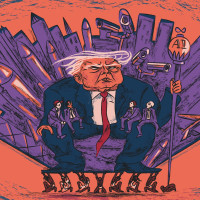
-
Weaponising Gender How gender became the perfect scapegoat for far-right and authoritarian actors
Publication date:
-
‘For some of us, it was always like this’ Anti-migrant politics as a fascist touchstone
Publication date:
-
The New Blood and Soil Nature, culture, and eco-fascism on the identitarian right
Publication date: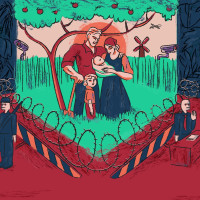
-
Is Our Homeland the Other? Care as a response to hate
Publication date:
-
Against the Stage Towards a Politics Beyond Performance
Publication date:


Credits
Authors
Roberto J. González is a professor of anthropology at San José State University, his academic home since 2001. His areas of expertise are science, technology, and culture; militarisation in US society; anthropological ethics; and environmental anthropology. You can reach him at roberto.gonzalez@sjsu.edu.
ACKNOWLEDGEMENTS: The author is grateful for constructive comments from Nick Buxton, Jeffrey Greger, Jay Ou, Clément Segal, and Charlotte Sunseri.
Thank you to NOOR for financial support and to the following for reviews and comments on drafts: Anuj Vaidya, Francesco Martone, Ilias Alami, Josephine Solanki, Max Haiven and the Editorial Advisory Board
EDITORIAL ADVISORY BOARD: Abigail Taylor, Anuradha Chenoy, Deborah Eade, Helen Lackner, Naureen Shameem, Nuria del Viso
ILLUSTRATOR: Sana Nasir
SUPPORTED BY: NOOR – www.wearenoor.org